Featured
The Internet of Things, with its vision of linking all aspects to a global network, is currently in the process of radically reshaping our everyday experiences across various domains.
The Internet of Things, with its vision of linking all aspects to a global network, is currently in the process of radically reshaping our everyday experiences across various domains.
The Internet of Things, with its vision of linking all aspects to a global network, is currently in the process of radically reshaping our everyday experiences across various domains.
Researchers at EPFL have developed a new, uniquely modular machine learning model for flexible decision-making. It is able to input any mode of text, video, image, sound, and time-series and then output any number, or combination, of predictions.
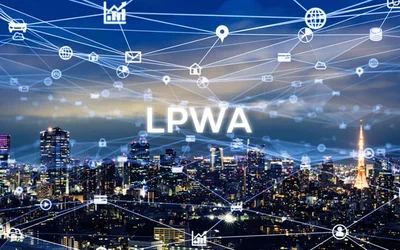
LPWA is an abbreviation for Low-Power Wide-Area. It is also referred to as Low-Power Wide-Area Network (LPWAN). LPWA is wireless communication technology that features low power consumption and wide-area and long-distance communication.
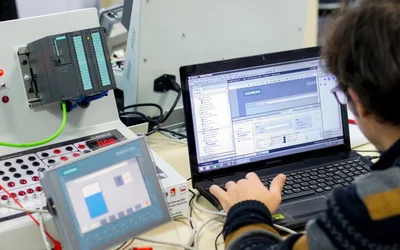
This article is a practical PLC programming guide covering the five IEC 61131-3 languages, the scan cycle that governs how your code actually runs, ladder and structured text examples, and the mistakes that cost engineers the most commissioning time.
23 minutes read.
18 minutes read.
18 minutes read.
15 minutes read.
13 minutes read.
17 minutes read.

Semiconductors
Nordic Semiconductor is a fabless semiconductor company specializing in wireless technology that powers the IoT.
181 Posts

High Tech
High Tech Campus Eindhoven is Europe's smartest square km and has the ultim...
49 Posts

University for science and technology
Freedom and individual responsibility, entrepreneurial spirit and open-min...
43 Posts

Higher Education
Work together. Create smart machines. Serve society. University of Michiga...
40 Posts
embedded world North America is the premier trade show and conference dedicated to the community of innovators and developers in the embedded tech ecosystem.
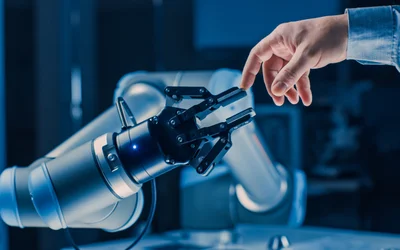
How Embedded Systems, AI, and Human-Centered Design Are Driving the Future of Robotics
Mario Mauerer, maxon's Global Business Development Manager, Robotics, discusses what it takes for robotic deployments to be successful in complex real-world environments.
Join Prof. Fei Chen as he explores advanced bimanual manipulation and teleoperation techniques shaping the future of intelligent human-like robots in this expert-led robotics session.
'Link-bots' can move, explore, cooperate without sensing or computation
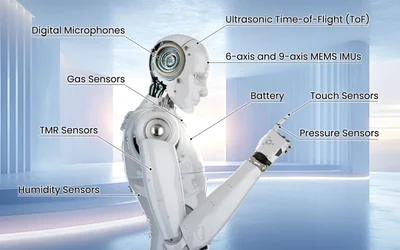
This article is part 4 of a 4-part article series on TDK's advanced robotics.
The Internet of Things, with its vision of linking all aspects to a global network, is currently in the process of radically reshaping our everyday experiences across various domains.

23 minutes read
Researchers at EPFL have developed a new, uniquely modular machine learning model for flexible decision-making. It is able to input any mode of text, video, image, sound, and time-series and then output any number, or combination, of predictions.

3 minutes read
LPWA is an abbreviation for Low-Power Wide-Area. It is also referred to as Low-Power Wide-Area Network (LPWAN). LPWA is wireless communication technology that features low power consumption and wide-area and long-distance communication.

15 minutes read
In this episode, we talk about the initiative from PolySpectra to generate 3D CAD models from text using AI.

19 minutes read
An international collaboration between EPFL and the University of Glasgow has led to an advanced machine-learning algorithm to effectively detect concealed manufacturing defects in wind turbine composite blades – before turbines are put into service.
3 minutes read
As network reliability is increasingly tested by aging power infrastructure and the complex demands of renewable energy, cellular IoT provides timely solutions.

5 minutes read
Condition Monitoring with LoRaWAN: A guide to its effectiveness in industrial maintenance, the transition from traditional methods, and overcoming implementation challenges
Leading the Digital Transformation with Edge AI and Wi-Fi Networking
In this video, we'll dive into the world of device testing within our IoT Device Management Platform.
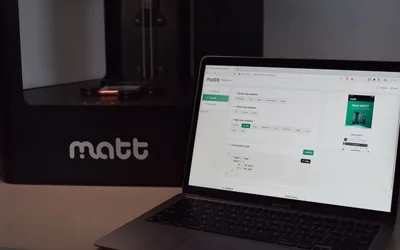
MATT Framework is the core software application that was designed to allow users to calibrate, prototype, develop testing scenarios, and manually operate the MATT robot, making it as easy to interact with as possible.

5 minutes read
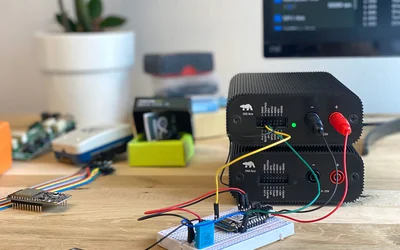
Battery performance is crucial for the successful operation of IoT devices, particularly in remote or inaccessible locations. They rely on battery power to sustain their operation over extended periods, and maximizing battery life directly impacts longevity, maintenance costs, and user experience.

3 minutes read
In this episode, we talk about how a driven undergraduate student from Columbia University mapped fingerprints from different fingers of the same person - which was widely known to be impossible by the experts in the field - using publicly available data and machine learning.
15 minutes read
In this video, we'll explore the exciting world of IoT development and learn how to seamlessly forward telemetry data to InfluxDB Cloud.
Researchers have developed a virtual reality application where a range of 3D modelling tools can be opened and controlled using just the movement of a user’s hand.

3 minutes read
New research from Carnegie Mellon University’s Department of Mechanical Engineering and the Human+AI Design Initiative underlines the adage “teamwork makes the dream work,” especially when it comes to human-AI collaboration.