Featured
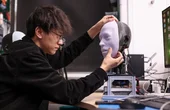
Columbia engineers build Emo, a silicon-clad robotic face that makes eye contact and uses two AI models to anticipate and replicate a person’s smile before the person actually smiles
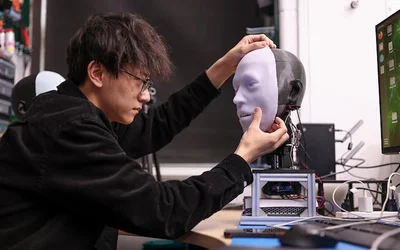
Columbia engineers build Emo, a silicon-clad robotic face that makes eye contact and uses two AI models to anticipate and replicate a person’s smile before the person actually smiles
Columbia engineers build Emo, a silicon-clad robotic face that makes eye contact and uses two AI models to anticipate and replicate a person’s smile before the person actually smiles
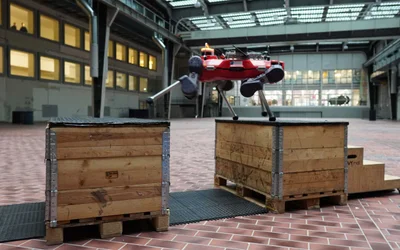
The quadrupedal robot ANYmal went back to school and has learned a lot. ETH Zurich researchers used machine learning to teach it new skills: the robot can now climb over obstacles and successfully negotiate pitfalls.
A new algorithm reduces travel time by identifying shortcuts a robot could take on the way to its destination.
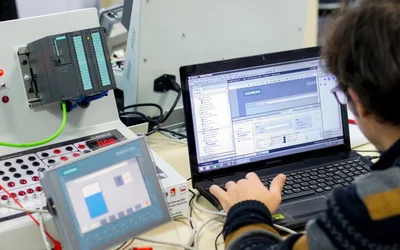
This article is a practical PLC programming guide covering the five IEC 61131-3 languages, the scan cycle that governs how your code actually runs, ladder and structured text examples, and the mistakes that cost engineers the most commissioning time.
23 minutes read.
18 minutes read.
18 minutes read.
15 minutes read.
13 minutes read.
17 minutes read.

Semiconductors
Nordic Semiconductor is a fabless semiconductor company specializing in wireless technology that powers the IoT.
181 Posts

High Tech
High Tech Campus Eindhoven is Europe's smartest square km and has the ultim...
49 Posts

University for science and technology
Freedom and individual responsibility, entrepreneurial spirit and open-min...
43 Posts

Higher Education
Work together. Create smart machines. Serve society. University of Michiga...
40 Posts
embedded world North America is the premier trade show and conference dedicated to the community of innovators and developers in the embedded tech ecosystem.
How Embedded Systems, AI, and Human-Centered Design Are Driving the Future of Robotics
Mario Mauerer, maxon's Global Business Development Manager, Robotics, discusses what it takes for robotic deployments to be successful in complex real-world environments.
Join Prof. Fei Chen as he explores advanced bimanual manipulation and teleoperation techniques shaping the future of intelligent human-like robots in this expert-led robotics session.
'Link-bots' can move, explore, cooperate without sensing or computation
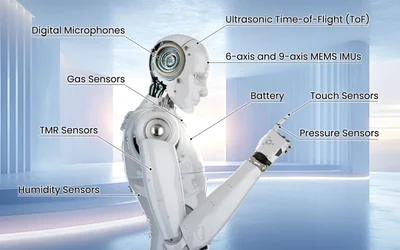
This article is part 4 of a 4-part article series on TDK's advanced robotics.
Columbia engineers build Emo, a silicon-clad robotic face that makes eye contact and uses two AI models to anticipate and replicate a person’s smile before the person actually smiles

4 minutes read
The quadrupedal robot ANYmal went back to school and has learned a lot. ETH Zurich researchers used machine learning to teach it new skills: the robot can now climb over obstacles and successfully negotiate pitfalls.

3 minutes read
A new algorithm reduces travel time by identifying shortcuts a robot could take on the way to its destination.
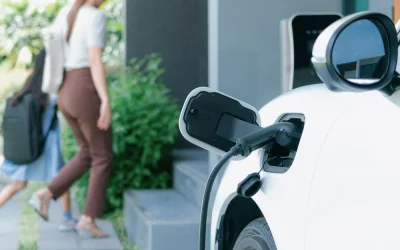
The global transition to electrified personal transport is gaining momentum, with consumer electric vehicles (EVs) leading the way. According to the International Energy Agency (IEA), EV sales exceeded 10 million units in 2022.

4 minutes read
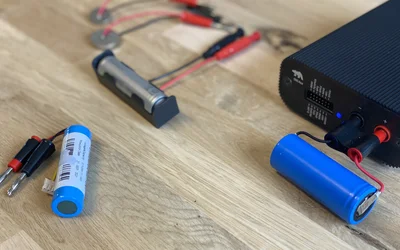
Choosing the appropriate battery for IoT devices is critical to ensure optimal performance and longevity. There are several factors to consider when selecting a battery that aligns with the specific requirements of the application, allowing for reliable and long-lasting power supply.

A smart factory is a factory that achieves operational process improvements, higher quality, and lower costs based on digital data by connecting processes from design to development, manufacturing, and maintenance in a network.

8 minutes read
For some IoT products, connectivity failure is a momentary inconvenience. For others, it’s a disaster.

3 minutes read
In the ever-evolving landscape of agriculture, the integration of technology has proven to be a game-changer. One of the most transformative advancements in recent years is the widespread adoption of the Internet of Things (IoT).
2 minutes read
Stanford researchers have developed a new phase-change memory that could help computers process large amounts of data faster and more efficiently.

4 minutes read
Wi-Fi and Edge Computing: Transforming AI Applications
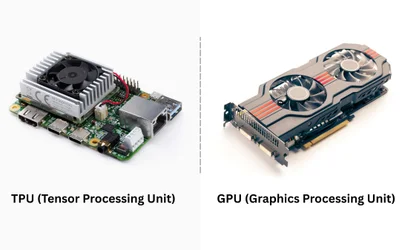
This article explores TPU vs GPU differences in architecture, performance, energy efficiency, cost, and practical implementation, helping engineers and designers choose the right accelerator for AI workloads today!
In the blink of an eye, the unruly, superheated plasma that drives a fusion reaction can lose its stability and escape the strong magnetic fields confining it within the donut-shaped fusion reactor.

6 minutes read
Researchers use AI and high-speed in-situ imaging to optimize process parameters for 3D printing metal alloys.

4 minutes read
In the future, the IoT will become ubiquitous with billions or even trillions of ‘things’ connected to the Cloud. These things aren’t just the PCs, servers, smart TVs, and smartphones traditionally associated with the Internet, they’re also small sensors and actuators
4 minutes read
This article provides an in-depth exploration of the evolution, fundamental concepts, diverse types, operating principles, and practical applications of ASICs.