Featured
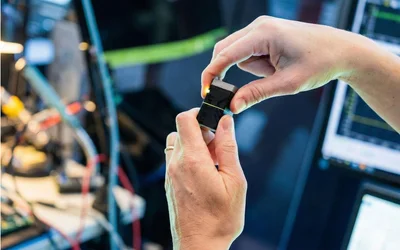
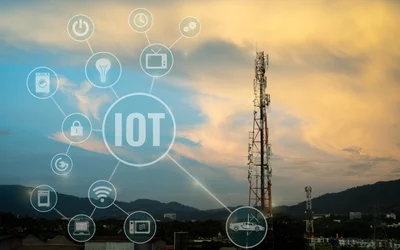
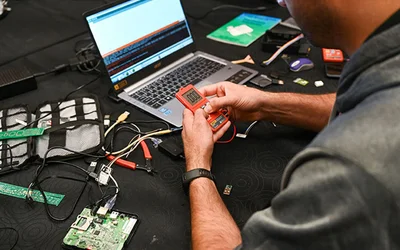
Article #5 Electronics Innovation Series. IoT security is a shared responsibility between chip manufacturers, hardware designers, and the consumer.
Article #5 Electronics Innovation Series. IoT security is a shared responsibility between chip manufacturers, hardware designers, and the consumer.
Article #5 Electronics Innovation Series. IoT security is a shared responsibility between chip manufacturers, hardware designers, and the consumer.
For the length of human history, technology has played an important role in preventing theft. Before car keys, Henry Ford had to chain his car to a lamppost to avoid anyone with the strength to turn a physical crank from stealing it.
Bringing the IoT community together around LoRaWAN® technology
Exploring the design, development, connectivity, security, and more aspects of IoT devices
18 minutes read.
21 minutes read.
20 minutes read.
17 minutes read.
25 minutes read.
28 minutes read.

Electronics
Mouser Electronics is a worldwide leading authorized distributor of semiconductors and electronic components.
219 Posts
Semiconductors
Nordic Semiconductor is a fabless semiconductor company specializing in wir...
181 Posts
What a programmable automation controller is, how PACs are built and programmed, and how to choose between a PLC and a PAC.
Explore how low-power sensor gateways enable reliable, long-range data collection for remote and distributed industrial IoT assets.
A compact, battery-powered sensing platform that wirelessly brings environmental and equipment-condition data from locations where traditional monitoring is difficult or impossible.
A Cat 1 bis platform that provides engineers with a practical path for long-term Global connectivity.
Real-time water monitoring and leak detection just got streamlined thanks to the nRF9151 – Nordic's low-power cellular IoT solution
A Cat 1 bis platform that provides engineers with a practical path for long-term Global connectivity.
The G+D Single Pane of Glass Delivers Secure, Remote, SGP.32-Driven IoT Management
As AI moves from screens into real environments, reliable and always-on connectivity are becoming a safety and scale requirement.
Article #5 Electronics Innovation Series. IoT security is a shared responsibility between chip manufacturers, hardware designers, and the consumer.
For the length of human history, technology has played an important role in preventing theft. Before car keys, Henry Ford had to chain his car to a lamppost to avoid anyone with the strength to turn a physical crank from stealing it.

4 minutes read
Bringing the IoT community together around LoRaWAN® technology
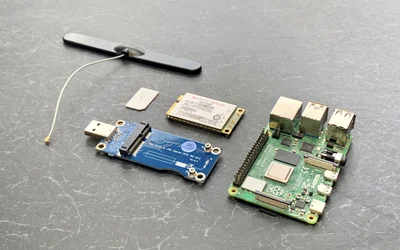
Adding cellular connectivity to your Raspberry Pi can be done in a few simple steps.

6 minutes read
The collaborative nature of open source projects brings together people across the world to work towards improving and monitoring our natural resources.
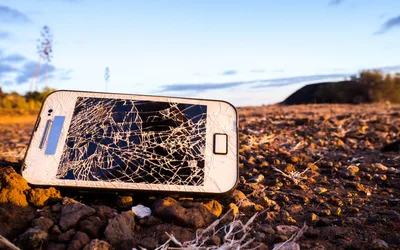
If devices lasted longer and were easier to fix, they could provide many years of good service before recycling. That saves precious materials and the energy needed to manufacture new products.
4 minutes read
Computer vision brings an 80% reduction in illegal dumping. IoT surveillance company iDefigo partners with Matroid to apply AI-based computer vision for illegal trash dumping detection.

2 minutes read
Into the future, more transport companies may start to integrate wastewater monitoring systems to manage these key facilities effectively. But this opportunity isn’t only limited to transport – any water monitoring capabilities can help reduce waste, and save energy, time and resources.
3 minutes read
Valuable IoT lessons, gained through painful mistakes
3 minutes read
Discover in this article the most common IoT security challenges and possible solutions to take into account for each new IoT venture.

4 minutes read
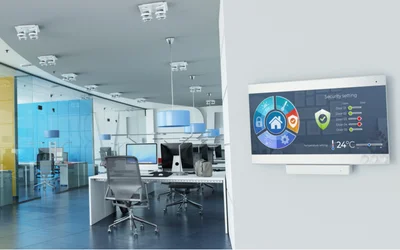
Building automation solutions can help reduce a building’s carbon footprint, optimize energy consumption, improve maintenance scheduling, make better use of available space, and reduce waste and operating costs.
5 minutes read
Increasing the range of a wireless product is an advantage for virtually every application. Consider, say, a large warehouse with a Bluetooth mesh network to track the location of valuable items.
4 minutes read
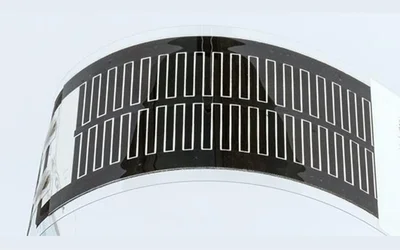
This article describes the TAeTTOOz printable battery technology developed by Evonik and acquired by InnovationLab for upscaling and mass production. In this article, you can learn about the operating principles, the key working characteristics, the material set, production techniques, and emerging applications of this technology

7 minutes read
BMW's attempt to enter the world of subscription services.

6 minutes read
This article covers an example of a smart washroom management case using data engineering to analyze IoT data and identify trends.
3 minutes read