Featured
Wevolver spoke with Orion Fans President, John Knight, to learn about the cooling challenges companies face, how their technologies address system reliability, and where innovation is heading in thermal management.
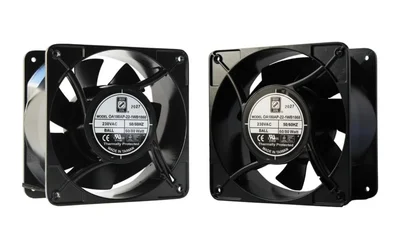
Wevolver spoke with Orion Fans President, John Knight, to learn about the cooling challenges companies face, how their technologies address system reliability, and where innovation is heading in thermal management.
Wevolver spoke with Orion Fans President, John Knight, to learn about the cooling challenges companies face, how their technologies address system reliability, and where innovation is heading in thermal management.
An edible robot made by EPFL scientists leverages a combination of biodegradable fuel and surface tension to zip around the water's surface, creating a safe - and nutritious - alternative to environmental monitoring devices made from artificial polymers and electronics.
Advanced Infrared Technologies Enable Accurate Emission Monitoring and Support Industrial Climate Compliance
The Seebeck effect converts a temperature difference across a conductor or junction of two materials into a voltage. This article reviews the physics, Seebeck coefficients, thermoelectric materials, figure of merit, thermocouples, and generator design.

Semiconductors
Nordic Semiconductor is a fabless semiconductor company specializing in wireless technology that powers the IoT.
181 Posts

Robotics & Automation
READY Robotics is a robotics software company that vastly simplifies robot ...
24 Posts
Automation Machinery Manufacturing
DEEPRobotics Technology Co., Ltd; leading the quadruped robots industrial a...
6 Posts
ZenCell by PriscoZen leverages the Arduino® UNO™ Q dual architecture to replace two boards with one.
Perceived Barriers and Strategic Solutions for Implementation
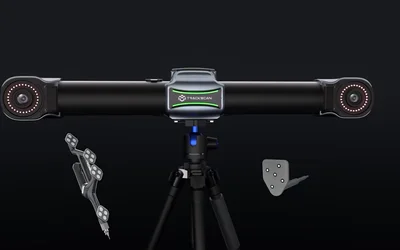
SCANOLOGY's 6D Pose Tracking System transforms industrial robots into high-precision experts, enabling rapid calibration, real-time pose compensation, and accurate positioning—boosting efficiency, product quality, and reliability in advanced manufacturing environments.
Scanology AM-DESK and Elite Robots deliver a plug-and-play automated 3D inspection solution, combining precision, flexibility, and speed to transform quality control for modern manufacturing and empower truly smart, data-driven factories.
The Seebeck effect converts a temperature difference across a conductor or junction of two materials into a voltage. This article reviews the physics, Seebeck coefficients, thermoelectric materials, figure of merit, thermocouples, and generator design.
Today's world is dominated by technology that uses either digital or analogue I/O modules to convert physical signals into digital format and vice versa. I/O modules, or input/output modules, are a mechanism by which information is communicated in electronic systems.
IAQ monitoring includes tracking PM, VOCs, NOx, CO₂, RH/T, and more. Sensirion's SEN6x, available through Mouser Electronics, integrates these sensing needs into a single module, reducing system complexity while enabling scalable, compliance-ready solutions.
Learn how compact methane sensors use TDLAS, 1.6 µm detection, and InGaAs photodiodes to deliver stable, repeatable sub-ppm CH₄ measurements in industrial environments.
Wevolver spoke with Orion Fans President, John Knight, to learn about the cooling challenges companies face, how their technologies address system reliability, and where innovation is heading in thermal management.
An edible robot made by EPFL scientists leverages a combination of biodegradable fuel and surface tension to zip around the water's surface, creating a safe - and nutritious - alternative to environmental monitoring devices made from artificial polymers and electronics.

3 minutes read
Advanced Infrared Technologies Enable Accurate Emission Monitoring and Support Industrial Climate Compliance
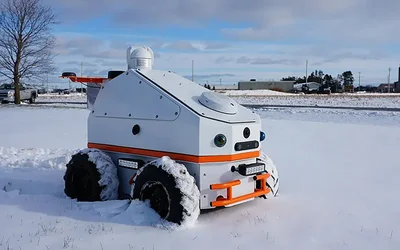
While a capable inspection robot can be costly, so is downtime.

6 minutes read
Scientists at EPFL have developed a scalable method to produce porous graphene membranes that efficiently separate carbon dioxide. The breakthrough could significantly reduce the cost and footprint of carbon capture technology.
3 minutes read
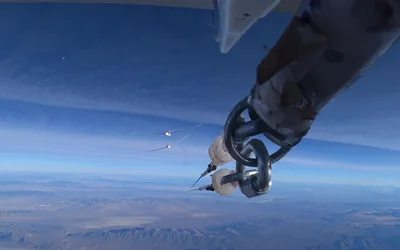
The world's first in-flight measurements of contrails from a hydrogen-powered turbojet engine have been conducted.

4 minutes read
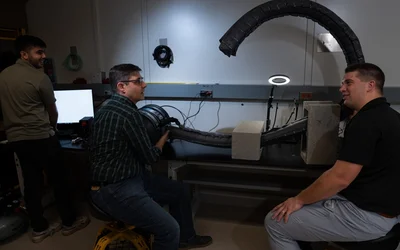
SPROUT, developed by Lincoln Laboratory and University of Notre Dame researchers, is a vine robot capable of navigating under collapsed structures.
Read part 1 of 4 in our new articles series exploring TDK’s advanced robotics. This first part delves into how TDK ROS leverage multiprocessor technology to enhance precision, efficiency, and multitasking across service and industrial applications.
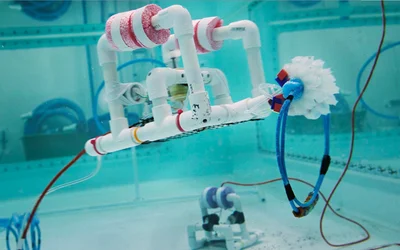
Launched by MIT Sea Grant, SeaPerch and SeaPerch II have had a big impact on young learners interested in ocean science and engineering.
We sit down with Sciosense CEO, Stefan Raible to discuss the future of sensors and how collaboration is key to engineering success.
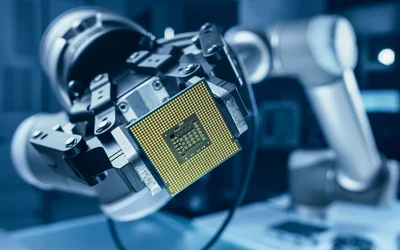
This technical article examines the mechanical engineering principles of CoWoS Packaging Technology, its mechanism, control systems, and performance metrics that define this cutting-edge technology!
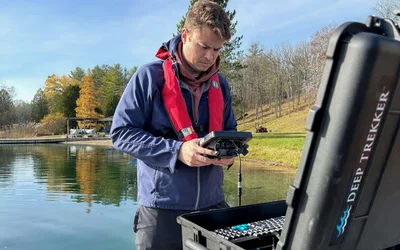
Discover how Deep Trekker rigorously tests and evaluates IMU technologies, comparing MEMS and FOG systems to ensure precise underwater navigation for ROVs.

7 minutes read
Yevgeniy Vorobeychik, Ning Zhang and William Yeoh receive $1.5 million DoD grant to enhance multiple facets of generative AI

2 minutes read
Discover the vital role of underwater positioning in marine science, and how remotely operated vehicles (ROVs) are leading the way in location tracking.
12 minutes read
In this episode, we explore how a snake-inspired robot developed by students from ETH Zurich aims to better leverage the power of robotics in search and rescue missions!

13 minutes read