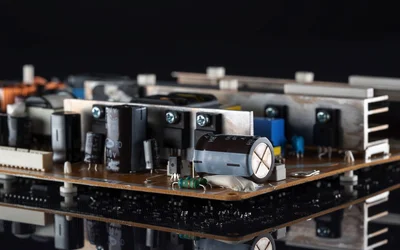
Modern electronics and renewable energy systems depend on DC to AC inverters that convert a DC source into a clean sinusoidal AC output. This technical article explains the theory behind inverter circuits, their types, architectures, and practical design tips.
As lithium-ion batteries power more vehicles and energy systems, the risk of thermal runaway grows. Honeywell's BES LITE detects electrolyte vapors at the first vent stage, enabling rapid intervention to prevent failures, protect assets, and ensure safety compliance.
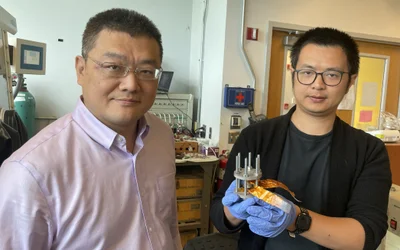
New technology from Reeja Jayan in the department of mechanical engineering at Carnegie Mellon University extends battery life cycle by 10x, reduces charging time, and improves operating safety.
This article is a detailed exploration of crystalline vs amorphous solids, covering atomic order, materials properties, semiconductors, and how they translate into practical semiconductor, hardware and digital design applications.
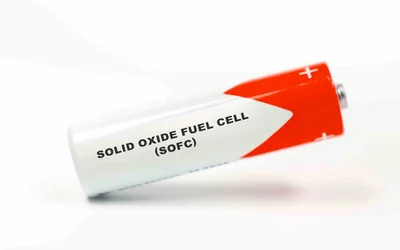
These devices could pack three times as much energy per pound as today's best EV batteries, offering a lightweight option for powering trucks, planes, or ships.
Development of technology to enable use of hydrogen as a fuel to power turbines, engines, boilers, etc., safely and efficiently is already underway. This first approach is suitable for applications where comparatively large output is required.
The approach directly converts the greenhouse gas into formate, a solid fuel that can be stored indefinitely and could be used to heat homes or power industries.

Using a new 3D printing technique, researchers at ETH Zurich have developed special ceramic structures for a solar reactor. Initial experimental testing show that these structures can boost the production yield of solar fuels.

Researchers at EPFL and Northwestern University unveil a groundbreaking design for perovskite solar cells, creating one of the most stable PSCs with a power-conversion efficiency above 25%, paving the way for future commercialization.

PRISM™ harnesses the principles of behavioural science along with cutting-edge technology to not only give customers the power to save a minimum of 20% on energy bills; but also help adjust the user’s mindset and drive long-term behavioural change around energy consumption.
Without political measures for zero-emission technologies, a significant proportion of heavy goods vehicles will still run on diesel in 2035. This result is shown in a new ETH Zurich study on the decarbonisation of truck traffic.
In this episode, we embark on a journey to the red planet and unveil the remarkable success of the NASA JPL MOXIE (Mars Oxygen In-Situ Resource Utilization Experiment) mission on Mars.
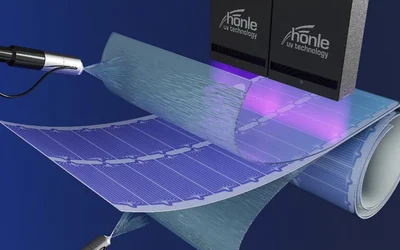
Organic Photovoltaics (OPV are a 3rd Gen PV technology with unique attribute. The key to their success is in Roll-to-Roll (R2R) processing. Here you will learn about the advantages and challenges of R2R manufacturing in OPVs and printed electronics
MOXIE successfully turned Martian carbon dioxide into usable oxygen – a monumental achievement with even bigger implications for the future of space exploration
In the rapidly evolving landscape of IoT, battery life is paramount for device sustainability. We dissect the challenges and strategies for battery longevity of LPWAN IoT devices. Explore battery profiling and optimization for extended device life and reduced costs.
A recent study identifies challenges faced in current modeling systems for electricity-system planning as it pertains to energy storage (ES) and suggests how systems should be built to balance the need to eliminate carbon emissions, while also considering affordability and system reliability.
In this episode, we discuss the game-changing journey of two MIT alumni who are revolutionizing industry energy use practices by introducing a remarkable thermal battery solution to make sustainable energy feasible at a commercial scale.
As solar power becomes increasingly popular, it’s essential to be aware of the potential defects that can occur in solar panels. While most panels are built to last decades, a few things can go wrong.
Imagine a world powered not only by renewables and batteries but also by the wiring infrastructure that connects these systems to one another. By turning wiring into energy storage assets, we solve tough sustainability challenges like performance and cost while preserving land too.