Featured
Read Article #2 of 2 in the Solderless Magnet Wire Solutions Mini-Series.
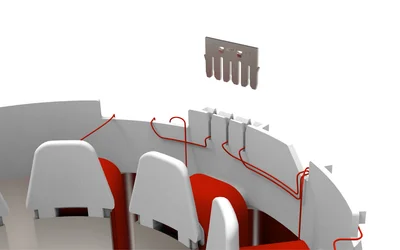
Read Article #2 of 2 in the Solderless Magnet Wire Solutions Mini-Series.
Read Article #2 of 2 in the Solderless Magnet Wire Solutions Mini-Series.
Read Article #1 of 2 in the Solderless Magnet Wire Solutions Mini-Series.
Novel thermal interface material cools chips better than existing state-of-the-art solutions.
The motor control center puts the starters, protection and controls for many electric motors into one lineup of cabinets. This guide explains what it is, how it is built, how it differs from switchgear and a VFD, and what current standards expect for safety and maintenance.
17 minutes read.
13 minutes read.
13 minutes read.
17 minutes read.
16 minutes read.
16 minutes read.



Electrical and Electronic Manufacturing
Drop-in power cords that improve battery performance.
18 Posts

University
KIT is one of the biggest research and education institutions worldwide and...
17 Posts

University
For almost two centuries DTU, Technical University of Denmark, has been ded...
16 Posts
Developers report equivalent capacity, first-cycle efficiency, fast charging, and an estimated 130 kg less direct CO₂e per tonne of coated graphite.
A solid oxide fuel cell converts fuel directly into electricity through a ceramic electrolyte that conducts oxygen ions at high temperatures. This guide covers the electrochemistry, the material choices, where the efficiency really comes from, and the degradation mechanisms.
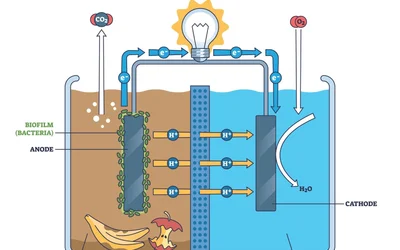
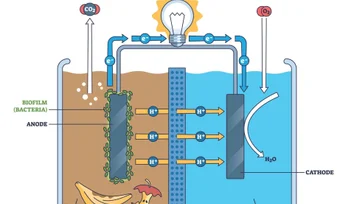
A microbial fuel cell turns the metabolism of living bacteria into an electrical current. This guide covers the electrochemistry, microbiology, materials, real performance numbers from pilot plants, and the economics that still keep the technology out of mainstream power generation.
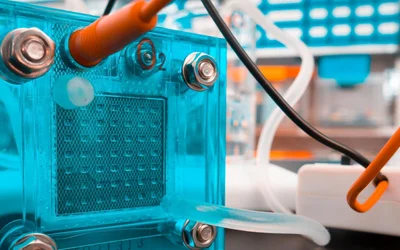
A PEM fuel cell converts hydrogen and oxygen into electricity at around 80 degrees C, with water and heat as the only products. This guide covers electrochemistry, layer materials, efficiency limits, and cost and durability to help you understand the practical applications of this technology.
A solid oxide fuel cell converts fuel directly into electricity through a ceramic electrolyte that conducts oxygen ions at high temperatures. This guide covers the electrochemistry, the material choices, where the efficiency really comes from, and the degradation mechanisms.
A microbial fuel cell turns the metabolism of living bacteria into an electrical current. This guide covers the electrochemistry, microbiology, materials, real performance numbers from pilot plants, and the economics that still keep the technology out of mainstream power generation.
A PEM fuel cell converts hydrogen and oxygen into electricity at around 80 degrees C, with water and heat as the only products. This guide covers electrochemistry, layer materials, efficiency limits, and cost and durability to help you understand the practical applications of this technology.
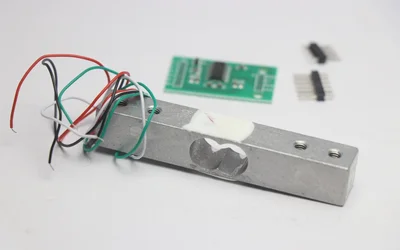
This article explains how load cells work, the main types, what accuracy specs and OIML/NTEP classes mean, and best practices for sizing, wiring, and installation.
Read Article #2 of 2 in the Solderless Magnet Wire Solutions Mini-Series.

9 minutes read
Read Article #1 of 2 in the Solderless Magnet Wire Solutions Mini-Series.
7 minutes read
Novel thermal interface material cools chips better than existing state-of-the-art solutions.

2 minutes read
KIT researchers are working together with partners on the industrial transfer of the pioneering sodium technology

According to new research, greenhouse gas emissions, energy consumption, and water usage are all meaningfully reduced when – instead of mining for new metals – batteries are recycled.

4 minutes read
Some carbon-based solar cells already show no drop in performance after three years’ worth of radiation, and the cause of degradation in others could be preventable.

3 minutes read
Researchers show how the use of machine learning enormously accelerates the search for new semiconducting molecules for perovskite solar cells
3 minutes read
SeaLion Energy, a CMU-led startup, received funding from the U.S. Department of Energy ARPA-E to extend EV battery life and facilitate repair and reuse to reduce waste.
3 minutes read
Ever wondered how batteries power your gadgets or how metals are refined to their purest forms? The answers lie in the interplay of cathodes and anodes, two simple yet critical components in electrochemistry. This article will delve into their workings, applications, and challenges.
The Internet of Things (IoT) is revolutionizing industries through connectivity and automation, but underestimated battery life costs can significantly inflate the total cost of ownership (TCO) over time.

4 minutes read
Development of technology to enable use of hydrogen as a fuel to power turbines, engines, boilers, etc., safely and efficiently is already underway. This first approach is suitable for applications where comparatively large output is required.

7 minutes read
Efficient antenna technology is critical for IoT, smart metering, and industrial connectivity. This article explores how omnidirectional antennas are now in demand to simplify designs and enhance performance.
Plasma cleaning is a high-tech surface treatment that uses ionized gas to remove microscopic contaminants, enhancing adhesion and durability in materials. This article explains plasma cleaning’s role across industries, its eco-friendly benefits, and emerging trends in sustainable manufacturing.
Caltech researchers from campus and JPL have collaborated to devise a method for coating lithium-ion battery cathodes with graphene, extending the life and performance of these widely used rechargeable batteries.

5 minutes read
Many IoT devices are battery-powered and one of the most important operating parameters is how long those batteries last in normal service. Maximizing battery life improves the user experience, lowers maintenance costs, and reduces wastage.

4 minutes read