A voltage reference is a precision circuit that delivers a stable output voltage independent of temperature, power supply, and load variations. This article covers key reference technologies, specifications, selection criteria, PCB design, and applications in ADCs, DACs, and calibration systems.
Researchers at ETH Zurich have, for the first time, created certifiably perfect random numbers using a quantum experiment. These can be used, for instance, for encrypting messages.
A critical flaw in random number generators puts the security of billions of low-cost IoT devices at risk. This means a new approach for generating random numbers is needed, which can be found in extracting entropy from SRAM behaviour.
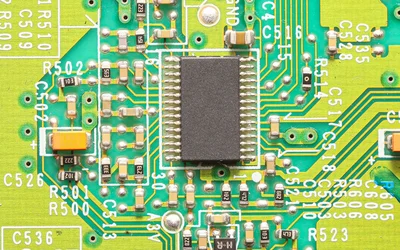
A voltage reference is a precision circuit that delivers a stable output voltage independent of temperature, power supply, and load variations. This article covers key reference technologies, specifications, selection criteria, PCB design, and applications in ADCs, DACs, and calibration systems.
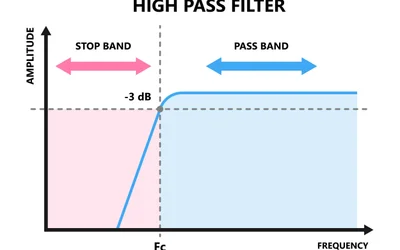
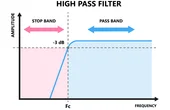
Active high-pass filters remove unwanted low-frequency signals while preserving useful higher frequencies. This article covers first- and second-order filter design, Sallen-Key and multiple-feedback topologies, and practical applications in audio electronics, instrumentation, and signal processing.
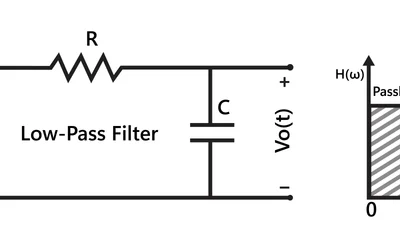
Active low-pass filters use op-amps, resistors, and capacitors to pass low-frequency signals while attenuating higher frequencies. This article covers first-order and second-order filter design, Sallen-Key and MFB topologies, cutoff frequency, Q factor, and applications.

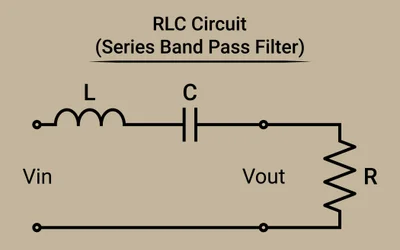
A bandpass filter is a circuit that allows a selected range of frequencies to pass while reducing low and high frequencies. This article covers the design of active bandpass filters using op-amps, resistors, and capacitors, including cutoff and center frequencies,, Sallen-Key and MFB topologies.
Explore how next-generation connectors enable reliable power and data transmission in satellites and spacecraft, overcoming extreme temperature, vacuum, radiation, and launch stresses.
Learn how to choose the right M2M SIM cards and data plans for IoT projects, avoid roaming and cost traps, and ensure reliable, scalable mobile connectivity.
Hey Tuya showcases how agentic Physical AI evolves assistants from isolated commands into systems that learn context, coordinate devices, and act reliably across real-world environments.
Understanding the signal names, numbering schemes, electrical limits and software control of the Raspberry Pi 5 general purpose input/output (GPIO) header empowers hardware and digital design engineers to build robust embedded solutions.
Article #6 of Mastering RF Engineering: RF technology powers everything from Wi-Fi and Bluetooth to radar, sensing, geolocation, and directed energy systems. This article explores the most essential RF applications, how they work, and their growing impact on modern technology and infrastructure.
NR+ is the first non-cellular 5G standard enabling massive IoT with low latency, long range, and operator-free private networks — powered by Nordic and Wirepas for scalable, resilient deployments.
Building the Data Backbone of Vehicles with GEMnet Solutions by TE Connectivity — combining Multi-Gigabit Bandwidth, Robust EMI Shielding, and Automotive-Grade Durability
Article #7 of Mastering RF Engineering: RF testing and measurement are essential to achieving accuracy and reliability in wireless systems. They ensure that every component and signal path performs as intended across varying frequencies, environments, and applications.
The Raspberry Pi Zero 2W features a quadcore 64 bit processor and builtin wireless in a tiny footprint. Its 40 pin header provides engineers with a flexible interface for embedded applications. This guide explores the theory behind the pinout and offers practical guidance for learners.
Article #5 of Mastering RF Engineering: Digital RF technology merges signal processing with high-frequency design, using DSP, ADCs, and DACs to enable advanced capabilities like beamforming, MIMO, and software-defined flexibility in compact modern systems.
Article #4 of Mastering RF Engineering: High-frequency performance in RF systems depends on more than just components, it begins with the circuit itself. Advances in materials, fabrication, and interconnect design are redefining how modern RF systems achieve unmatched performance and reliability.