Featured
The tinyML Foundation, Sony Semiconductor, and the City of San José are teaming up to use Machine Learning in improving pedestrian safety

The tinyML Foundation, Sony Semiconductor, and the City of San José are teaming up to use Machine Learning in improving pedestrian safety
The tinyML Foundation, Sony Semiconductor, and the City of San José are teaming up to use Machine Learning in improving pedestrian safety
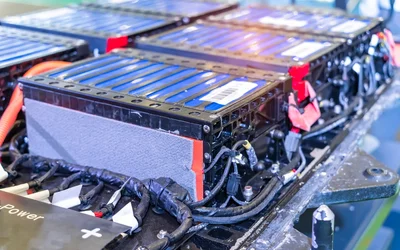
Edge AI platforms can assist engineers to monitor battery health systems.
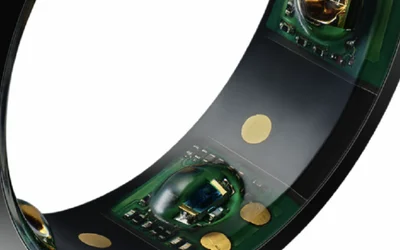
From sleep monitoring wearables to face detection models, tinyML is making a big impact on the way we can gather and apply data.
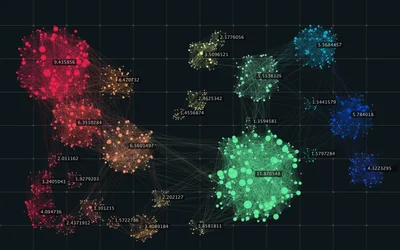
Unsupervised learning is a machine learning approach that finds patterns, structure, or useful representations in unlabeled data. It groups similar observations, compresses high-dimensional features, detects outliers, discovers item relationships, and supports modern representation learning.
13 minutes read.
17 minutes read.
11 minutes read.
16 minutes read.
14 minutes read.
14 minutes read.


High Tech
High Tech Campus Eindhoven is Europe's smartest square km and has the ultim...
49 Posts

University for science and technology
Freedom and individual responsibility, entrepreneurial spirit and open-min...
43 Posts
Protect the cloud by securing the edge with hardware-based security, TPMs, HSMs, and resilient edge computing architectures.
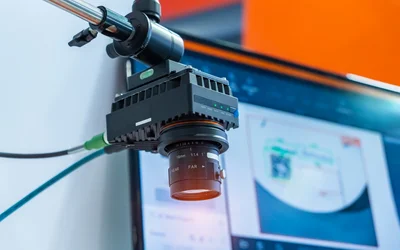
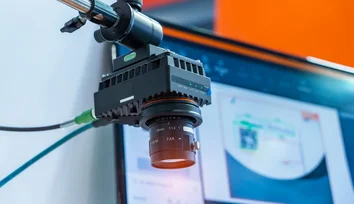
Understanding industrial vision systems by examining their components, imaging fundamentals, AI integration since 2020, and how to choose the right solution for every application.
Explore the rise of intelligent EV hardware and how real-time processing, ML acceleration, and hardware virtualization are enabling safer, smarter, software-defined electric vehicles.
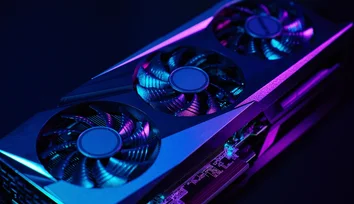
A detailed engineering reference on performance, signaling, and power differences in current graphics memory standards.
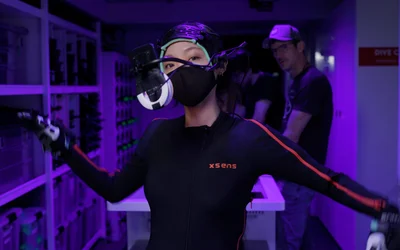
how Last Praetorian Interactive made Project Vesperi with one Xsens suit
With Xsens Motion Capture
With Xsens Indie Program
The tinyML Foundation, Sony Semiconductor, and the City of San José are teaming up to use Machine Learning in improving pedestrian safety
Edge AI platforms can assist engineers to monitor battery health systems.
From sleep monitoring wearables to face detection models, tinyML is making a big impact on the way we can gather and apply data.
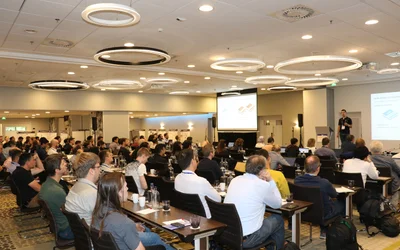
Highlights from the 3rd Annual tinyML EMEA Innovation Forum include exploring hardware developments, algorithm optimization, and deploying MLOps tools.
Article 5 of Bringing Intelligence to the Edge Series: Integrating voice user interface technology into microcontroller units for offline, edge-based voice recognition is set to redefine the landscape of home automation and smart industrial applications.
In both analytics and machine learning (ML), the value of data cannot be overstated. Understanding its importance is essential for unlocking its full potential and driving informed decision-making, enhancing business processes, and exploring new opportunities across various industry sectors.
Unsupervised learning is a machine learning approach that finds patterns, structure, or useful representations in unlabeled data. It groups similar observations, compresses high-dimensional features, detects outliers, discovers item relationships, and supports modern representation learning.
In this episode, we discuss a novel new approach for increasing the field of view of autonomous systems by leveraging reflections of blindspots on reflective bodies.

13 minutes read
Article 3 of Bringing Intelligence to the Edge Series: Balancing the critical metrics of accuracy, power consumption, latency, and memory requirements is key to unlocking the potential of Tiny Machine Learning (TinyML) in low-power microcontrollers and edge computing.
Article 2 of Bringing Intelligence to the Edge Series: Advancements in AI and embedded vision technologies are revolutionizing various industries, enabling real-time decision-making, enhancing security, and facilitating automation in various applications.
Article 1 of Bringing Intelligence to the Edge Series: With the introduction of AI, IoT devices can become more intelligent and less reliant on external systems— but not without trade-offs in performance and cost. Understanding how to make that decision is key.
Introducing the Bringing Intelligence to the Edge Series: Exploring how Artificial Intelligence is moving to embedded systems, transforming technology across various applications.
Exploring the key concepts related to Unsupervised vs Supervised Learning, understanding the fundamental principles, major algorithms and their real-world applications, and practical distinctions between supervised and unsupervised learning.
Artificial intelligence (AI) is a wide-ranging tool that enables people to rethink how we integrate information, analyze data, and use the resulting insights to improve decision making
Gain a comprehensive understanding of Edge AI by exploring the fundamental concepts, hardware components, software tools, and real-world applications.