Featured
Transforming manufacturing processes through advanced inspection
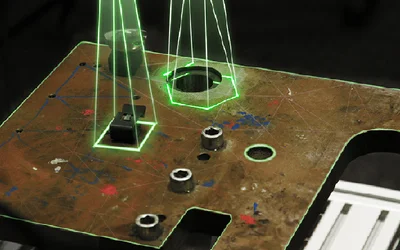
Transforming manufacturing processes through advanced inspection
Unsupervised learning is a machine learning approach that finds patterns, structure, or useful representations in unlabeled data. It groups similar observations, compresses high-dimensional features, detects outliers, discovers item relationships, and supports modern representation learning.
13 minutes read.
17 minutes read.
11 minutes read.
16 minutes read.
14 minutes read.
14 minutes read.



High Tech
High Tech Campus Eindhoven is Europe's smartest square km and has the ultim...
49 Posts

University for science and technology
Freedom and individual responsibility, entrepreneurial spirit and open-min...
43 Posts
Protect the cloud by securing the edge with hardware-based security, TPMs, HSMs, and resilient edge computing architectures.
Understanding industrial vision systems by examining their components, imaging fundamentals, AI integration since 2020, and how to choose the right solution for every application.
Explore the rise of intelligent EV hardware and how real-time processing, ML acceleration, and hardware virtualization are enabling safer, smarter, software-defined electric vehicles.
A detailed engineering reference on performance, signaling, and power differences in current graphics memory standards.
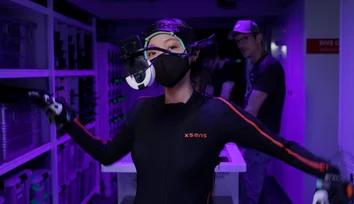
how Last Praetorian Interactive made Project Vesperi with one Xsens suit
With Xsens Motion Capture
With Xsens Indie Program
Transforming manufacturing processes through advanced inspection
What’s Next for Artificial Intelligence and Edge Computing?
How Edge AI Senses the World for Situational Awareness.
What to Consider When Selecting Your Edge AI Hardware and Software.
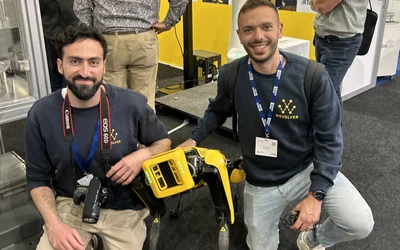
The 2023 trade show brought together technological innovations, industry experts, and future talents in the field of automation.
The greater the amount of high-quality data you have, the better your machine learning model will be. This post looks at the challenges (and solutions) involved in creating and organizing a dataset when you’re starting from scratch.

5 minutes read
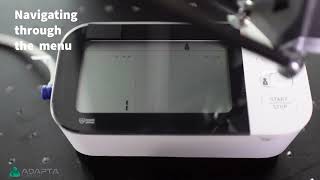
Medical device testing & certification require methods defined by reliability and precision, critical characteristics while validating that medical devices safely & accurately perform while being used.
Researchers create a new simulation tool for robots to manipulate complex fluids in a step toward helping them more effortlessly assist with daily tasks.
Vision, Robotics & Motion is a highly anticipated event in the manufacturing industry that will take place in the Netherlands on the 7th and 8th of June, 2023. It will celebrate its 20th edition in 2023.
This machine-learning method could assist with robotic scene understanding, image editing, or online recommendation systems.
A new machine-learning model makes more accurate predictions about ocean currents, which could help with tracking plastic pollution and oil spills, and aid in search and rescue.
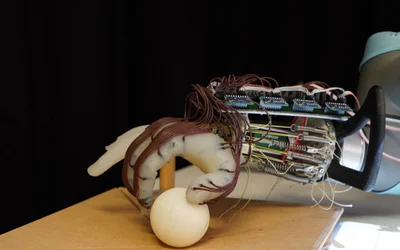
Researchers have designed a low-cost, energy-efficient robotic hand that can grasp a range of objects – and not drop them – using just the movement of its wrist and the feeling in its ‘skin’.
Scientists at EPFL have developed PeSTo, an AI model that can predict, with high confidence, the binding interfaces of proteins when they bind other proteins, nucleic acids, lipids, ions, and small molecules. The model's low computational cost enables the processing of large amounts of structural data, opening up opportunities for new biological discoveries.

3 minutes read
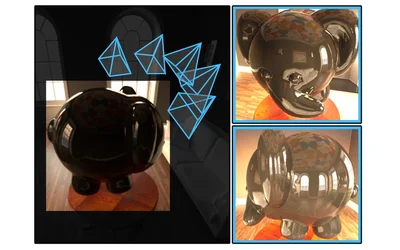
A new computer vision system turns any shiny object into a camera of sorts, enabling an observer to see around corners or beyond obstructions.
Let us delve into the profound impact that generative AI may have on employment, exploring both the opportunities it creates and the challenges it presents, as we strive to shape a world where human ingenuity and machine intelligence can coexist harmoniously.

8 minutes read