Food processing techniques require the removal of moisture from the crop without destroying its nutritional qualities. The article proposes a dehydrator/oven whose temperature and humidity can be perfectly controlled and its generated heat is evenly distributed in its drying chamber.

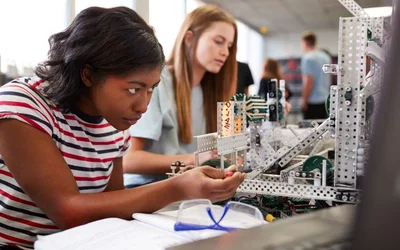
As the University Technology Exposure Program 2022 enters its final month, we continue to receive submissions spanning different domains of technology. Submissions published in June included articles related to healthcare, electric vehicles, data analytics, smart cities, and smart manufacturing.
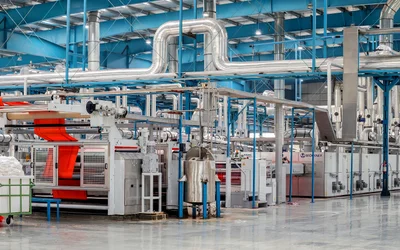
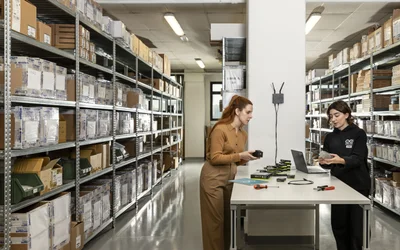
The study is about the transformation of the manual assembly process of medical test kits by integrating the learning factory and digital twin. Lean manufacturing principles and lean thinking are introduced to revamp value-added activities; reduce waste and level-load human utilization.
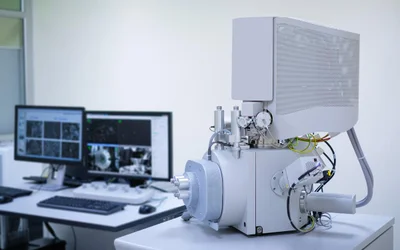
This article delves into the fundamental principles of SEM, various imaging modes and techniques, sample preparation methods, and the applications of SEM in different fields.
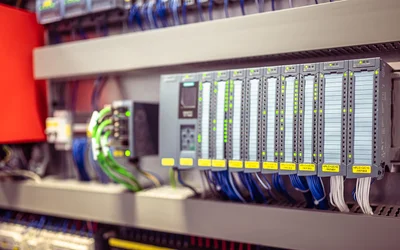
Understanding and improving scan time is vital for your PLC so that you can be sure it’s operating efficiently and effectively. Scan time in this context refers to the time it takes your PLC to assess and process all incoming and outgoing data.
In the ever-evolving landscape of technology and innovation, businesses are constantly seeking ways to stay ahead of the curve, optimize processes, and drive innovation. One powerful approach gaining widespread recognition is the adoption of open-source technology platforms – and for good reason.
Food processing techniques require the removal of moisture from the crop without destroying its nutritional qualities. The article proposes a dehydrator/oven whose temperature and humidity can be perfectly controlled and its generated heat is evenly distributed in its drying chamber.
As the University Technology Exposure Program 2022 enters its final month, we continue to receive submissions spanning different domains of technology. Submissions published in June included articles related to healthcare, electric vehicles, data analytics, smart cities, and smart manufacturing.
The study is about the transformation of the manual assembly process of medical test kits by integrating the learning factory and digital twin. Lean manufacturing principles and lean thinking are introduced to revamp value-added activities; reduce waste and level-load human utilization.
A student write-up that tries to compare the environmental impact and complexity of manufacturing automobile parts through conventional methods and modern distributed manufacturing techniques like 3D printing.
A student article focusing on how the management of emergency vehicles can be fostered within a Smart City to suggest the best course of action in different traffic situations.
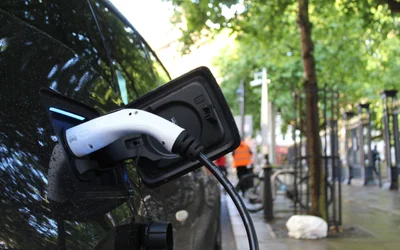
Using public electricity and solar panels for the easy and hassle-free charging of Electric Vehicles is an interesting solution to combat the problem of the unavailability of Electric Vehicle Charging Stations.
As a result of a constant increase in the number of flights, aircraft noise is becoming a major source of noise-induced annoyance. This article lists down some of the sources contributing to it and proposes possible solutions for mitigating the problem.
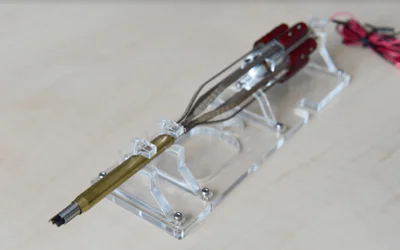
At the Delft University of Technology, a series of “self-propelling” needles have been developed for downsizing the diameter of tissue transportation systems.
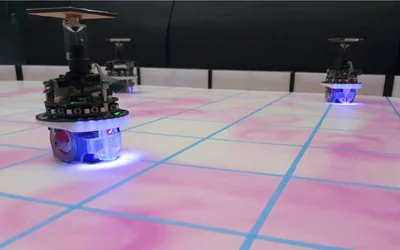
Researchers developed a system to conduct experiments in swarm robots that enables the e-puck robots to release and detect artificial pheromone to mimic stigmergic mechanisms.
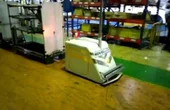
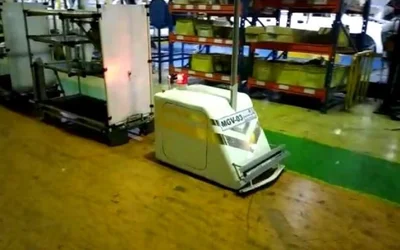
The MGV (Mechanical Guidance Vehicle) device is a self-controlling device without a driver. The guidance system of this device is mechanical, without a driver. Rough surfaces, which are one of the limitations of the AGV (Automated Guided Vehicle) device, do not exist for this device.
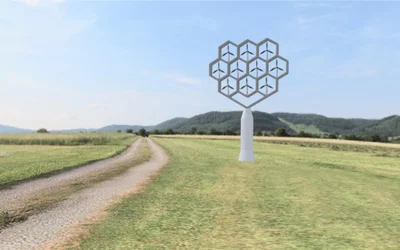

This is a multicopter that can fly close to bridges, overpasses, and other pieces of large infrastructure to perform high-pressure washing. Water is pumped to high pressure on the ground, then sent to the drone via a hose.
ADIUTOR device proposes a novel approach to provide high-intensity, repetitive, task-specific self-treatment at the home of an upper limb and it can help monitor patients' progress as well as personalize their treatment with improved motivation and interaction.