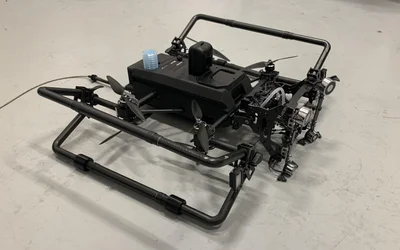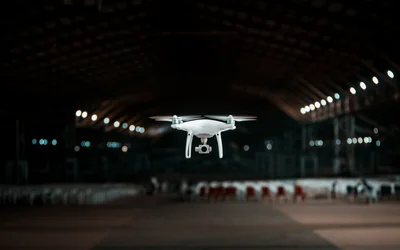
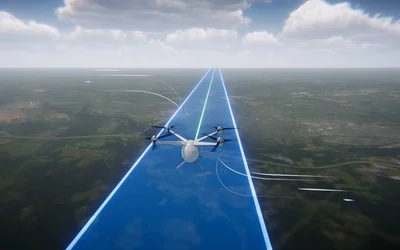
Flightmare is an open-source simulator for quadrotors that moves away from rigid paradigms and proposes a flexible modular structure that empowers the users or automated algorithms to fine-tune the simulator to the task at hand.
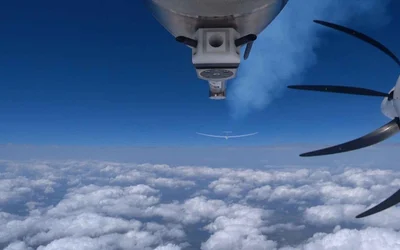
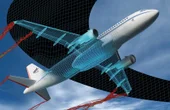
DLR supports new test flight programme by Airbus and its subsidiary Airbus UpNext for CO2-emission-free flight. The 'Blue Condor' project investigates the effects of contrails from hydrogen engines.
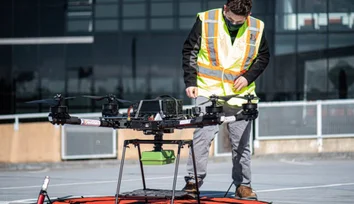
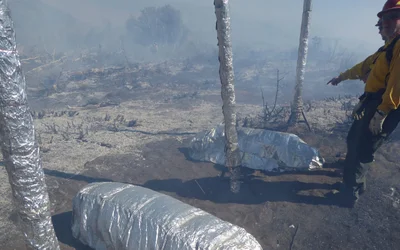
In this episode, we talk about how researchers are developing tools to keep us safe using technology that ranges from ultra-heat resistant tents for fighters to drones capable of discovering hidden landmines.
Unveiling the Duel of Digital Design - A Comprehensive Exploration of History, Syntax, and Applications of the two popular hardware description languages
Learn why growing hardware teams slow down as they scale, and how aligned workflows, parallel collaboration, and real-time design visibility restore speed and momentum.
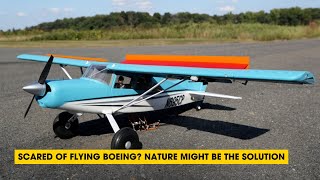
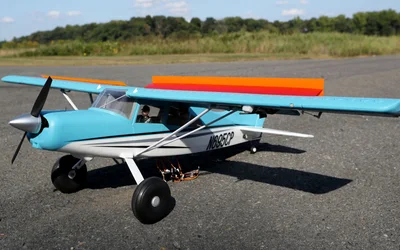
In this episode, we explore how the mechanics of bird wings are inspiring new approaches to prevent airplanes from stalling and learn how bio-mimetic designs from nature are paving the way for innovations in aviation, enhancing stability and safety for future flights.
Taking inspiration from bird feathers, Princeton engineers have found that adding rows of flaps to a remote-controlled aircraft’s wings improves flight performance and helps prevent stalling, a condition that can jeopardize a plane’s ability to stay aloft.
Flightmare is an open-source simulator for quadrotors that moves away from rigid paradigms and proposes a flexible modular structure that empowers the users or automated algorithms to fine-tune the simulator to the task at hand.
DLR supports new test flight programme by Airbus and its subsidiary Airbus UpNext for CO2-emission-free flight. The 'Blue Condor' project investigates the effects of contrails from hydrogen engines.
In this episode, we talk about how researchers are developing tools to keep us safe using technology that ranges from ultra-heat resistant tents for fighters to drones capable of discovering hidden landmines.
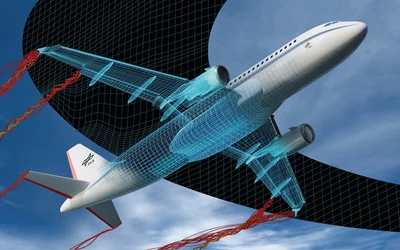
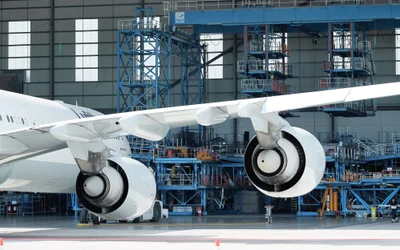
The initial project for the digitalised development of control surfaces for future aircraft wings has now been successfully completed at the German Aerospace Center (Deutsches Zentrum für Luft- und Raumfahrt; DLR) Virtual Product House (VPH).
In this article, the focus is on understanding the key steps in designing structural composites with examples of aerospace components; i.e. wing and fuselage.
Engineers at EPFL and the University of Geneva believe they hold the key to automated drone mapping. By combining artificial intelligence with a new algorithm, their method promises to considerably reduce the time and resources needed to accurately scan complex landscapes.
In this episode, we talk about how an app leveraging 3 sets of machine learning algorithms aims to reduce waste and emissions by creating 3D models of feet and the hoverfly inspired AI that will be keeping airfields safe from small drones via acoustic mapping and filtering.
An air-breathing jet engine (turbofan) is widely used in aircraft propulsion. AFP systems are used for making the fan blades and containment casing for these jet engines. Here step by step process of making a jet engine blade via the AFP process is explained.
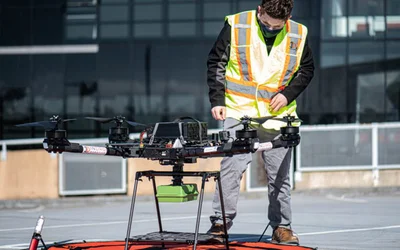
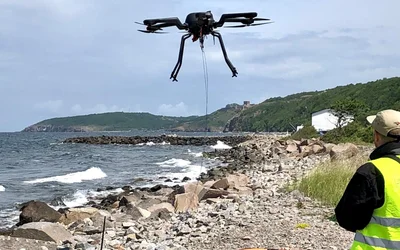
Could drones provide a safe and effective alternative to sending out ships, helicopters and cranes in future, and could they take some of the pressure off of maintenance staff?