Featured
As evidence mounts that gas drilling and sewer systems leak far more greenhouse gases than previously believed, a team of Princeton researchers has developed a method to pinpoint leaks both big and small for speedy repair.

This white paper explains how precision timing solutions support reliable PNT architectures across aerospace, defense, and industrial systems.
As evidence mounts that gas drilling and sewer systems leak far more greenhouse gases than previously believed, a team of Princeton researchers has developed a method to pinpoint leaks both big and small for speedy repair.
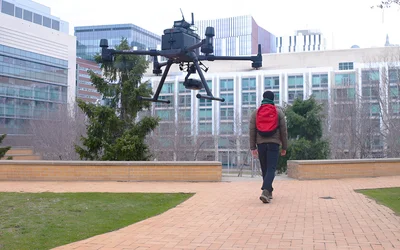
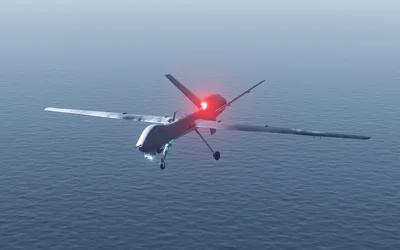
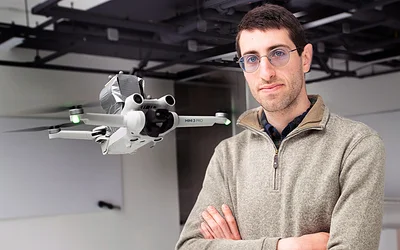
MIT researchers exhibit a new advancement in autonomous drone navigation, using brain-inspired liquid neural networks that excel in out-of-distribution scenarios.
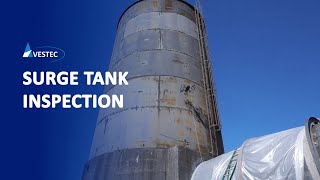
Intelligent flying robots can perform Non-Destructive Testing inspections on various assets across various industries, including tanks, towers, pipes, flare stacks, ships, and more.
Lidar SLAM lets a robot, vehicle, or handheld scanner map an unknown space while tracking its own position inside it. This guide discusses the processing pipeline, compares nine lidar SLAM and odometry algorithms, from GMapping to lidar-inertial and neural methods, and shows how to choose sensors
16 minutes read.

Aerospace
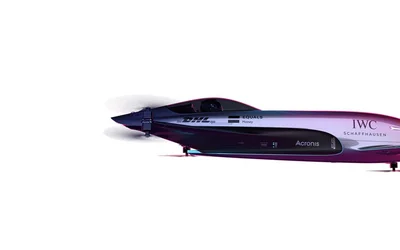
Airspeeder is the world’s first racing series for electric flying cars. Our mission will accelerate eVTOL (electric vertical tak...
26 Posts

Robotics and Drones
We empower R&D by providing the computational power, ROS packages, payloads...
14 Posts

Drone Fleet Management Software
Cloud Ground Control is a cloud based command and control solution for oper...
7 Posts

Automation Machinery Manufacturing
Addcomposites is the provider of the Automated Fiber Placement (AFP) ecosys...
5 Posts
Learn why growing hardware teams slow down as they scale, and how aligned workflows, parallel collaboration, and real-time design visibility restore speed and momentum.
How standardized electronic identification will enable high-volume, complex drone operations.
In this episode, we explore how the mechanics of bird wings are inspiring new approaches to prevent airplanes from stalling and learn how bio-mimetic designs from nature are paving the way for innovations in aviation, enhancing stability and safety for future flights.
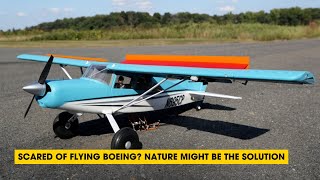
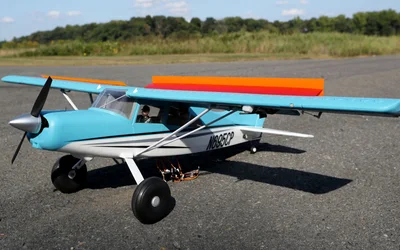
Taking inspiration from bird feathers, Princeton engineers have found that adding rows of flaps to a remote-controlled aircraft’s wings improves flight performance and helps prevent stalling, a condition that can jeopardize a plane’s ability to stay aloft.
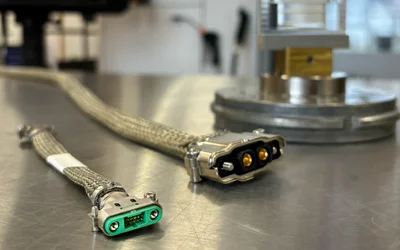
How does connector design influence UAV performance in demanding environments? Harwin explores high-reliability connectors for next-generation UAVs.
An interview with Ryan Smart, VP of Product at Harwin, discussing the challenges of shielding in high-reliability connectors, high-current design trends, and the hybrid power-and-signal connector layouts.
Adding Intelligence to Radar with the BrainChip Real-Time Micro-Doppler Classification
CBC Interview: InDro Robotics CEO Philip Reece on the New Federal Budget & Technology
As evidence mounts that gas drilling and sewer systems leak far more greenhouse gases than previously believed, a team of Princeton researchers has developed a method to pinpoint leaks both big and small for speedy repair.
MIT researchers exhibit a new advancement in autonomous drone navigation, using brain-inspired liquid neural networks that excel in out-of-distribution scenarios.
Intelligent flying robots can perform Non-Destructive Testing inspections on various assets across various industries, including tanks, towers, pipes, flare stacks, ships, and more.

Refineries are known for operating under harsh conditions of high pressure and temperature, which can cause damage to equipment over time, leading to defects such as internal corrosion, cracking, and erosion.
3 minutes read
Air taxis and flying cars may seem like science fiction, but for Onland, founder of Serendipity, these are real-world technologies he’s helping cities and countries prepare for now.

4 minutes read
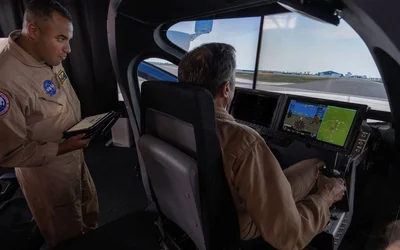
In a world that runs on data, computer simulations are among our most powerful tools for investigating any scenario. The same is true for NASA Advanced Air Mobility (AAM) researchers as they plan the future of the national airspace. Together with industry partners, these researchers are delivering the data needed to allow self-flying electric air taxis and drones to execute flight paths as easily as your phone maps your car’s route.

3 minutes read
Intelligent Flying Robots have revolutionized NDT inspections by conducting accurate ultrasonic thickness (UT) and visual inspections in challenging conditions.
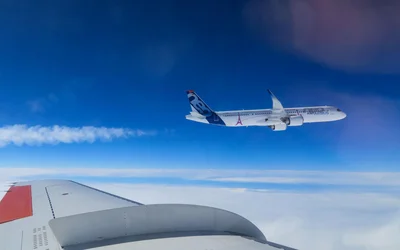
Sustainable aviation fuels (SAFs) significantly reduce the climate impact of aviation in terms of both its carbon footprint and other climate impact not related to carbon dioxide. In the future, the targeted use of SAFs in contrail regions can help to rapidly reduce the climate impact of air transport. Flight tests using aircraft powered by 100 percent SAF are to take place again in order to prepare for this transition.

3 minutes read
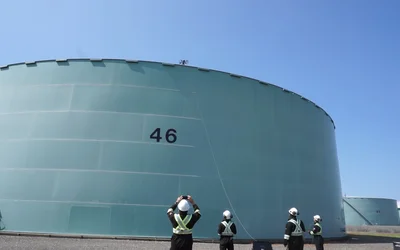
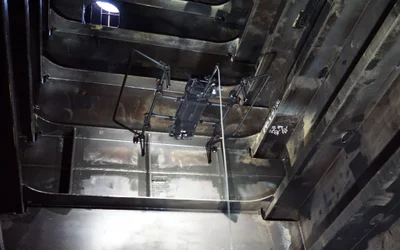
A large metal vessel of a Floating Storage and Offloading (FSO) unit requires an extensive inspection from every angle, but cramped spaces and high temperatures make the inspection challenging. This inspection was done with a flying robot to avoid putting people in the small and hot areas.
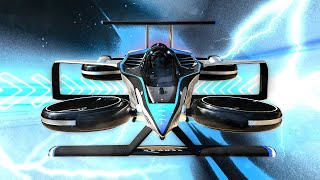
Alauda Aeronautics today unveils the Airspeeder Mk4, the first crewed version of its flying racing car. Designed and built in Adelaide, South Australia, the Airspeeder Mk4 is the world's fastest hydrogen electric Vertical Take-Off and Landing (eVTOL) aircraft.

2 minutes read
Using an Intelligent Flying Robot, inspectors can safely perform measurements and inspections without exposure to potential hazards.
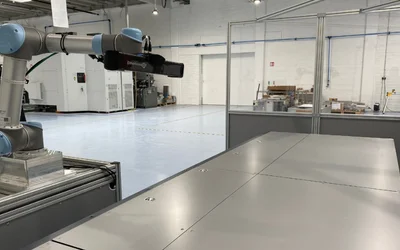
The MAAS project team developed a unique, end-to-end solution for the assembly of airplane wing parts, which uses Photoneo 3D vision technology to handle challenges such as screw hole misalignment, panel to panel step height, and gaps out of specification.

4 minutes read
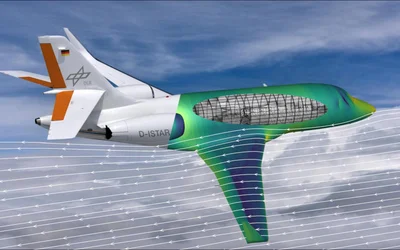
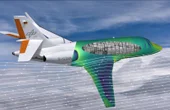
Decarbonisation of aviation relies on a combination of many incremental steps and outright technological breakthroughs. To succeed, both approaches need to exist inside a collaborative ecosystem. In this spirit, Airbus and two leading European research institutions, DLR and ONERA, are exploring how high-performance computing can improve our understanding of the relationship between aerodynamics and aircraft efficiency.
3 minutes read
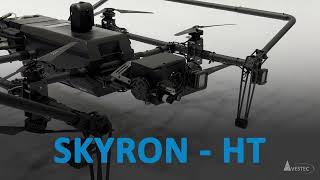
The world's first high-temperature aerial platform for Close and General Visual Inspection performs a job at 65°C on an offshore platform.
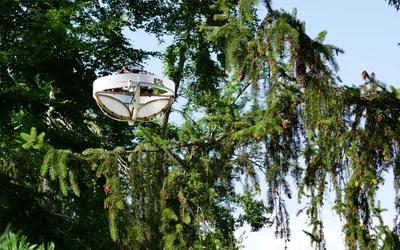
Researchers at ETH Zurich and the Swiss Federal research institute WSL have developed a flying device that can land on tree branches to take samples. This opens up a new dimension for scientists previously reserved for biodiversity researchers.

3 minutes read