Designing for Reliability in Compact, High-Power Systems: Insights from Ryan Smart, VP of Product at Harwin
An interview with Ryan Smart, VP of Product at Harwin, discussing the challenges of shielding in high-reliability connectors, high-current design trends, and the hybrid power-and-signal connector layouts.

24 Apr, 2026. 7 minutes read
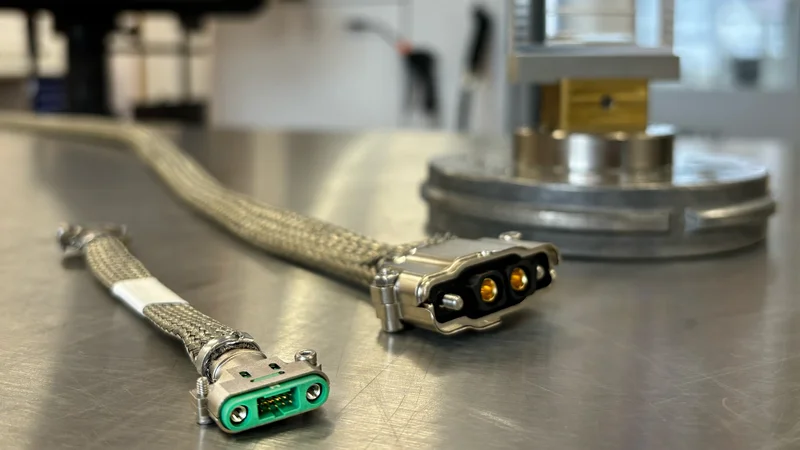
Electronic systems are becoming smaller, more powerful, and more densely integrated. Higher current levels, faster data speeds, tighter layouts, and harsher mechanical conditions are forcing engineers to rethink how connectors deliver both power and signal integrity without compromising reliability. In this interview, Ryan Smart, VP of Product at Harwin, shares insights into three major areas shaping advanced connector design, including effective shielding in high-reliability environments, higher-current compact connectors, and the importance of hybrid power-and-signal layouts.

Connector Reliability & Shielding
As electronic systems become more compact and densely integrated, maintaining signal integrity in electrically noisy environments is a major challenge for design engineers. Shielding has become a core aspect of connector design, particularly in high-reliability sectors such as aerospace, defense, motorsport, and industrial systems, where vibration, temperature cycling, and long service life are expected.
We asked Ryan Smart about the practical challenges engineers face when designing shielded connectors and how Harwin approaches these issues in demanding applications.
Wevolver Team: High-reliability applications demand robust signal protection. What are the biggest challenges engineers face today when designing shielded connectors?
Ryan Smart: “I’d say the three biggest are the ability to manage EMI, to maintain shielding effectiveness and to ensure long-term reliability.
Taking these in order, modern systems tend to be more compact and so have components more densely packed than they previously would, with noise sources sitting closer together. The shift to more compact systems also creates challenges in terms of shielding design – how do you ensure the performance while still also making them smaller, lighter and easier to assemble? And then there are the conditions in which they operate, for example the shield connection is likely to be undergoing constant vibration and/or temperature cycling, which require special measures to prevent failure from occurring. “
Wevolver Team: As systems operate at higher data speeds and in electrically noisy environments, how is connector shielding improving to maintain signal integrity?
Ryan Smart: “ There are several methods that can be used. For example, Harwin implements 360° shielding designs to reduce leakage and improve grounding continuity. But it’s much more than any one individual step and allowing operations to continue in such environments needs to be factored in right from the very start of a connector and shield’s conception. Material selection naturally plays a highly significant role, as does plating to improve conductivity and corrosion resistance. And then there are features such as latches and Screw-Loks that improve mechanical retention, which will also help prevent degradation of shielding performance over time.”
Wevolver Team: From your perspective, what design considerations are most often overlooked when engineers specify shielded high-reliability connectors?
Ryan Smart: “Definitely grounding paths, with some customers implementing these properly in the connector itself but failing to do so beyond it.
After that, another area that we seek overlooked is the impact of termination quality and cable preparation on shielding performance.
My final one relates to environmental factors that the connectors will come into contact with. Whether it’s an industrial system or a mil-aero computer, the connector and its shielding will be exposed to considerable vibration, moisture, and temperature ranges. These can all affect shield integrity significantly and designs must therefore take these into consideration to maintain the required performance and service life.”
Wevolver Team: Harwin has developed connectors for demanding aerospace and industrial environments. How do your design principles translate into improved performance for such applications?
Ryan Smart: “Harwin’s has a very strong track record here, and we are trusted by the military, by space agencies, by motorsport teams, and by industrial equipment manufacturers to cope with this.
Material science and plating systems are vital in achieving this. For example, the Gecko G125 series of connectors have a vibration rating of 20G for 6 hours and implement a 4-finger beryllium copper contact design that provides a high spring force [BG6.1] to maintain connectivity through high vibration and shock. It additionally uses gold-over-nickel plating for high-reliability conduction over 1,000 mating cycles. And stainless-steel Screw-Loks and latching hardware are used for enhanced connections under stress.
Testing is also essential, and it’s critical that all connectors are verified beyond basic compliance to simulate and ensure reliability in real-world operating environments.”
Power Contacts & High-Current Trends (10–100A)
Designers are being asked to deliver more power in less space across industries such as UAVs, electrified vehicles, robotics, and industrial automation. The increasing reliance on battery systems, distributed power architectures, and compact system layouts is pushing connectors into higher current ranges, often between 10A and 100A, without increasing footprint. This introduces new thermal, mechanical, and materials challenges that need to be addressed at the connector design stage.
We discussed with Ryan Smart about the trends driving this shift and the engineering trade-offs involved in designing compact connectors capable of safely delivering higher current.
Wevolver Team: Many industries are pushing toward higher power density and electrification. What design and application requirements are pushing connectors toward higher current ratings, particularly in the 10-100A range?
Ryan Smart: “This is absolutely the case and can be seen in systems such as UAVs, but also in the electrification of vehicles, as well as in robotics, and in industrial equipment too.
Shrinking system size is common to all of these: UAVs obviously need to be lighter and smaller to travel further, but even industrial systems face this pressure with the more systems and more functionality needing to fit into the same facilities.
In addition to this, there is an increased use of battery systems and distributed power architectures, which is pushing connectors to the higher current ranges. “
Wevolver Team: What are the primary engineering trade-offs when designing compact connectors that must safely deliver high current?
Ryan Smart: “Everything is a trade-off, but the top three are probably the balancing of contact size with space constraints; the need to implement thermal management without increasing the connector footprint; and the need to deliver increased durability and mating cycle performance but without adding bulk.”
Wevolver Team: How is Harwin addressing challenges such as thermal management, contact durability, and reliability in high-current connector solutions?
Ryan Smart: “Firstly, contact geometry can be better optimized to reduce resistance and heat generation. Beyond this, we are designing for thicker PCBs, which enables better heat dissipation and are therefore often a requirement in high current systems. From a materials point of view, our use of high-performance copper alloys and plating for long service life also plays a key role. And, as I said for vibration, validation for real-world conditions (including extremes) is vital to ensure our connectors meet our customers’ needs.”
Mixed Layout & Hybrid Connectors
Modern systems bring together motors, sensors, control electronics, and high-speed communication links within compact enclosures. Designers deal with power delivery, low-level signals, and high-speed data within the same tightly constrained mechanical layout. This can be seen in robotics, aerospace platforms, autonomous systems, and advanced industrial equipment, where reducing size and weight directly affects performance, efficiency, and system integration.
Hybrid connectors address this challenge by allowing power, signal, and data lines to be consolidated into a single interface. This saves space, simplifies assembly, reduces cabling complexity, and lowers the number of potential failure points in the system.
Ryan Smart talked about the applications driving hybrid connectors and the design challenges engineers face when combining multiple electrical requirements into one interface.
Wevolver Team: In what types of applications are hybrid power-and-signal connectors becoming most valuable, and why?
Ryan Smart: “While there are lots of applications, there are probably three core underpinning trends that dictate the need for hybrid connectors. First are applications where size and weight are critical, which would be aerospace and defense systems or drones. Second are those applications where both control signals and power are needed in tight spaces, and a good example of this is industrial automation systems. Finally, we have those systems where there is a need to combine motors, sensors, and data in one, and this can be seen in robotics and other autonomous systems.”
Wevolver Team: What design challenges do engineers typically face when combining power, signal, and high-speed data within a single connector?
Ryan Smart: “There is obviously a need to prevent electrical interference between high-current and sensitive signal lines. And maintaining mechanical strength while keeping the connector compact is also vital. But these come with the need to manage thermal effects from power contacts, which adds a whole world of complexity.”
Wevolver Team: How is Harwin approaching hybrid connector development to help designers reduce space, simplify assembly, and maintain high reliability?
Ryan Smart: “Harwin’s approach here comes down to designing for ease of assembly without compromising retention or durability.
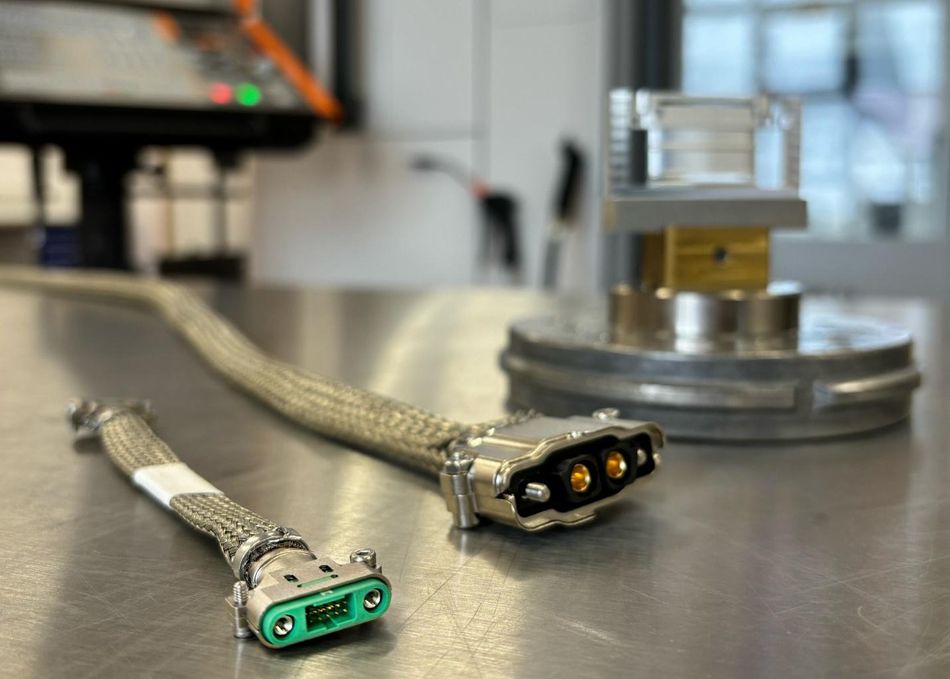
And this can probably be shown best if we look at a connector like the Datamate Mix-Tek, a 2.00/4.00mm pitch connector that delivers 3.3A for signal and up to 40A per contact for power. This retains many of the vibration resistance features of Gecko, allowing it to be rated up to 20G, but also brings in features such as a modular design that allow flexible pin configurations, and a 50Ω coaxial ganged contact for frequencies up to 6GHz.
Bringing these onto a single connector enables smaller, lighter systems that are highly robust and offer the specifications to meet the performance needs of modern systems without compromising on size or reliability.”
Conclusion
Across shielding, high-current delivery, and hybrid layouts, Ryan Smart’s insights suggest that connector reliability depends on viewing the interconnect as part of the entire system rather than as an isolated component. Electrical performance, mechanical robustness, thermal behavior, materials, and assembly practices are closely linked, and overlooking any one of these aspects can affect long-term performance in demanding environments.
The margins for error in connector specification and integration are becoming smaller as systems shrink. Grounding paths beyond the connector, termination quality, thermal management, and environmental exposure are all practical considerations that need to be addressed early in the design process. These factors influence not only signal integrity and current-carrying capability but also how well connectors withstand vibration, temperature cycling, and extended service life. Similarly, hybrid connectors can simplify layouts while maintaining performance and reliability by combining power, signal, and data into a single interface.
Designing connectors for compact, high-power systems is less about any single feature and more about how multiple design decisions work together. Attention to these details enables connectors to meet the requirements of modern electronic systems without compromising reliability.