Featured
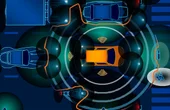
Someday autonomous vehicles and human-driven vehicles will share the road. How to manage the rise of AVs is the topic of a Carnegie Mellon policy brief.
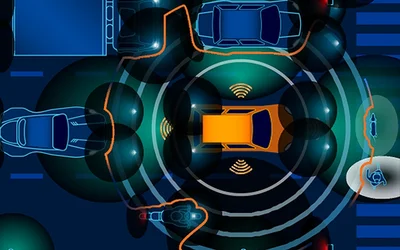
Someday autonomous vehicles and human-driven vehicles will share the road. How to manage the rise of AVs is the topic of a Carnegie Mellon policy brief.
Someday autonomous vehicles and human-driven vehicles will share the road. How to manage the rise of AVs is the topic of a Carnegie Mellon policy brief.
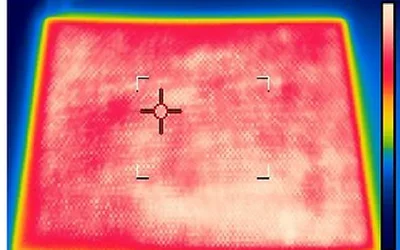
Sometimes manufacturers would like to install heating in objects that are difficult to heat. The armrest of your car. Your sporty winter coat. Bags for food delivery. Sleeping bags. etc This has been difficult to achieve until now. Read more about printed heater technology
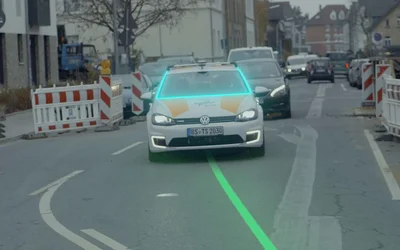
In the Providentia++ project, researchers at the Technical University of Munich (TUM) have worked with industry partners to develop a technology to complement the vehicle perspective based on onboard sensor input with a bird’s-eye view of traffic conditions. This improves road safety – also for autonomous driving.
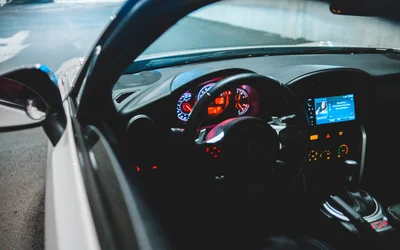
Autonomous Vehicles (AVs) are poised to revolutionize human transportation by making it more safe, comfortable, and reliable. From passenger travel to cargo transportation, AVs equipped with AI and sensors offer tremendous potential.
16 minutes read.
14 minutes read.
18 minutes read.
10 minutes read.
16 minutes read.


Robotics and Drones
We empower R&D by providing the computational power, ROS packages, payloads...
14 Posts

Test and Measurement equipment
Keysight Technologies, Inc. (NYSE: KEYS) is a leading technology company th...
11 Posts

Electro-Mechanical Component Manufacturing
ISL Products is an engineering oriented designer and manufacturer of value-...
9 Posts
Examining the latest developments in self-driving vehicles.
Autonomous Vehicles (AVs) are poised to revolutionize human transportation by making it more safe, comfortable, and reliable. From passenger travel to cargo transportation, AVs equipped with AI and sensors offer tremendous potential.
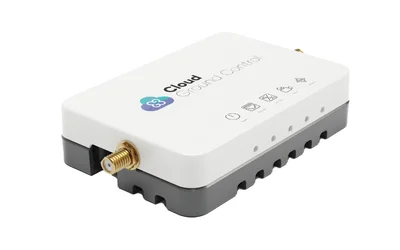
CGConnect, its cellular micro-modem that uses 4G/5G networks to link any drone or robotic vehicle to Cloud Ground Control’s cloud-based drone fleet management platform, enabling live-streaming, command and control from a web browser.
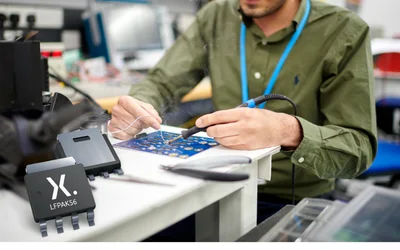
More than 20 years ago, a team set out to solve a problem: How do we reduce power loss and help reduce MOSFET size at the same time? LFPAK was the answer - and it changed everything.
As robotics shifts from innovation showcases to real-world deployment, motion systems play a vital role in this next stage of robotics.
Specialized design and manufacturing of robotic systems for chemical, nuclear, and high-risk industrial applications.
The Companies and Concepts Redefining Tomorrow's Industries
Safe autonomy in various vehicle systems and in uncertain conditions.
Someday autonomous vehicles and human-driven vehicles will share the road. How to manage the rise of AVs is the topic of a Carnegie Mellon policy brief.

3 minutes read
Sometimes manufacturers would like to install heating in objects that are difficult to heat. The armrest of your car. Your sporty winter coat. Bags for food delivery. Sleeping bags. etc This has been difficult to achieve until now. Read more about printed heater technology

2 minutes read
In the Providentia++ project, researchers at the Technical University of Munich (TUM) have worked with industry partners to develop a technology to complement the vehicle perspective based on onboard sensor input with a bird’s-eye view of traffic conditions. This improves road safety – also for autonomous driving.
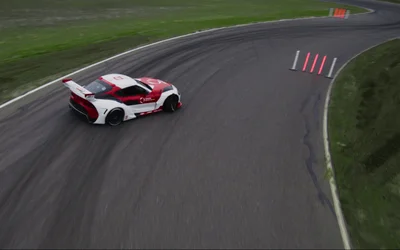
In this episode, we talk about how Toyota and Stanford are collaborating to utilize AI for drifting controls and the efforts behind a team at TUM which has resulted in an autonomous race car performing at the capacity of an amateur F1 driver.

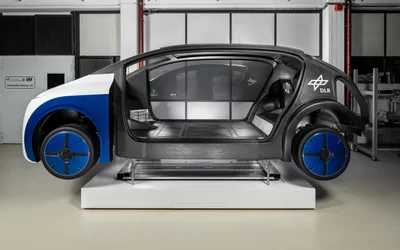
In this episode, we talk about a TUM spin-off - DeepDrive that wants to address the difficulties in making new EVs from scratch by developing a “plug-and-play” platform along with DLR proposal for a hydrogen plug-in hybrid interurban vehicle to meet the carbon reduction targets of the European Union
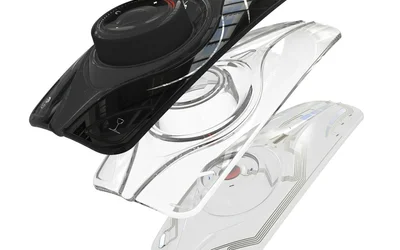
Molecular particle free inks can offer extreme formability and stretchability, allowing the design and production of 3D shaped and/or in-mold electronics parts with extreme curvatures and complex shapes.
This video shows how the ML-trained MEMS-IMU performs in the INS mechanization compared to the same MEMS IMU but without using the ML
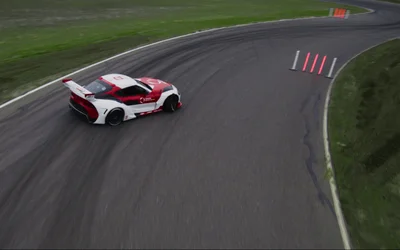
Advances in software allow a customized car to perform controlled, autonomous drifting to enhance active safety and to give drivers the skills of professional racers.
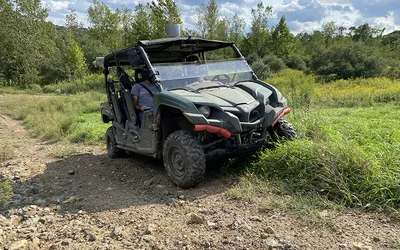
In this episode, we talk about how researchers plan to orchestrate the movement of a fleet of cars in real-time to avoid or minimize waiting periods at stoplights and how off-road navigation is being tackled in a way that’ll make your car understand the dynamics of its surroundings like a human.
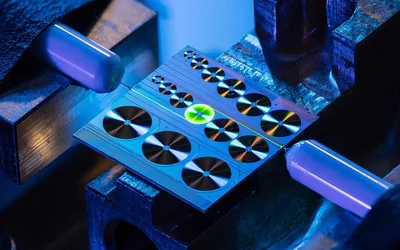
EPFL scientists have built a compact waveguide amplifier by successfully incorporating rare-earth ions into integrated photonic circuits. The device produces record output power compared to commercial fiber amplifiers, a first in the development of integrated photonics over the last decades.

3 minutes read
In the not-too-distant future, autonomous, networked vehicles will be able to handle most tasks independently. However, they are not yet capable of dealing with all traffic situations. If they encounter a problem that they do not know how to solve, safety comes first.

4 minutes read
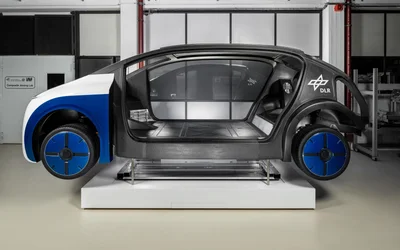
With the Interurban Vehicle (IUV), the German Aerospace Center (Deutsches Zentrum für Luft- und Raumfahrt; DLR) has developed a ground-breaking concept for mid- and upper range vehicles.
5 minutes read
Using satellite imagery or road schematic maps as "side information," the ViKiNG robot can plan its own miles-long route to a goal — measurably outperforming its strongest competitors, even when its side information is inaccurate or outdated.
This research predicts the adaptive cruise control set speed profile in the user-defined range for the future time steps, optimizing the engine operating point (EOP) in real-time. The prediction of EOP was made by a deep learning model using all the parameters affecting the engine performance.
A novel mathematical approach for planning the autonomous vehicle motion in a constrained space