Featured
Navigating AI's Future in a Riveting Podcast Discussion

Navigating AI's Future in a Riveting Podcast Discussion
Navigating AI's Future in a Riveting Podcast Discussion
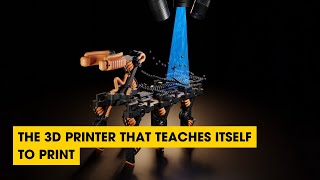
In this episode, we discuss an additive manufacturing breakthrough from MIT that enables inkjet printers to print soft materials that were deemed unsuitable before, print more accurately, and print ~660 times faster than comparable printer technologies!
One of the biggest transformations happening in wireless IoT connectivity right now is the introduction of artificial intelligence (AI) and machine learning (ML).
Artificial intelligence (AI) is a wide-ranging tool that enables people to rethink how we integrate information, analyze data, and use the resulting insights to improve decision making
15 minutes read.
20 minutes read.
13 minutes read.
17 minutes read.
25 minutes read.
11 minutes read.


Entertainment
The Next Byte Podcast is hosted by two young engineers - Daniel and Farbod - who select the most interesting tech/engineering cont...
165 Posts

High Tech
High Tech Campus Eindhoven is Europe's smartest square km and has the ultim...
49 Posts

University for science and technology
Freedom and individual responsibility, entrepreneurial spirit and open-min...
43 Posts
From leading experts at the CDFAM Computational Design Symposium
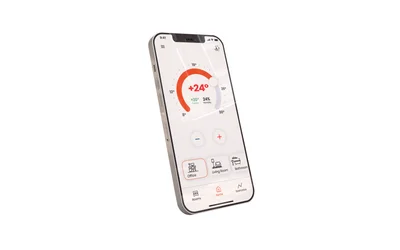
eCozy 2.0 system addresses the limitations of traditional thermostats for water heating radiators, delivering efficiency, convenience and sustainability benefits to households
Protect the cloud by securing the edge with hardware-based security, TPMs, HSMs, and resilient edge computing architectures.
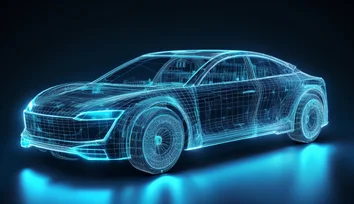
Explore the rise of intelligent EV hardware and how real-time processing, ML acceleration, and hardware virtualization are enabling safer, smarter, software-defined electric vehicles.
EPFL researchers are developing AI models that could one day enable vision prosthetics able to restore meaningful, object-level sight for the blind.
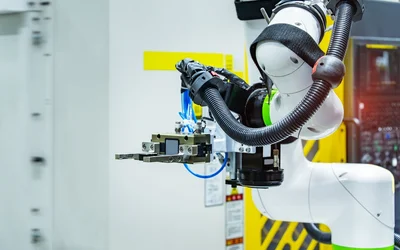
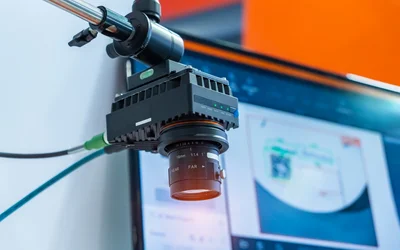
A deep-dive listicle guiding controls, automation, and quality engineers toward the best vision systems for manufacturing applications in 2026.
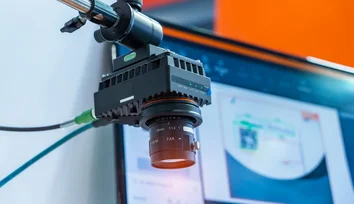
Understanding industrial vision systems by examining their components, imaging fundamentals, AI integration since 2020, and how to choose the right solution for every application.
The AI-powered tool could inform the design of better sensors and cameras for robots or autonomous vehicles.
Navigating AI's Future in a Riveting Podcast Discussion
In this episode, we discuss an additive manufacturing breakthrough from MIT that enables inkjet printers to print soft materials that were deemed unsuitable before, print more accurately, and print ~660 times faster than comparable printer technologies!

11 minutes read
One of the biggest transformations happening in wireless IoT connectivity right now is the introduction of artificial intelligence (AI) and machine learning (ML).

5 minutes read
Volatile Organic Compounds (VOC) sensors are key in detecting potentially dangerous air quality.
In part II of the Mouser podcast episode, Dr. Smit Patel continued discussing the evolving landscape of digital therapeutics and its impact on healthcare highlighting several key insights into how digital solutions are reshaping medical treatments and the regulatory environment surrounding them.
Exploring the Fusion of Neuromorphic Computing and Electronic Noses for Advanced Sensory Solutions
In the latest BrainChip podcast episode, host Nandan Nayampally sat down with Zach Shelby, CEO of Edge Impulse, to talk about AI at the Edge.
Digital therapeutics are transforming the way we approach medicine and patient care.
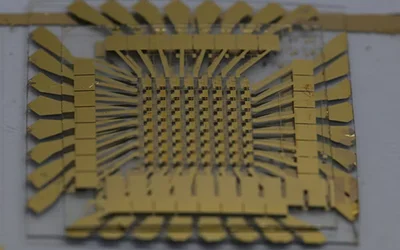
Sang-Hoon Bae and collaborators have demonstrated integrated processing hardware they say could revolutionize AI computing

2 minutes read
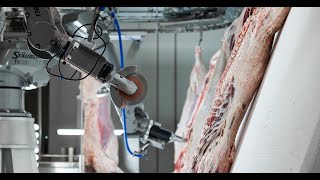
This one-of-a-kind technology developed by Intelligent Robotics uses AI and Photoneo MotionCam-3D cameras to let robots fully automate the process of beef carcass scribing.

Researchers have trained an artificial intelligence to design the structure of so-called metamaterials with desired mechanical properties for a wide range of applications.

4 minutes read
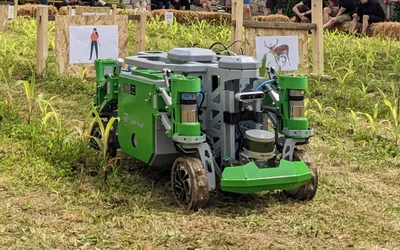
In response to the OKDo Engineering Challenge provocation, a team from the University of Maribor submitted a proposal to use the ROCK 5B in their raspberry detection and localization robot.
Explore how GNSS technology, powered by the u-blox M10 platform, offers pet safety with high-precision, low-energy tracking solutions for our furry friends.
Discover more about the crucial topic of indoor air quality.
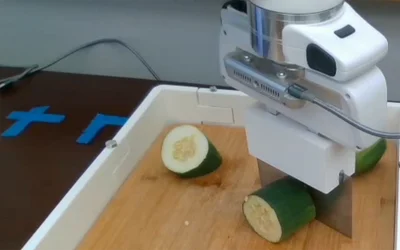
Researchers at CMU combined two vision foundational models—models trained on large visual data sets—to help a robot arm recognize the shape and the type of fruit and vegetable slices.

3 minutes read