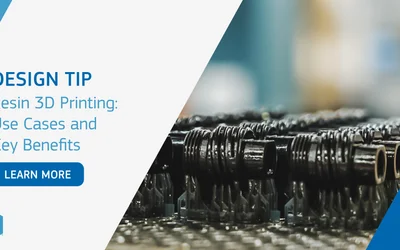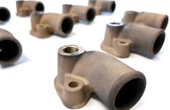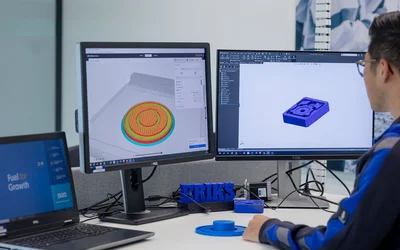
Nexa3D’s patented Lubricant Sublayer Photo-curing (LSPc) technology can print at up to 24 vertical centimeters per hour. That means more prototypes in less time.
To enhance the applicability of thermoplastics across various industries, reinforcing additives are added to improve properties such as mechanical strength, UV resistance, and conductivity, contributing to the material's overall performance.
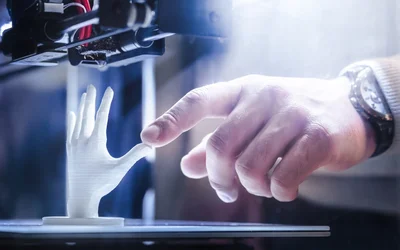
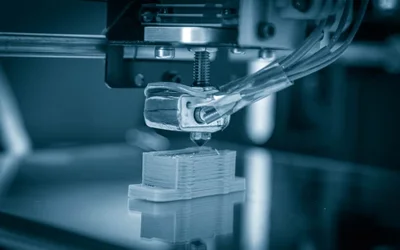
What is 3D printing? This article goes over the basics of 3D printing, otherwise known as additive manufacturing, covering its engineering principles and applications.
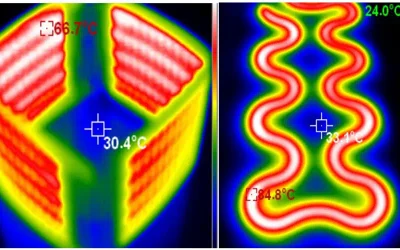
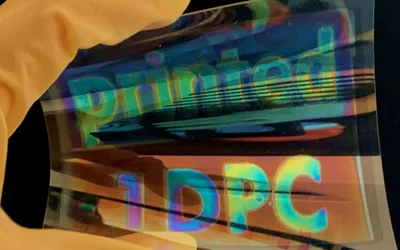
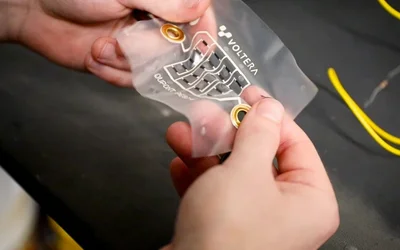
E2IP Technologies manufactures Flexible Heaters using Screen Printing Technology. This is one of the most important segments of printed and additive electronics with applications in cars, homes, and industrial settings.
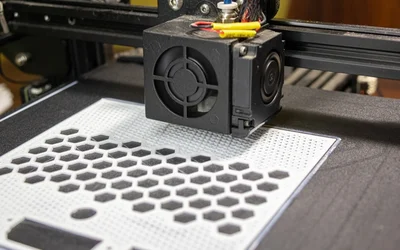
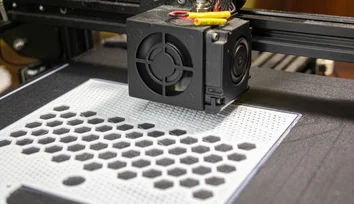
Here’s what to do if you notice clicking noises, under-extrusion, or other print quality issues caused by extruder skipping on the Ender 3 by Creality.
Unwanted lines in 3D prints can show up for many reasons and take different forms. Here we look at the most common types of lines in 3D prints and how to eliminate them.
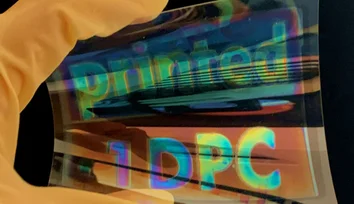
KIT researchers are developing a process with which, for the first time, mirrors with a reflection of more than 99 percent can be printed in variable sizes
A deep dive into the physics, properties, and practical applications of 3D printing filaments, from everyday polylactic acid to performance composites.
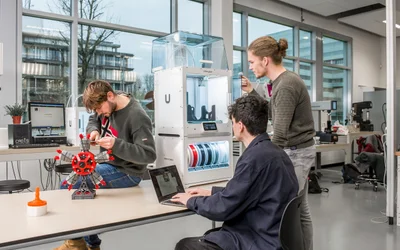
Using a fleet of printers including an UltiMaker S3 and a MakerBot Method X, the team at Ocean Alliance was able to design, prototype, and build a sophisticated drone-based tagging system from the ground up.
This guide explores how to leverage infill to balance structural integrity with efficiency, ensuring your 3D prints meet specific performance needs while minimizing waste and production time.
Nexa3D’s patented Lubricant Sublayer Photo-curing (LSPc) technology can print at up to 24 vertical centimeters per hour. That means more prototypes in less time.
To enhance the applicability of thermoplastics across various industries, reinforcing additives are added to improve properties such as mechanical strength, UV resistance, and conductivity, contributing to the material's overall performance.
At Eschbal, a Swiss manufacturer of window systems, prototypes, small series and production tools are additively manufactured. To this end, the technical department around Michael Ebnöther successfully uses a Sintratec S2.
This chapter excerpt discusses thermoplastic processing in engineering, highlighting challenges like precise parameter control and moisture sensitivity while emphasizing methods like injection molding, extrusion, and additive manufacturing for shaping thermoplastics to meet diverse needs.
FDM vs SLA is one of the most common questions asked by desktop 3D printer buyers. The two technologies have their respective strengths and weaknesses.
This article sums up the different ways of manufacturing corrosion resistant metal parts, with suitable metal materials, related technological processes and post-processing options.