Featured
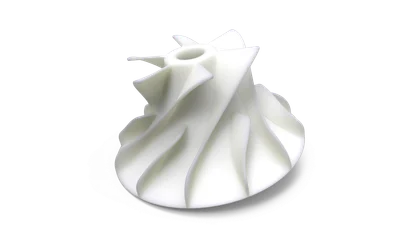
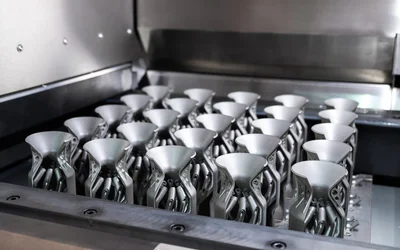
Selective Laser Sintering, your masterclass in product design and development.
This Report shows how tools like artificial intelligence, digital twins, and on-demand manufacturing are no longer emerging concepts, but are already delivering measurable impact across the product lifecycle.
Selective Laser Sintering, your masterclass in product design and development.
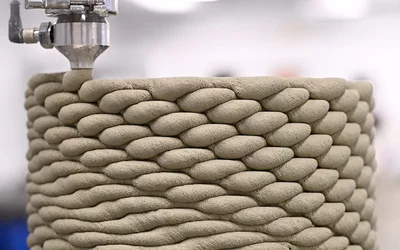
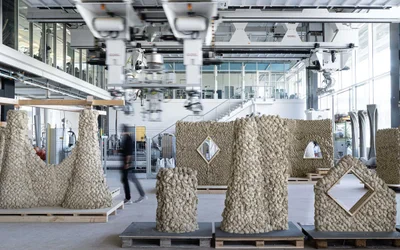
Taking inspiration from nature, researchers from Princeton Engineering have improved crack resistance in concrete components by coupling architected designs with additive manufacturing processes and industrial robots that can precisely control materials deposition.
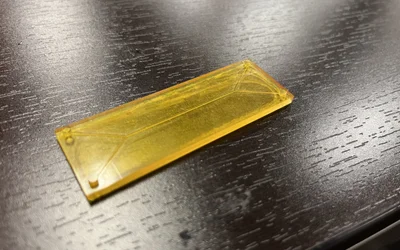
Soft lithography creates three-dimensional patterns and structures at the microscale and nanoscale levels. Unlike photolithography, a fabrication technique used by the semiconductor industry, soft lithography produces microfluidic devices, microarrays, and microelectromechanical systems (MEMS).
An engineer’s guide to understanding the state of the art in metal 3D Printing
15 minutes read.
22 minutes read.
11 minutes read.
18 minutes read.
12 minutes read.
16 minutes read.


Entertainment
The Next Byte Podcast is hosted by two young engineers - Daniel and Farbod - who select the most interesting tech/engineering cont...
165 Posts
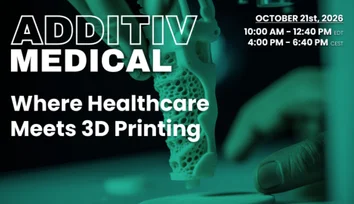
ADDITIV Medical 2026 will bring together more than 500 medical professionals
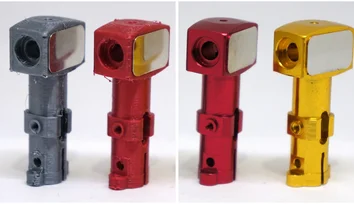
Choosing between 3D printing and injection molding is one of the key decisions in product development—especially in case of prototyping.
The choice between 3D printing and CNC machining is the most common decision regarding manufacturing methods that must be made before placing the first order for prototypes. The correct answer depends on tolerance requirements, material specifications, component geometry, and schedule.
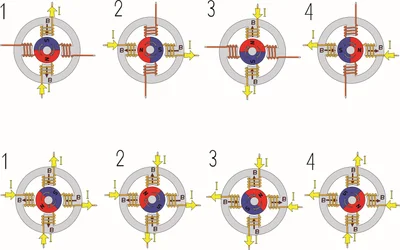
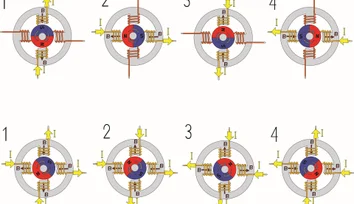
How microstepping works in stepper motors, the incremental torque cost of each resolution, and why finer microsteps do not improve positioning accuracy.
Discover how iAM Marketplace simplifies industrial additive manufacturing by unifying materials, validation services, and multi-brand technologies into one open ecosystem for efficient AM sourcing.
This article discusses what attendees can expect from TCT Asia 2026, including its conference format, focus areas, and the experts contributing to industry-specific discussions.
This article discusses the exhibitors, products, and industrial trends defining additive manufacturing across the Asia-Pacific region at TCT Asia 2026.
This article discusses how the Asia-Pacific region is advancing additive manufacturing and the role of TCT Asia as the leading 3D printing and additive manufacturing event in the Asia-Pacific.
Selective Laser Sintering, your masterclass in product design and development.

4 minutes read
Taking inspiration from nature, researchers from Princeton Engineering have improved crack resistance in concrete components by coupling architected designs with additive manufacturing processes and industrial robots that can precisely control materials deposition.

3 minutes read
Soft lithography creates three-dimensional patterns and structures at the microscale and nanoscale levels. Unlike photolithography, a fabrication technique used by the semiconductor industry, soft lithography produces microfluidic devices, microarrays, and microelectromechanical systems (MEMS).

3 minutes read
Engineers, procurement managers, and other manufacturing professionals can streamline procurement and enhance productivity through FACTUREE's vision to simplify sourcing, reduce complexity, and save valuable time and resources by providing a single point of contact.
To help customers get even more uptime, develop parts faster or create emergency spare parts, Krones turned to 3D printing. With the use of UltiMaker 3D printers, prototypes were able to be produced in a day, or even in hours in some cases.

5 minutes read
ETH Zurich researchers have developed a fast, robot-assisted printing process for earth materials that does not require cement.

How DFM guidelines save money, reduce lead times, and deliver better products.
4 minutes read
Inkjet printing innovator Quantica has developed a printhead that can print previously un-jettable materials. The technology has implications for the printing of adhesives, coatings, and functional materials.
Soft polymers with the combined properties of electrolytes and traditional polymers offer some unique and desirable properties that can be drastically changed on demand.

5 minutes read
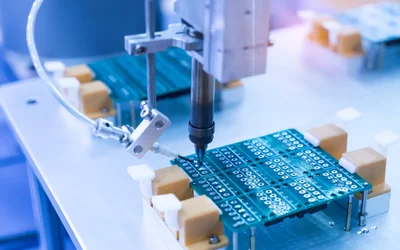
Exploring the key distinctions between 3D printing and PCB printing, from materials and precision to applications and costs

4 minutes read
3D printing hasn’t been viable up to now as a technology for mass production. It’s still in the early stages of development and different processes are still being formulated.
In the high-octane world of Formula 1, where speed, weight reduction, and rapid development cycles are crucial, it's no surprise that 3D printing has become an indispensable ally.
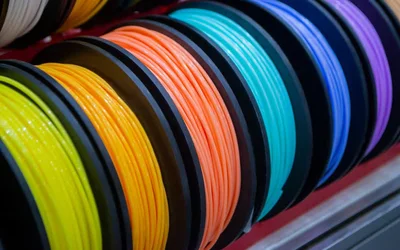
The ASA glass transition temperature is around 100°C. This makes it slightly easier to print than ABS, while it is also better for outdoor applications due to its good UV resistance.
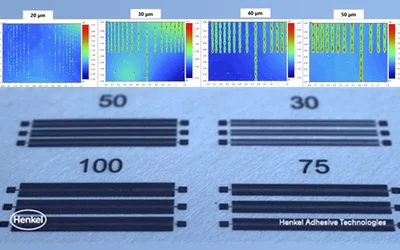
Henkel Adhesive Technologies holds leading market positions worldwide in the industrial and consumer business. As a global leader in the adhesives, sealants, and functional coatings markets, Henkel has developed a large material portfolio of LOCTITE® conductive inks ...

7 minutes read
Being first to finish is always top of the agenda, especially when getting your product to market. Those extra moments with less competition could make or break a brand and/or its product.