





Be the first to know.
Get our automation  weekly email digest.

Tagged with

automation

ORGANIZATIONS.

SHAPING THE INDUSTRY.

Rowse

Electrical, pneumatics & automation specialist

We formed Rowse in 2004, and have enjoyed many years of rewarding engagement with our customers. Our aim is always to supply quali...

67 Posts

Photoneo

Industrial Automation

Photoneo develops industrial 3D vision, robotic intelligence software, and ...

54 Posts

READY Robotics

Robotics & Automation

READY Robotics is a robotics software company that vastly simplifies robot ...

24 Posts

Avestec Technologies

Automation Machinery Manufacturing

We are a company in flying robotics, specializing in Non-destructive inspec...

23 Posts

Adapta Robotics

Robotics, R&D

Automate Advance Adapt. Enhancing human potential through robotic automatio...

12 Posts

View more

Latest Posts

Mobile robots are becoming increasingly common in manufacturing facilities, as they replace human beings in repetitive transfer tasks. Most of them can be found in warehouses, but they’re also finding a place in assembly and manufacturing plants. This is mainly due to continuing developments in sensor technology, and computer intelligence. Their safety and flexibility have also improved.

What You Need To Know About Mobile Robots

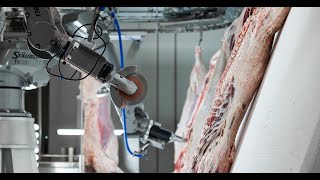
Robomation Robot Technologies Inc. developed a solution for automated polishing / sandblasting of objects, using Photoneo 3D camera MotionCam-3D attached to the robotic arm. MotionCam-3D has been chosen for this application because it provides a number of unique benefits, including the ability to scan the object's surface in motion with utmost precision and efficiency.

Automated object polishing with MotionCam-3D

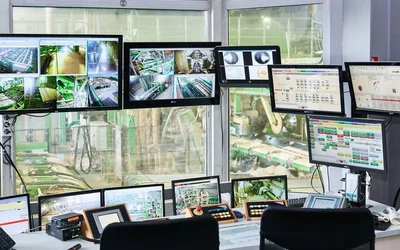
Distributed Control System(DCS) is vital in industrial automation due to its ability to centralize control, monitor processes in real-time, and ensure efficient and safe operations. It enhances process control, improves efficiency, and safeguards operational reliability for maximum productivity

What is Distributed Control System (DCS)?

The Modbus TCP/IP protocol was introduced by Modicon (now Schneider Electric) in 1999. Developed as an extension of the Modbus serial protocol to enable communication over TCP/IP networks, its purpose was to leverage the widespread adoption of Ethernet in industrial environments. The robustness, simplicity, and wide compatibility have made Modbus TCP/IP the go-to choice for countless industrial applications in the current scenario.

Understanding Modbus TCP-IP: An In depth Exploration

Medical device testing & certification require methods defined by reliability and precision, critical characteristics while validating that medical devices safely & accurately perform while being used.

Robot Automated Medical Device Testing