Featured
Brian de Bart, Team Lead Automotive System Innovation at NXP explains about chips and AI in automotive industry as part of a series from the founding partners of the AI Innovation Center at High Tech Campus Eindhoven.
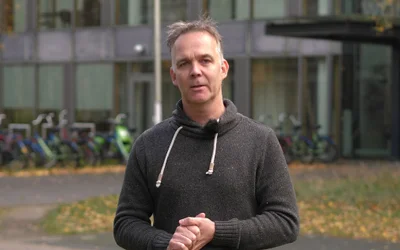
Brian de Bart, Team Lead Automotive System Innovation at NXP explains about chips and AI in automotive industry as part of a series from the founding partners of the AI Innovation Center at High Tech Campus Eindhoven.
Brian de Bart, Team Lead Automotive System Innovation at NXP explains about chips and AI in automotive industry as part of a series from the founding partners of the AI Innovation Center at High Tech Campus Eindhoven.
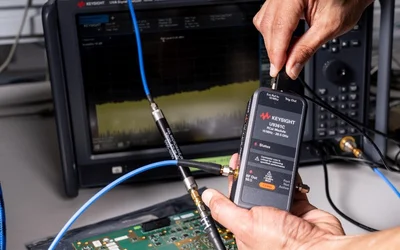
In our last blog, we explored traditional vector network analyzer architecture. Now, let’s look at how network analyzers based on direct digital synthesis (DDS) provide an extra performance boost for an edge in the latest 5G component test.
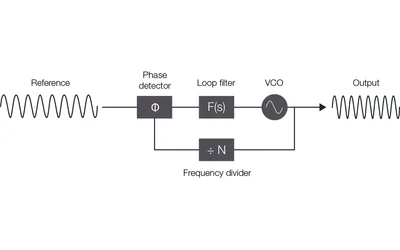
In this two-part blog we’ll look at how network analyzers generate signals. The phase locked loop is the bread and butter of analog signal generation, and understanding how phase locked loops work is key to understanding network analyzer block diagrams.
How a mesh network works: node roles, routing vs managed flooding, the multi-hop throughput cost, and Wi-Fi mesh, Thread, Zigbee and LoRa compared.
15 minutes read.
18 minutes read.
19 minutes read.
18 minutes read.
17 minutes read.
23 minutes read.
Semiconductors
Nordic Semiconductor is a fabless semiconductor company specializing in wireless technology that powers the IoT.
181 Posts

High Tech
High Tech Campus Eindhoven is Europe's smartest square km and has the ultim...
49 Posts

University for science and technology
Freedom and individual responsibility, entrepreneurial spirit and open-min...
43 Posts

Higher Education
Work together. Create smart machines. Serve society. University of Michiga...
40 Posts
A JFET is a normally-on, voltage-controlled semiconductor device that regulates current through a conductive channel by varying its depletion region using an electric field.
A common-source MOSFET amplifier is a voltage-amplifier circuit with input at the gate, output at the drain, and source as the common reference. It provides voltage gain with an approximately 180 degree phase shift between input and output.
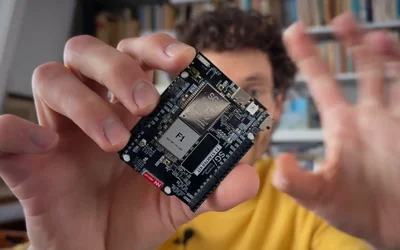
The F1 Starter Kit, built around the F1 Smart Module which supports cellular, LoRa, BLE and WiFi
This guide to robotics programming covers offline, lead-through, and teach pendant methods, key vendor languages, C++ alongside Python, ROS 2 integration, and safety limit implementation.
ROS is not an operating system. It is the open-source middleware and toolset that much of the robotics industry builds on, and this guide explains what is ROS, how it works, what changed in ROS 2, and when you should use it.
Mario Mauerer, maxon's Global Business Development Manager, Robotics, discusses what it takes for robotic deployments to be successful in complex real-world environments.
Join Prof. Fei Chen as he explores advanced bimanual manipulation and teleoperation techniques shaping the future of intelligent human-like robots in this expert-led robotics session.
Brian de Bart, Team Lead Automotive System Innovation at NXP explains about chips and AI in automotive industry as part of a series from the founding partners of the AI Innovation Center at High Tech Campus Eindhoven.

5 minutes read
In our last blog, we explored traditional vector network analyzer architecture. Now, let’s look at how network analyzers based on direct digital synthesis (DDS) provide an extra performance boost for an edge in the latest 5G component test.

3 minutes read
In this two-part blog we’ll look at how network analyzers generate signals. The phase locked loop is the bread and butter of analog signal generation, and understanding how phase locked loops work is key to understanding network analyzer block diagrams.
3 minutes read
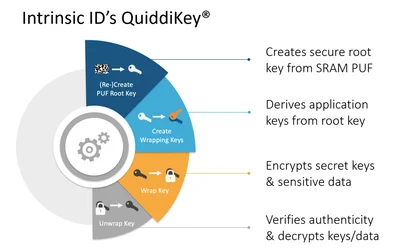
To secure the billions of devices that are being connected to the Internet of Things, every device needs to have the capability to protect sensitive data and secure communications.

3 minutes read
The newest Apple's HomeKit Accessory Protocol specification opens strategic and marketing opportunities for Nordic customers. Nordic SW and HW support the extended HomeKit with both Thread and Bluetooth LE options.

3 minutes read
Arnaud Hubaux, Senior Technical Program Manager explains about optimization of ASML machines as part of a series from the founding partners of the AI Innovation Center at High Tech Campus Eindhoven.
5 minutes read
Analyzing the frequency spectrum and accurately determining a signal’s value and characteristics, such as magnitude and phase, are of critical importance in modern technology using wireless techniques.
3 minutes read
Promoted by the 150 companies forming the Zigbee Alliance, Project CHIP could play a pivotal role in invigorating the relatively young smart home sector.
4 minutes read
Interesting discussion with Hod Lipson, the head of Creative Machines Lab, Columbia University in New York. In this episode, Can robots be Self-aware? Can robots design other robots and self-repair? Why should we evolve robots to do tasks that animals do so well?

You can now build tiny machine learning (TinyML) models that interpret sensor data in realtime, from detecting lions roaring to tracking sheep workouts.

How “Acronym Soup” Serves Up Big Security Advantages.
3 minutes read
If you have worked with a vector network analyzer (VNA), you are probably used to calibrating your measurement setup to account for losses. However, when you’re working with a signal or spectrum analyzer, do you take the time to apply similar corrections? Chances are you probably don’t.
3 minutes read
Covid-19 has put a rocket under global IoT adoption as governments, businesses, and organizations have turned to technology to remain viable.
3 minutes read
What may have started as a technology to have fun with, may very well change the way we tackle data protection and identity frauds.
Sebastiaan Laurijsse, Chief Transformation Strategist at Splunk and initiator of the AI Leadership Forum explains about the future of data as part of a series from the founding partners of the AI Innovation Center at High Tech Campus Eindhoven.
7 minutes read