Featured
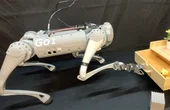
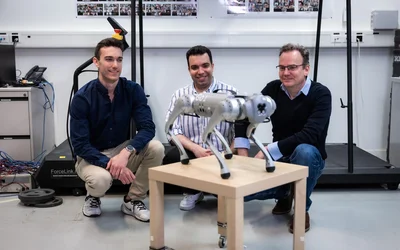
New locomotion and manipulation technology from Ding Zhao’s lab will enable four-legged robots to lend a hand in the not-so-distant future.
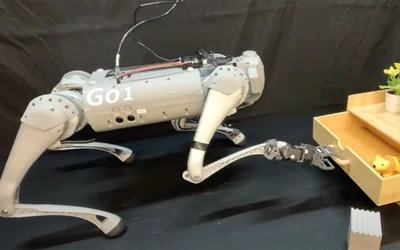
New locomotion and manipulation technology from Ding Zhao’s lab will enable four-legged robots to lend a hand in the not-so-distant future.
New locomotion and manipulation technology from Ding Zhao’s lab will enable four-legged robots to lend a hand in the not-so-distant future.
A new algorithm learns to squish, bend, or stretch a robot’s entire body to accomplish diverse tasks like avoiding obstacles or retrieving items.
Wireless connectivity makes dumb products intelligent. Smart devices can transmit information about their surroundings and conditions while receiving instructions and updates. That in turn enables functionality that’s impossible for products operating in isolation.
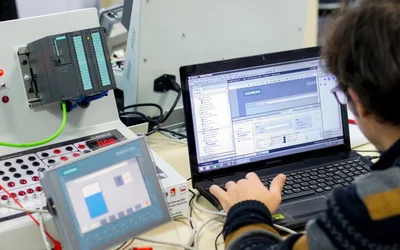
This article is a practical PLC programming guide covering the five IEC 61131-3 languages, the scan cycle that governs how your code actually runs, ladder and structured text examples, and the mistakes that cost engineers the most commissioning time.
23 minutes read.
18 minutes read.
18 minutes read.
15 minutes read.
13 minutes read.
17 minutes read.

Semiconductors
Nordic Semiconductor is a fabless semiconductor company specializing in wireless technology that powers the IoT.
181 Posts

High Tech
High Tech Campus Eindhoven is Europe's smartest square km and has the ultim...
49 Posts

University for science and technology
Freedom and individual responsibility, entrepreneurial spirit and open-min...
43 Posts

Higher Education
Work together. Create smart machines. Serve society. University of Michiga...
40 Posts
embedded world North America is the premier trade show and conference dedicated to the community of innovators and developers in the embedded tech ecosystem.
How Embedded Systems, AI, and Human-Centered Design Are Driving the Future of Robotics
Mario Mauerer, maxon's Global Business Development Manager, Robotics, discusses what it takes for robotic deployments to be successful in complex real-world environments.
Join Prof. Fei Chen as he explores advanced bimanual manipulation and teleoperation techniques shaping the future of intelligent human-like robots in this expert-led robotics session.
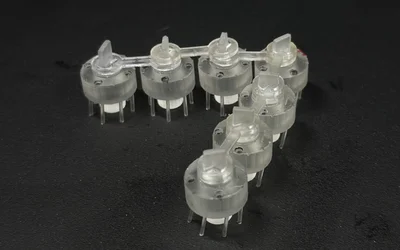
'Link-bots' can move, explore, cooperate without sensing or computation
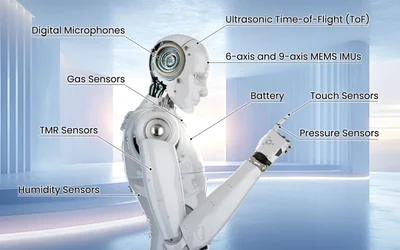
This article is part 4 of a 4-part article series on TDK's advanced robotics.
New locomotion and manipulation technology from Ding Zhao’s lab will enable four-legged robots to lend a hand in the not-so-distant future.

3 minutes read
A new algorithm learns to squish, bend, or stretch a robot’s entire body to accomplish diverse tasks like avoiding obstacles or retrieving items.
Wireless connectivity makes dumb products intelligent. Smart devices can transmit information about their surroundings and conditions while receiving instructions and updates. That in turn enables functionality that’s impossible for products operating in isolation.

5 minutes read
A four-legged robot trained with machine learning by EPFL researchers has learned to avoid falls by spontaneously switching between walking, trotting, and pronking – a milestone for roboticists as well as biologists interested in animal locomotion.

3 minutes read
An R&D Powerhouse

4 minutes read
Explore the transformative power of precision agriculture, highlighting innovations like Particle's M-Series and the future of sustainable farming. Dive into the evolution, technologies, and trends shaping tomorrow's agriculture.
Robot Operating System (ROS) drivers were developed on Analog Devices products so that they can be readily used within a ROS ecosystem. This article will give an overview on how to use and integrate these drivers in their applications, products, and systems.

8 minutes read
In his doctoral research, Daan de Geus worked on advanced image processing methods that allow robots and cars to better recognize what they see around them.

5 minutes read
This podcast episode promises to supercharge your understanding of the next big thing in IoT.
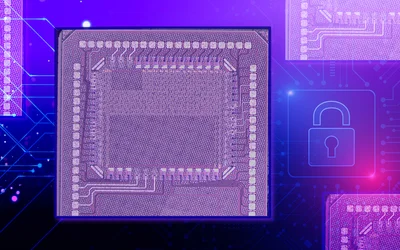
Researchers have developed a security solution for power-hungry AI models that offers protection against two common attacks.
As the world continues to embrace the Internet of Things (IoT), the demand for efficient power management solutions for IoT devices is on the rise.
Wevolver was present at the recent Embedded World event in Nuremberg to launch the 2024 Edge AI report.
In this episode, we discuss research coming out of Columbia University to better connect humans with robots by having them detect, process, and respond to facial expressions!

17 minutes read
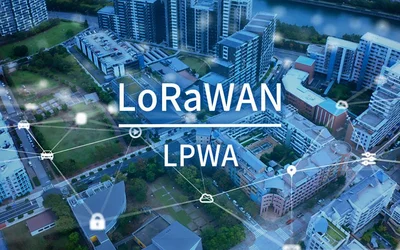
LoRaWAN is a standard within LPWA (Low Power Wide Area) wireless communication that uses the unlicensed band (sub-GHz band) that does not require a radio station license and features wide-area and long-distance communication as well as low speeds and low power consumption.

7 minutes read
Low-cost, wearable sensors could increase access to care for patients with Parkinson’s disease. New machine-learning approaches and a baseline of data from healthy older adults improve the accuracy of the results from such sensors

3 minutes read