Featured
New research uses AI to improve training of sensorimotor skills in human subjects, with potential applications ranging from performing surgery to perfecting tennis serves.
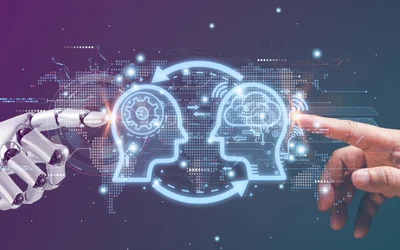
New research uses AI to improve training of sensorimotor skills in human subjects, with potential applications ranging from performing surgery to perfecting tennis serves.
New research uses AI to improve training of sensorimotor skills in human subjects, with potential applications ranging from performing surgery to perfecting tennis serves.
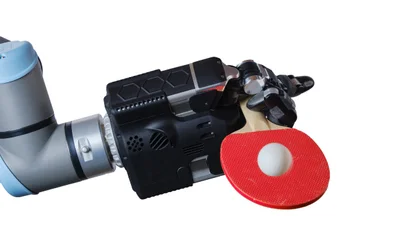
Shadow Robot’s partnership with Google DeepMind exemplifies how collaboration drives innovation in robotics and AI. This article explores how their expertise in dexterous robotic hands, particularly the DEX-EE, is advancing machine learning research.
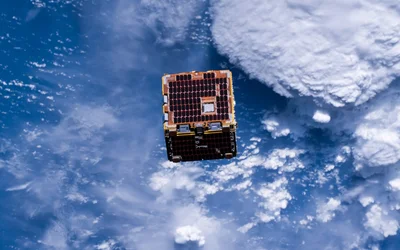
The evolution of new launch systems has made space exploration more accessible than ever. Designers need low-profile connectors that will survive the harsh environments found in orbit. Find out how Harwin is developing connector solutions for the next generation of nanosatellites.
What a programmable automation controller is, how PACs are built and programmed, and how to choose between a PLC and a PAC.
15 minutes read.
13 minutes read.
17 minutes read.
16 minutes read.
14 minutes read.

Semiconductors
Nordic Semiconductor is a fabless semiconductor company specializing in wireless technology that powers the IoT.
181 Posts

High Tech
High Tech Campus Eindhoven is Europe's smartest square km and has the ultim...
49 Posts

University for science and technology
Freedom and individual responsibility, entrepreneurial spirit and open-min...
43 Posts

Higher Education
Work together. Create smart machines. Serve society. University of Michiga...
40 Posts
How Embedded Systems, AI, and Human-Centered Design Are Driving the Future of Robotics
Learn why teams still lose half their development time to test and fix, and what changes when you get real visibility into the target.
From simple sensor control to connected, intelligent devices, embedded systems often outgrow a single MCU. Pairing an MCU with Linux adds power and flexibility, but also introduces communication challenges, dual development workflows, and increasing software complexity.
This article explores how automated CI/CD pipelines replace fragile manual build processes with reproducible, auditable workflows that improve compliance, reduce defects, and accelerate development in regulated embedded systems
Mario Mauerer, maxon's Global Business Development Manager, Robotics, discusses what it takes for robotic deployments to be successful in complex real-world environments.
Join Prof. Fei Chen as he explores advanced bimanual manipulation and teleoperation techniques shaping the future of intelligent human-like robots in this expert-led robotics session.
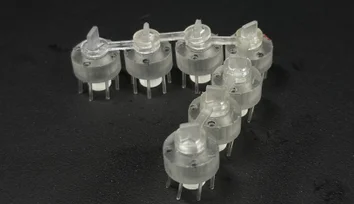
'Link-bots' can move, explore, cooperate without sensing or computation
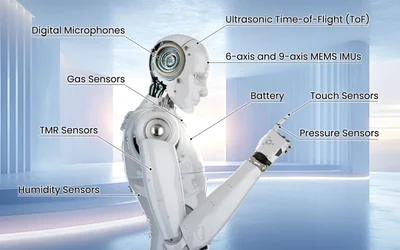
This article is part 4 of a 4-part article series on TDK's advanced robotics.
New research uses AI to improve training of sensorimotor skills in human subjects, with potential applications ranging from performing surgery to perfecting tennis serves.

2 minutes read
Shadow Robot’s partnership with Google DeepMind exemplifies how collaboration drives innovation in robotics and AI. This article explores how their expertise in dexterous robotic hands, particularly the DEX-EE, is advancing machine learning research.
The evolution of new launch systems has made space exploration more accessible than ever. Designers need low-profile connectors that will survive the harsh environments found in orbit. Find out how Harwin is developing connector solutions for the next generation of nanosatellites.
AYDO CEO explains the strategic monetization and DePIN’s advancements in IoT.
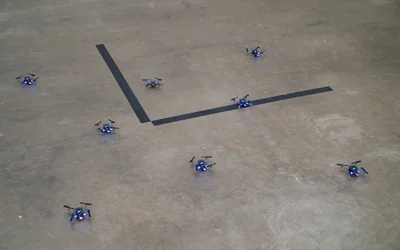
New research could improve the safety of drone shows, warehouse robots, and self-driving cars.
By automatically generating code that leverages two types of data redundancy, the system saves bandwidth, memory, and computation.
The Internet of Things (IoT) is revolutionizing our interaction with the environment; traditional sensing methods often fall short for modern IoT applications, but radar sensors excel by operating effectively under diverse conditions, detecting subtle movements, and providing detailed spatial data.
Building on the success of conventional wearables, smart rings have been enthusiastically embraced by early adopters with a finger on the pulse of cutting-edge yet fashionable health and fitness wireless products.

3 minutes read
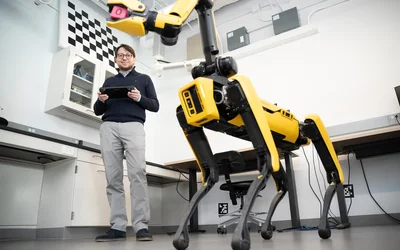
Associate Professor Luca Carlone is working to give robots a more human-like awareness of their environment.
NPUs are integrated units that excel in real-time AI tasks on edge devices like smartphones and IoT systems with low power consumption. TPUs are standalone processors designed for large-scale AI workloads in data centers, delivering exceptional performance in deep learning tasks.
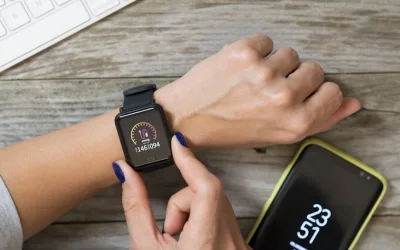
Advanced wearable devices enable the wearer to track their BP around the clock, without having to attend their health professional or grapple with a clunky home BP monitor.
3 minutes read
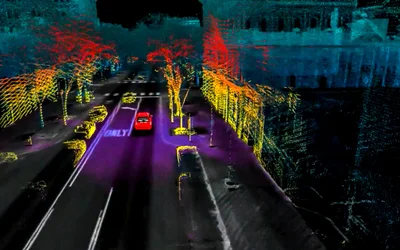
Texas A&M University is creating advanced mapping technologies to further the evolution of autonomous vehicles.
3 minutes read
Learn how agnostic systems like Awentia's No-Data Vision Foundation Model addresses key barriers to AI adoption such as data dependency, cost, and complexity across industries like agriculture, robotics and manufacturing.
This article is for everyone who’s – at least – slightly worried about what will happen to their deployed NB-IoT devices in the US, or abroad. Let’s explore the potential scenarios and actionable mitigation plans to minimize risks.

4 minutes read
EPFL researchers have developed 4M, a next-generation, open-sourced framework for training versatile and scalable multimodal foundation models that go beyond language.

4 minutes read