Featured
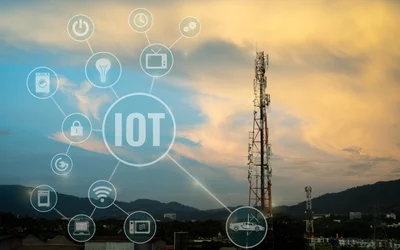
Cellular connectivity is the perfect choice of wireless technology to connect your Internet of Things (IoT) devices,
Cellular connectivity is the perfect choice of wireless technology to connect your Internet of Things (IoT) devices,
Cellular connectivity is the perfect choice of wireless technology to connect your Internet of Things (IoT) devices,
Create sustainable and thriving communities that are well-equipped to face future challenges. Win up to $7,000+ in prizes!
Without the coders, engineers, entrepreneurs, and innovators of tomorrow emerging from the classrooms—and soon—it will become increasingly difficult to advance society and tackle diverse global challenges. As things stand now, a global technology talent shortage threatens to stifle progress across all tech sectors.
Exploring the design, development, connectivity, security, and more aspects of IoT devices
18 minutes read.
21 minutes read.
20 minutes read.
17 minutes read.
25 minutes read.
28 minutes read.

Electronics
Mouser Electronics is a worldwide leading authorized distributor of semiconductors and electronic components.
219 Posts
Semiconductors
Nordic Semiconductor is a fabless semiconductor company specializing in wir...
181 Posts
What a programmable automation controller is, how PACs are built and programmed, and how to choose between a PLC and a PAC.
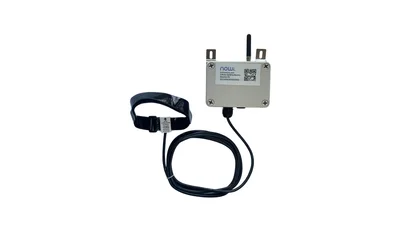
Explore how low-power sensor gateways enable reliable, long-range data collection for remote and distributed industrial IoT assets.
A compact, battery-powered sensing platform that wirelessly brings environmental and equipment-condition data from locations where traditional monitoring is difficult or impossible.
A Cat 1 bis platform that provides engineers with a practical path for long-term Global connectivity.
Real-time water monitoring and leak detection just got streamlined thanks to the nRF9151 – Nordic's low-power cellular IoT solution
A Cat 1 bis platform that provides engineers with a practical path for long-term Global connectivity.
The G+D Single Pane of Glass Delivers Secure, Remote, SGP.32-Driven IoT Management
As AI moves from screens into real environments, reliable and always-on connectivity are becoming a safety and scale requirement.
Cellular connectivity is the perfect choice of wireless technology to connect your Internet of Things (IoT) devices,

5 minutes read
Create sustainable and thriving communities that are well-equipped to face future challenges. Win up to $7,000+ in prizes!
Without the coders, engineers, entrepreneurs, and innovators of tomorrow emerging from the classrooms—and soon—it will become increasingly difficult to advance society and tackle diverse global challenges. As things stand now, a global technology talent shortage threatens to stifle progress across all tech sectors.

4 minutes read
Smart lighting is a key component of smart commercial buildings and the connected home. Based on LEDs—which use at least 75 percent less energy, and last up to 25 times longer than traditional incandescent lighting, according to the U.S. Department of Energy (DoE)—combined with Bluetooth LE SoCs like Nordic’s nRF52, nRF53, and the forthcoming nRF54 Series, smart lighting brings illumination into the modern age.
4 minutes read
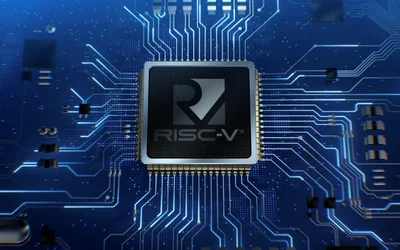
RISC-V Evolution: From Early Computing to Tomorrow's Tech Promise

7 minutes read
As the IoT market is slowly maturing, IoT systems are becoming increasingly complex and versatile. As a result, embedded devices are composed of distinct firmware components made by different parties working together, often running on multiple MCUs simultaneously.

5 minutes read
The development of IoT agriculture has seen a rapid increase in recent years as advancements in technology have enabled farmers to monitor and control their equipment remotely. This allows them to take care of their crops from anywhere in the world, making it possible for them to monitor the health and growth rates of their plants in real time.

2 minutes read
Inside the home, Virtual Reality (VR) and Augmented Reality (AR) are moving in on traditional electronic gaming territory. Headsets and sound systems help players feel as if they are actually inside their favorite game. Wireless tech helps make the experience even more immersive by connecting headset and handset(s) for low-latency game control.
4 minutes read
I've argued before that the IoT is more than hype. In fact, there is no question today that the IoT has gone mainstream.
5 minutes read
Technology has a tendency to move from hardware to software, as physical components give way to virtual features. That trend certainly holds in IoT connectivity.
4 minutes read
AI chips, designed for machine learning tasks, are spurring new chip architectures for efficient deep learning computation.

4 minutes read
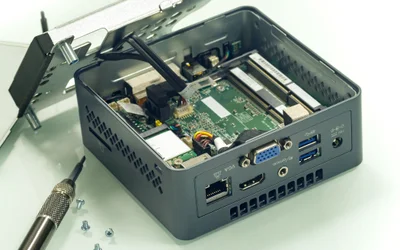
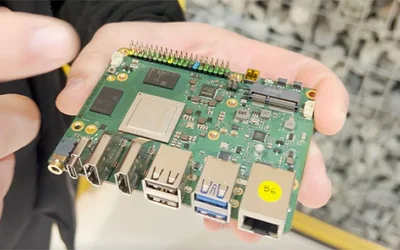
An examination of troubleshooting techniques for single board computer issues.
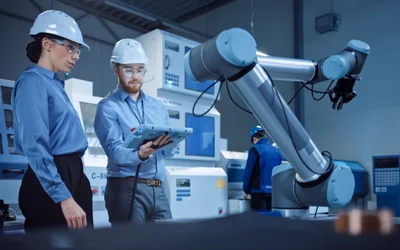
The integration of AI, IoT, and robotics allows robots to access and exchange data with other devices, enabling them to make informed decisions.
An investigation into innovative applications of SBCs
IoT Connectivity: How to Choose the Right Connectivity Management Platform for My Organization?
3 minutes read