Featured
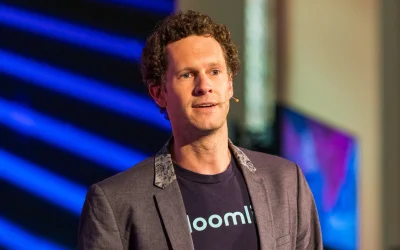
Tom van Nunen defended his thesis at the department of Electrical Engineering on February 8th, 2023.
Tom van Nunen defended his thesis at the department of Electrical Engineering on February 8th, 2023.
Tom van Nunen defended his thesis at the department of Electrical Engineering on February 8th, 2023.
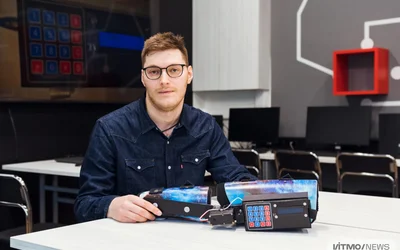
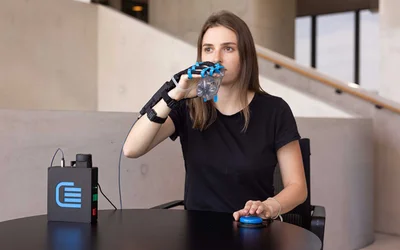
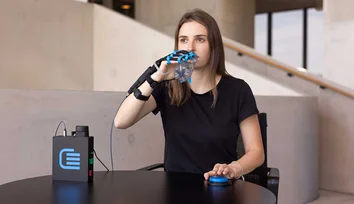
Artem Meinov, a PhD student at the Faculty of Software Engineering and Computer Systems, has developed a prosthetic training aid for people with motor disorders. The new device helps to strengthen elbow flexor muscles and, in contrast to its competitors, it’s portable and can be personalized.
If you talk to the co-founders of Campus startup Autoscriber, they will tell you the biggest revolution in healthcare will be data-driven. “The moment you talk to your doctor and say, ‘I have a headache,’ artificial intelligence will start to mine your whole medical history. It will compare it to other people with your genetic background to calculate what is the most likely diagnosis,” said Koen Bonenkamp, one of two Autoscriber co-founders. This is the company’s vision behind its software.
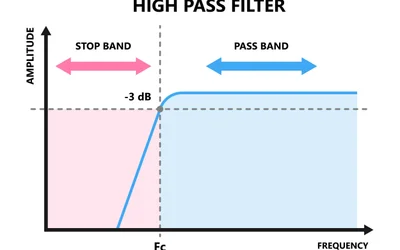
Active high-pass filters remove unwanted low-frequency signals while preserving useful higher frequencies. This article covers first- and second-order filter design, Sallen-Key and multiple-feedback topologies, and practical applications in audio electronics, instrumentation, and signal processing.
16 minutes read.
15 minutes read.
19 minutes read.
12 minutes read.
14 minutes read.


Entertainment
The Next Byte Podcast is hosted by two young engineers - Daniel and Farbod - who select the most interesting tech/engineering cont...
165 Posts

High Tech
High Tech Campus Eindhoven is Europe's smartest square km and has the ultim...
49 Posts

University for science and technology
Freedom and individual responsibility, entrepreneurial spirit and open-min...
43 Posts
University
At the Harvard John A. Paulson School of Engineering and Applied Sciences (...
42 Posts
with Xsens motion capture
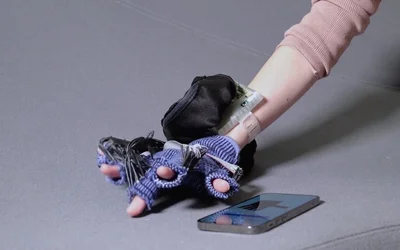
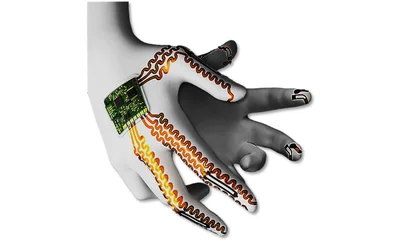
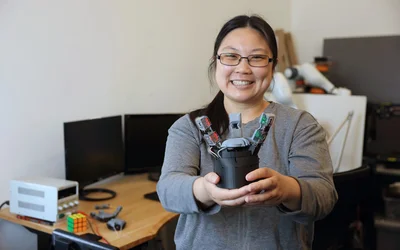
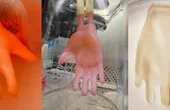
A new glove with more than three dozen actuators across all five fingers and the palm, developed by Cornell researchers, aims to reduce swelling for people suffering from edema.
AI-powered artificial muscles made from pliable materials are reshaping recovery, from stroke rehabilitation to prosthetic design. These machines help people regain motion, strength, and confidence.
Researchers at ETH Zurich have developed an innovative hand exoskeleton that helps persons after stroke re-learn how to grasp. Its accordion-like structure makes it light, robust and easy to integrate into everyday life.
AI-powered artificial muscles made from pliable materials are reshaping recovery, from stroke rehabilitation to prosthetic design. These machines help people regain motion, strength, and confidence.
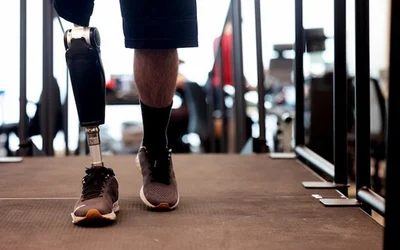
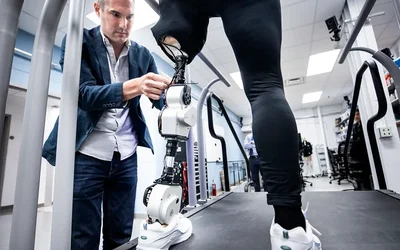
Paired with custom control software, Össur's powered knee prosthesis helped study participants sit, stand and walk more easily.
MIT CSAIL researchers enhance robotic precision with sophisticated tactile sensors in the palm and agile fingers, setting the stage for improvements in human-robot interaction and prosthetic technology.
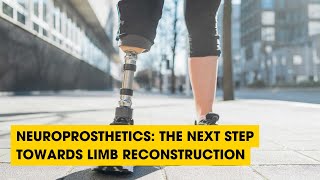
In this episode, we discuss a breakthrough from ETH Zurich to mimic natural foot signals to the brain using state of the art neuroprosthetics.
Tom van Nunen defended his thesis at the department of Electrical Engineering on February 8th, 2023.
Artem Meinov, a PhD student at the Faculty of Software Engineering and Computer Systems, has developed a prosthetic training aid for people with motor disorders. The new device helps to strengthen elbow flexor muscles and, in contrast to its competitors, it’s portable and can be personalized.

4 minutes read
If you talk to the co-founders of Campus startup Autoscriber, they will tell you the biggest revolution in healthcare will be data-driven. “The moment you talk to your doctor and say, ‘I have a headache,’ artificial intelligence will start to mine your whole medical history. It will compare it to other people with your genetic background to calculate what is the most likely diagnosis,” said Koen Bonenkamp, one of two Autoscriber co-founders. This is the company’s vision behind its software.

4 minutes read
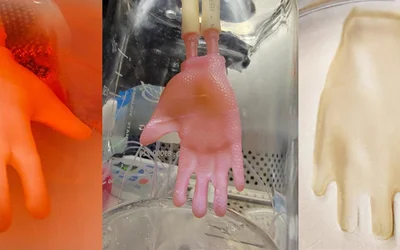
Columbia University devising a way to grow engineered skin in complex, three-dimensional shapes, making it possible to construct, for example, a seamless “glove” of skin cells that can be easily slipped onto a severely burned hand.
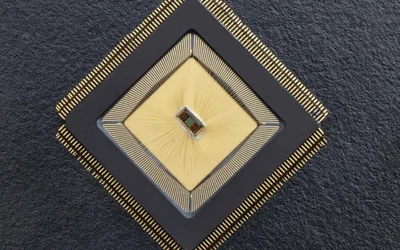
EPFL researchers have combined low-power chip design, machine learning algorithms, and soft implantable electrodes to produce a neural interface that can identify and suppress symptoms of various neurological disorders.

3 minutes read
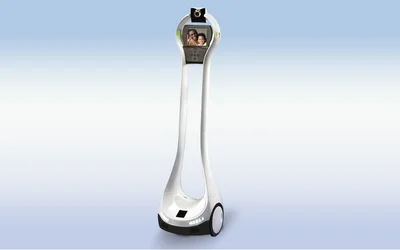
Vecna Technologies, founded by a pair of MIT alumni, has followed a long and winding path to help people in health care settings.
A dive into how AI is helping overcome limitations with current prosthetics by offering improved signal decoding, functionality and more intuitive control.
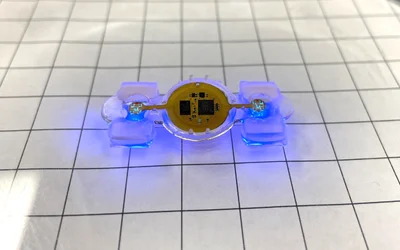
The hybrid “eBiobots” are the first to combine soft materials, living muscle and microelectronics, said researchers at the University of Illinois Urbana-Champaign, Northwestern University and collaborating institutions. They described their centimeter-scale biological machines in the journal Science Robotics.
Choosing a material for new Medical Device Development can have a major influence throughout your medical device life cycle, from design, prototyping, testing, regulatory approvals, and mass production to commercialization and even disposal. Every material has certain characteristics, which should be in consistent with the properties of the medical device as well as final applications.

2 minutes read
The Fe+male Tech Heroes was initially designed as a platform from women to (primarily) women. Over the years, our network has expanded and reached many men who understand that diverse input is pivotal for the success of any project. One of those smart minds is Julien Penders, who believes initiatives like ours are crucial to inspire the younger generation and change society for the better.
6 minutes read
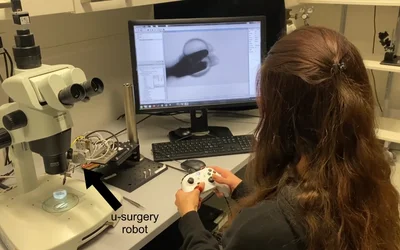
Combining biology and robotics, scientists at EPFL have built a robotic microsurgery platform that can perform high-precision, micrometer-resolution dissections to advance our understanding of how the vertebrate body forms during embryonic development.
4 minutes read
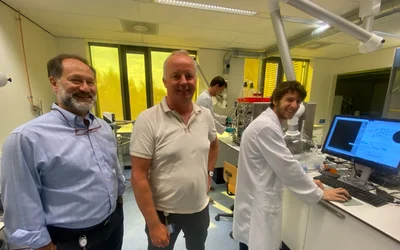
Success lies in open innovation and forging partnerships to further develop deep-tech, medical applications for its technology. So, at first glance, Eindhoven and its semiconductor and deep-tech focus isn’t the obvious place for a pharma company. Yet the founders of Emultech knew they needed to be here, and time has proved them right.
4 minutes read
An artificial intelligence algorithm can determine non-invasively, with about 70% accuracy, if an in vitro fertilized embryo has a normal or abnormal number of chromosomes, according to a new study from researchers at Weill Cornell Medicine.

4 minutes read
In this episode, we talk about a device developed using shape memory alloys which can prevent and reverse the effects of muscle atrophy.

As an Inspiring 50 award-winner and startup founder, Greek-Albanian Sophia-Eriola Shanko is a first-time entrepreneur. She has a BSc in Control Systems Engineering, graduating in a classroom with two girls and 100 boys. She pursued a fully EU-funded MSc on Semiconductors and obtained her Ph.D. at TU Eindhoven.
5 minutes read