The applications of 3D printing span many industries, from aircraft fuel nozzles to dental aligners. Here we look at some of the most important uses of the technology.
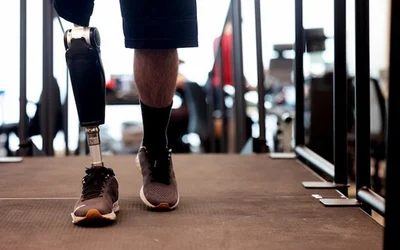
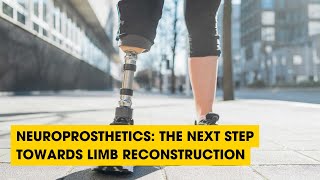
AI-powered artificial muscles made from pliable materials are reshaping recovery, from stroke rehabilitation to prosthetic design. These machines help people regain motion, strength, and confidence.
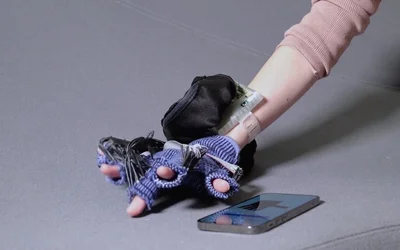
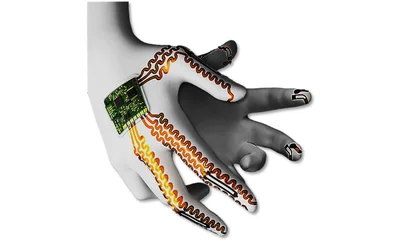
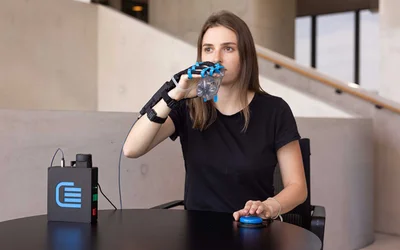
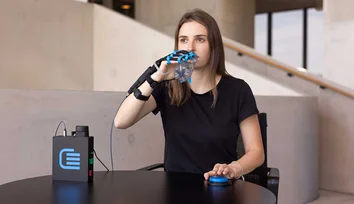
Researchers at ETH Zurich have developed an innovative hand exoskeleton that helps persons after stroke re-learn how to grasp. Its accordion-like structure makes it light, robust and easy to integrate into everyday life.
In this episode, we cover Harvard's soft wearable robot that learns a patient's intent and provides just-enough support, helping stroke and ALS patients regain independence in everyday tasks.
AI-powered artificial muscles made from pliable materials are reshaping recovery, from stroke rehabilitation to prosthetic design. These machines help people regain motion, strength, and confidence.
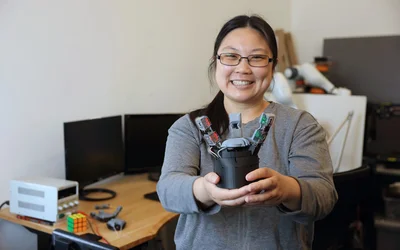
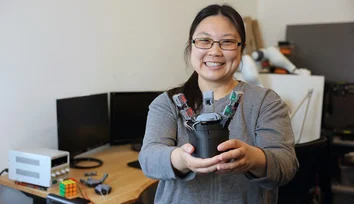
MIT CSAIL researchers enhance robotic precision with sophisticated tactile sensors in the palm and agile fingers, setting the stage for improvements in human-robot interaction and prosthetic technology.
As a physicist and ‘real techie’, Sofie Baselmans dedicated her career to creating healthcare technology. Always searching for the ‘perfect’ workplace, she worked in a hospital and in several corporate environments.
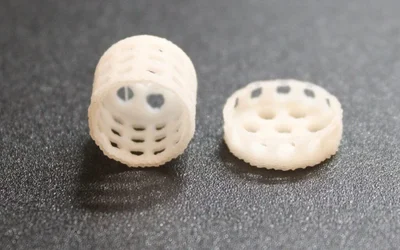
Advancements in 3D printing have helped to lower the cost of robotics innovation by more than 40,000x! This article explains how that happened and highlights 5 categories of end-use robotics components that can be made on-demand with additive manufacturing today.
Digital imaging giant Teledyne DALSA is one of the most senior residents at High Tech Campus Eindhoven. Using state-of-the-art X-ray detectors for medical, dental and industrial applications their ambition is to be both world and innovation leader in their field.
New research from Carnegie Mellon University’s Bin He introduces a novel, AI-based dynamic brain imaging technology alternative which could map out rapidly changing electrical activity in the brain with high speed, high resolution, and low cost.
In this episode, we talk about how researchers are developing tools to better understand how different microbial communities impact our health in an effort to reverse engineer them and the critical methodology used to 3D print functional heart ventricles.
This student article proposes rapid protocols for clinical diagnosis of COVID-19 through the automatic analysis of hematological parameters using Evolutionary Computing and Machine Learning. These hematological parameters are obtained from blood tests common in clinical practice.
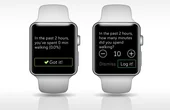
Article #8 of Improving Lives with Digital Healthcare Series: Advancements in electronics have transformed the healthcare sector. The focus is on improving the experiences of users by utilizing cutting-edge technologies like advanced drug delivery systems, wearables, surgical robots, and more.
Article #7 of Improving Lives with Digital Healthcare Series: Real-time monitoring of multiple physiological health parameters can be an effective way of preventing and early diagnosis of several diseases.
Article #6 of Improving Lives with Digital Healthcare Series: Immersive technologies enabled by modern sensing and connectivity systems can be effective pedagogical tools in making medical education safer, accessible, personalized, and engaging.
Article #5 of Improving Lives with Digital Healthcare Series: Intelligent software, wireless connectivity systems along with developments in flexible circuits have enabled electronic part manufacturers to provide OEMs the support required to implement better medical solutions.
Article #4 of Improving Lives with Digital Healthcare Series: Transferring information directly between the human brain and a computer can unlock the possibilities of using machines as extended parts of the human body.