What Is A Pick And Place Machine?
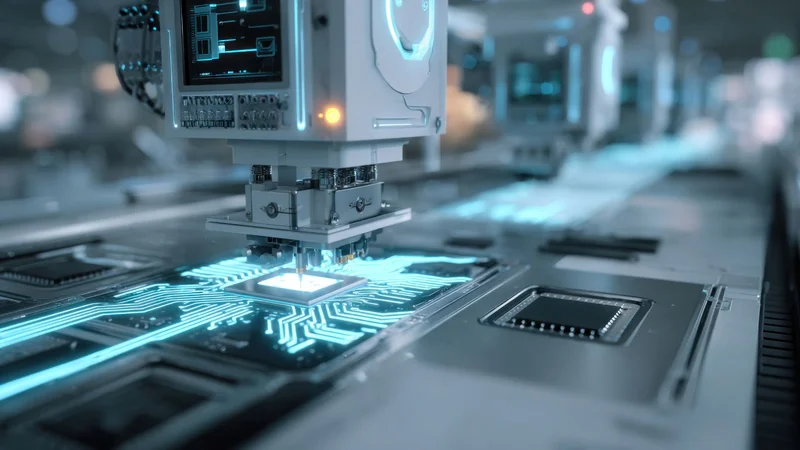
A pick and place (P&P) machine is one of the core features of surface mount technology. More technically called component placement systems, P&P machines are specialised tools for industrial automation.

This article was first published on
www.rowse-automation.co.ukThey’re required for precision manufacturing and assembly, and useful for things like printed circuit boards, which are generally too small for humans to deal with. These boards are put together with a collection of surface-mount devices, which the P&P machines select and position accurately onto them.
What Are The Main Components Of A Pick And Place Machine?
P&P machines are automated devices that consist of several key systems. The type of mechanism used for picking and placing depends on what sort of components are being handled. Their shape, size and material are all determining factors, as well as production volume and the required degree of precision. The main features of a P&P machine include:
The control system, which controls all the P&P machine’s movement and actions. It ensures accurate positioning and coordinates the entire selection and assembly process.
The feeder system, which holds the required components and supplies them to the head.
The head, or end-effector, is usually attached to a robotic arm. This takes the components from the feeder using a mechanical gripper or vacuum nozzle. The arm then moves to the desired location, and the head places the component down.
The vision system, which identifies the exact position of components using cameras or other sensors. This ensures that all components are placed accurately. Some of these systems are extremely sophisticated in identifying minute placement markers or identifying errors.
The conveyor system moves the products consistently through the P&P machine so that the assembly process is completed efficiently.
Different Types Of P&P Systems
Not all P&P systems are the same, as some are fixed and some aren’t. The fixed type is ideal for environments with high production volumes but little product variation. Given a preset configuration, they reliably and cost-effectively carry out high-speed, repetitive tasks like sorting, packaging and product assembly. The downside to this is that they’re not very adaptable, and reconfiguring fixed systems may be costly.
An alternative type of P&P machine is a stand-alone version, most often used in electronics manufacturing. They’re designed for precision and the delicate operations necessary for electronics production. Stand-alone P&Ps are more flexible, as they can be adjusted to fit different components, and they’re sufficiently precise to handle sensitive items without damage. However, the investment cost is high, and you can only really use them for electronic applications.
The most versatile type of P&P machine is a robotic system, with programmable arms that are useful in a wide range of industries. They’re easily adapted to different materials, sizes and shapes and can be rapidly reprogrammed to accommodate different products. As their technology evolves, they’re starting to incorporate AI features and intuitive interfaces that make them significantly easier and quicker to use. On the downside, they’re expensive, and the initial set-up may be complex.
Which Type Of Head Should You Choose For Your P&P Machine?
When you’re choosing a machine for picking and placing, it’s important to select the right type of head. If you’re dealing with very light or tiny components found in electronic applications, you should opt for a vacuum head with suction cups. Vacuum systems are precise, rapid and sensitive to fragile items, but can only manage to pick up items weighing no more than a few ounces.
If you need something that can handle medium to heavy-weight items (up to about 50 lbs), you’ll need a mechanical gripper with fingers or claws. These aren’t normally so rapid and precise as a vacuum, but can handle a greater variety of weights, sizes and shapes.
If your application demands a combination of both heavy and delicate components, or if some of them require high speeds and close tolerances, you might need to customise. It’s possible to create hybrid P&P machinery using vacuum picks, grippers and a robot arm.
How Do Pick And Place Machines Enhance Production?
P&P machines are indispensable in modern manufacturing, especially in electronics. They streamline manufacturing processes and translate designs into physical assemblies with great accuracy and reliability. They’re capable of handling high-volume production, they improve efficiency by a significant amount and reduce the risk of human error.
Automated pick and place offers greater production throughput and quicker turnaround times, so your overall production time and expenditure are less. You’ll also improve product consistency and quality, making it easier to meet performance and reliability standards.