Featured
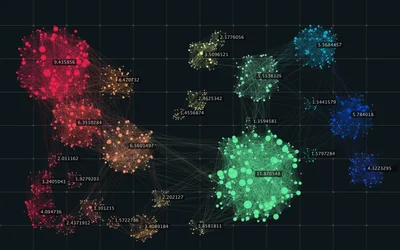
Open ad-hoc categorization approach combines language guidance with visual clustering to learn contextualized features for flexible image interpretation.
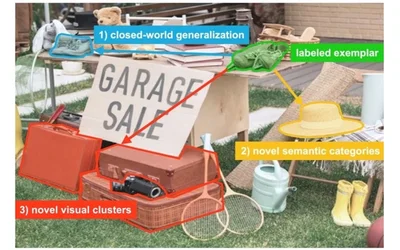
Open ad-hoc categorization approach combines language guidance with visual clustering to learn contextualized features for flexible image interpretation.
Open ad-hoc categorization approach combines language guidance with visual clustering to learn contextualized features for flexible image interpretation.
New research shows automatically controlling vehicle speeds to mitigate traffic at intersections can cut carbon emissions between 11 and 22 percent.
Artificial intelligence shows researchers that pollution increases may be more likely following natural hazards.
Unsupervised learning is a machine learning approach that finds patterns, structure, or useful representations in unlabeled data. It groups similar observations, compresses high-dimensional features, detects outliers, discovers item relationships, and supports modern representation learning.
13 minutes read.
17 minutes read.
11 minutes read.
16 minutes read.
14 minutes read.
14 minutes read.



High Tech
High Tech Campus Eindhoven is Europe's smartest square km and has the ultim...
49 Posts

University for science and technology
Freedom and individual responsibility, entrepreneurial spirit and open-min...
43 Posts
From leading experts at the CDFAM Computational Design Symposium
eCozy 2.0 system addresses the limitations of traditional thermostats for water heating radiators, delivering efficiency, convenience and sustainability benefits to households
Protect the cloud by securing the edge with hardware-based security, TPMs, HSMs, and resilient edge computing architectures.
Explore the rise of intelligent EV hardware and how real-time processing, ML acceleration, and hardware virtualization are enabling safer, smarter, software-defined electric vehicles.
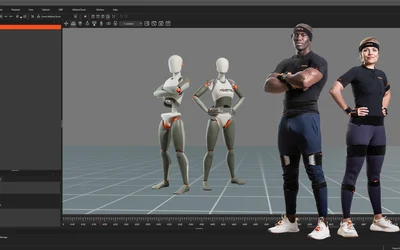
With MVN Analyze
how Last Praetorian Interactive made Project Vesperi with one Xsens suit
With Xsens Motion Capture
Open ad-hoc categorization approach combines language guidance with visual clustering to learn contextualized features for flexible image interpretation.

4 minutes read
New research shows automatically controlling vehicle speeds to mitigate traffic at intersections can cut carbon emissions between 11 and 22 percent.
Artificial intelligence shows researchers that pollution increases may be more likely following natural hazards.

3 minutes read
Article #6 of Confronting AI Series: AI's rapid evolution has outpaced regulation. In this Q&A, Jared Bowns explores how adaptive frameworks, accountability, and ethical oversight can help engineers manage the risks and responsibilities of building trustworthy AI systems.
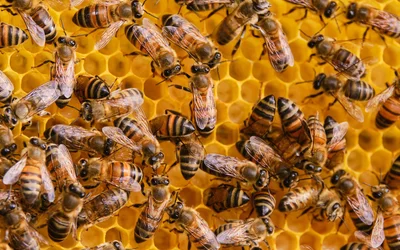
EPFL researchers are developing robotic beehive frames that help locate honey stores inside of beehives over time, without relying on cameras. The aim is to develop new observation tools to study honeybee behavior that better fit the bees' natural way to occupy space compared to current methods.

3 minutes read
Did you miss ATCx AI for Engineers 2025? Catch up on key insights, real-world AI use cases, and how the event showcased AI's growing role in transforming engineering workflows, design, and smart manufacturing.
Neural Jacobian Fields, developed by MIT CSAIL researchers, can learn to control any robot from a single camera, without any other sensors.
Article #5 of Confronting AI Series: Smart ML on embedded systems demands efficiency under tight memory, compute, and latency constraints. Techniques like pruning, quantization, low-rank decomposition, and federated learning enable compact, fast, and reliable models for edge intelligence.
Vision-driven, multi-arm robotics are set to transform the factory itself into a configurable product, capable of switching from one assembly task to the next with a software update instead of a hardware rebuild. Learn more now in our latest report.
Researchers are shortcutting complex equations with AI, paving the way for engineering and scientific breakthroughs.
The CodeSteer system could boost large language models' accuracy when solving complex problems, such as scheduling shipments in a supply chain.
Article #4 of Confronting AI Series: AI's rapid rise brings transformative potential and serious risks; without transparency, regulation, education, and justice, unchecked deployment may entrench bias, erode trust, and harm society more than it helps.
MIT engineers designed a versatile interface that allows users to teach robots new skills in intuitive ways.
Texas A&M researchers received a grant from the U.S. Army Research Laboratory to address the limitations of applying artificial intelligence tools in military scenarios.
3 minutes read
Article #3 of Confronting AI Series: Discover how data centers tackle AI's surging energy needs, from renewable energy adoption to advanced cooling technologies and sustainable practices for a greener, smarter future.