Featured
The PhysicsGen system, developed by MIT researchers, helps robots handle items in homes and factories by tailoring training data to a particular machine.
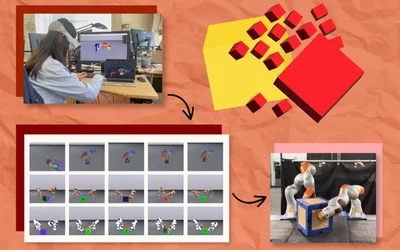
The PhysicsGen system, developed by MIT researchers, helps robots handle items in homes and factories by tailoring training data to a particular machine.
The PhysicsGen system, developed by MIT researchers, helps robots handle items in homes and factories by tailoring training data to a particular machine.
This summer, EPFL and ETH Zurich will release a large language model (LLM) developed on public infrastructure. Trained on the "Alps" supercomputer at the Swiss National Supercomputing Centre (CSCS), the new LLM marks a milestone in open-source AI and multilingual excellence.
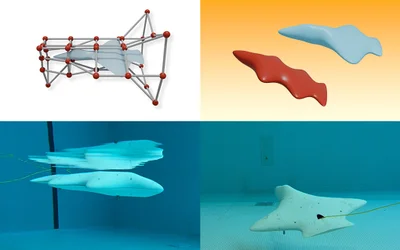
An AI pipeline developed by CSAIL researchers enables unique hydrodynamic designs for bodyboard-sized vehicles that glide underwater and could help scientists gather marine data.
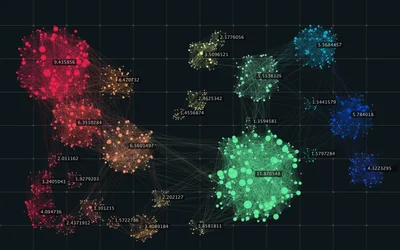
Unsupervised learning is a machine learning approach that finds patterns, structure, or useful representations in unlabeled data. It groups similar observations, compresses high-dimensional features, detects outliers, discovers item relationships, and supports modern representation learning.
13 minutes read.
17 minutes read.
11 minutes read.
16 minutes read.
14 minutes read.
14 minutes read.



High Tech
High Tech Campus Eindhoven is Europe's smartest square km and has the ultim...
49 Posts

University for science and technology
Freedom and individual responsibility, entrepreneurial spirit and open-min...
43 Posts
From leading experts at the CDFAM Computational Design Symposium
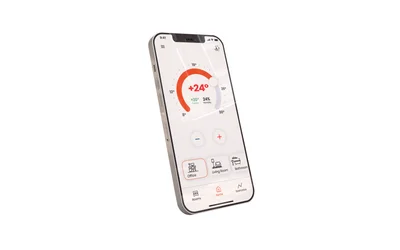
eCozy 2.0 system addresses the limitations of traditional thermostats for water heating radiators, delivering efficiency, convenience and sustainability benefits to households
Protect the cloud by securing the edge with hardware-based security, TPMs, HSMs, and resilient edge computing architectures.
Explore the rise of intelligent EV hardware and how real-time processing, ML acceleration, and hardware virtualization are enabling safer, smarter, software-defined electric vehicles.
With MVN Analyze
how Last Praetorian Interactive made Project Vesperi with one Xsens suit
With Xsens Motion Capture
The PhysicsGen system, developed by MIT researchers, helps robots handle items in homes and factories by tailoring training data to a particular machine.
This summer, EPFL and ETH Zurich will release a large language model (LLM) developed on public infrastructure. Trained on the "Alps" supercomputer at the Swiss National Supercomputing Centre (CSCS), the new LLM marks a milestone in open-source AI and multilingual excellence.

4 minutes read
An AI pipeline developed by CSAIL researchers enables unique hydrodynamic designs for bodyboard-sized vehicles that glide underwater and could help scientists gather marine data.
Article #2 of Confronting AI Series: AI can enhance decisions and refine processes, yet organizations are hesitant to integrate it. Boosting trust through education, clear policies, transparent models, and improved human-AI collaboration will encourage wider adoption.
A new 3D simulation tool developed by ETH and SLF researchers now allows for significantly more accurate predictions of complex alpine mass movements, supporting alpine risk management.

6 minutes read
Unlike traditional software applications, where user actions have immediate and predictable results, CV workflows introduce inherent conceptual and interaction complexities that require a different UX approach.
A novel framework offers accurate water flow predictions and simulations with unprecedented efficiency

6 minutes read
Article #1 of Confronting AI Series: AI is rapidly evolving beyond language models, quietly transforming fields like vision, prediction, and control. Explore how diverse AI techniques are solving complex challenges where text-based approaches fall short.
Researchers at EPFL have created a mathematical model that helps explain how breaking language into sequences makes modern AI like chatbots so good at understanding and using words.
3 minutes read
Machine-learning framework predicts effects of electric fields

3 minutes read
WashU interdisciplinary research uses machine learning to offer accurate prediction of preterm birth

3 minutes read
Matroid's no-code computer vision platform leverages an intuitive 'detector studio' to accelerate deployment - no coding skills required.
AI scientists and doctors partner to understand who is at risk for persistent post-surgical pain
4 minutes read
Scientists at EPFL have created MammAlps, a multi-view, multi-modal video dataset that captures how wild mammals behave in the Swiss Alps. This new resource could be a game-changer for wildlife monitoring and conservation efforts.
3 minutes read
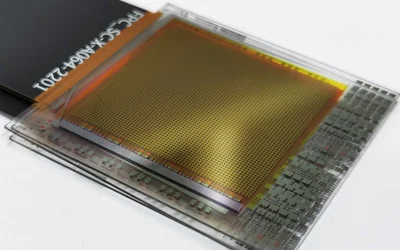
Researchers at ETH Zurich and Empa have developed a new image sensor made of perovskite. This semiconductor material enables better colour reproduction and fewer image artefacts with less light. Perovskite sensors are also particularly well suited for machine vision.
4 minutes read