Factories as a Product
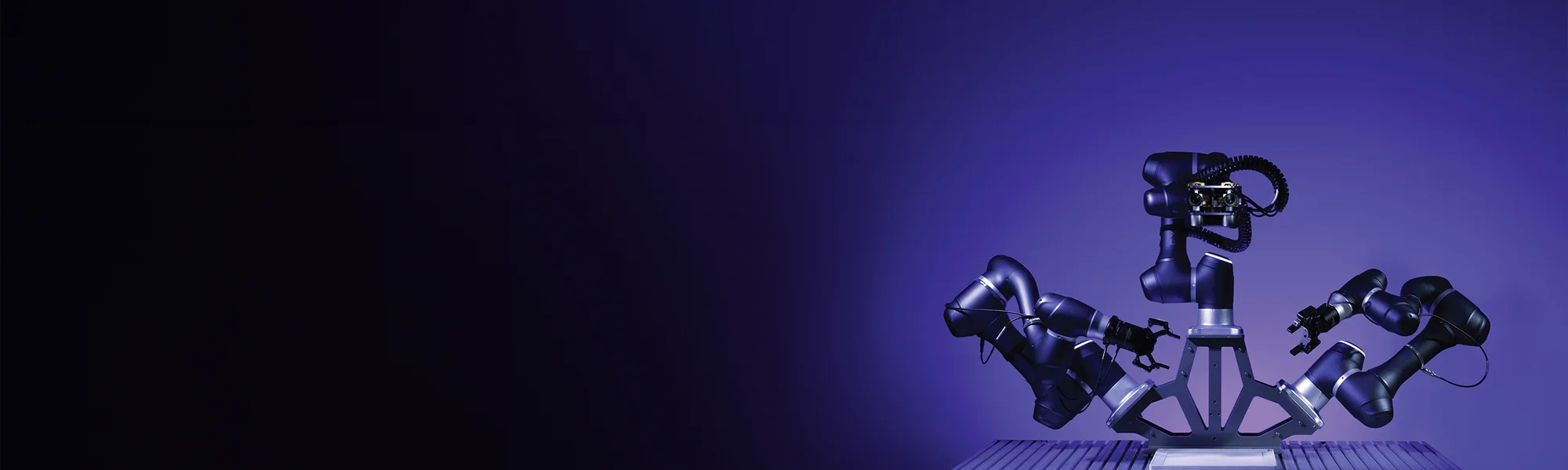
Vision-driven, multi-arm robotics are set to transform the factory itself into a configurable product, capable of switching from one assembly task to the next with a software update instead of a hardware rebuild. Learn more now in our latest report.


Vision-Driven Robotics and the Rise of Universal Manufacturing
Manufacturing productivity has plateaued as traditional automation reaches its flexibility limit. Shorter product life cycles, SKU proliferation, and high-mix/low-volume orders expose the limitations of fixed tooling and “blind” robots.
This report explains how vision-driven, multi-arm robotics transforms the factory itself into a configurable product, capable of switching from one assembly task to the next with a software update instead of a hardware rebuild. By giving robots the ability to see, interpret, and learn on the fly, pioneers such as CynLr are unlocking order-size-one economics, slicing change-over times, and laying the groundwork for genuinely universal factories.
What you’ll learn
The Flexibility Gap – why productivity gains have stalled and how falling robot costs set the stage for a new leap forward.
Robotic Vision 101 – event-based cameras, dual-lens depth, and AI pose-estimation that let robots grasp never-seen-before parts.
Factories-as-a-Product (FaaP) – a business model that treats standardized, modular cells as assets you configure like cloud instances.
Industry cases – quantified gains in automotive, semiconductor, and food packaging lines—including a 75 % set-up cost reduction.
Trend radar to 2030 – self-optimizing plants, “manipulation OS” for multi-arm robots, and modular Factories-as-a-Service.
Ready to build factories that pivot at the speed of software?
Inside the report
Introduction – From rigid lines to software-defined production
Evolution of Flexible Automation – Fixed lines → FMS → plateau
Robotic Vision & Object Handling – How perception closes the flexibility gap
Advanced Manufacturing – Universal Factories and the FaaP Model
Applications Across Industries – Automotive, electronics, consumer goods
The Future – AI-driven self-optimization, multi-robot collaboration
References & Historical Appendix
Report Introduction
Factories have always powered human progress, from the steam-driven mills of the Industrial Revolution to modern assembly lines that mass-produce goods at an astonishing pace. Their ever-improving machinery has helped society achieve unprecedented productivity, allowing people to shift from grueling manual tasks to higher-level innovation.
Yet, today’s factories—despite advanced automation—often remain constrained by rigidity. Designed for mass production, they struggle to adapt efficiently to volatile market demands, increasing product customization, shorter lifecycles, and the complexities of high-mix, low-volume manufacturing.
This inflexibility results in costly retooling, significant downtime, and hinders the ability to rapidly introduce new product variations, ultimately limiting manufacturing potential.
The critical enabler for overcoming these limitations lies in equipping robots with advanced perception, specifically, vision-driven robotics. By integrating sophisticated cameras, sensors, and AI-powered interpretation, robots gain the ability to "see," understand, and interact with their environment dynamically.
This allows them to handle variations in object shape, orientation, and presentation without the need for precise fixtures or exhaustive reprogramming for every scenario. This capability is foundational for creating truly adaptable, software-defined production systems – often termed universal factories – which can pivot quickly between diverse tasks and products, unlocking unprecedented agility and efficiency.
This report explores the evolution toward this vision-driven flexibility, delves into the core technologies enabling robots to perceive and handle complexity, and examines how these advancements are paving the way for highly adaptable manufacturing paradigms like universal factories and Factories as a Product.
As manufacturers strive for greater efficiency and agility, the lines between hardware and software blur, giving rise to universal factories—facilities that function as adaptable “products” themselves.
Read the full report. Download it for free now.
About the sponsor: CynLr
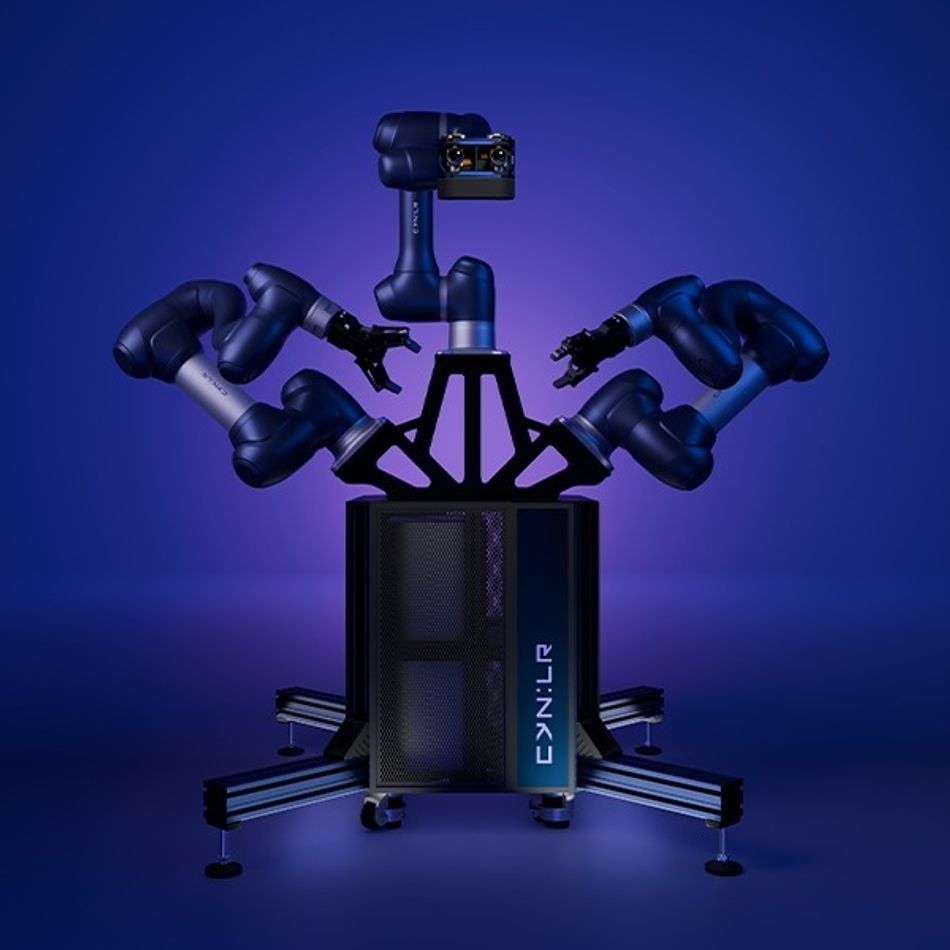
CynLr builds visually intelligent, multi-arm robots that can identify and manipulate any object in unstructured environments. Their CyRo platform and CLX-1 vision stack form the core building blocks for universal, product-agnostic factories.
Learn more on cynlr.com