Featured
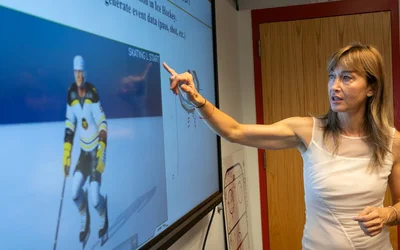
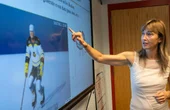
EPFL researchers have teamed up with Dartfish and the Lausanne Hockey Club to push the boundaries of sports-performance analysis by applying computer vision and machine-learning technology to action on the ice.

EPFL researchers have teamed up with Dartfish and the Lausanne Hockey Club to push the boundaries of sports-performance analysis by applying computer vision and machine-learning technology to action on the ice.
EPFL researchers have teamed up with Dartfish and the Lausanne Hockey Club to push the boundaries of sports-performance analysis by applying computer vision and machine-learning technology to action on the ice.
#10 of our Voice of Innovation fireside chat series: Robotics and AI reporter Rachel Gordon speaks to Daniel Situnayake, a founder, engineer, and teacher, on what it means to run sophisticated machine learning algorithms on small devices at the edge of a network.
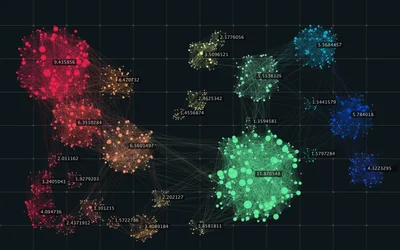
Unsupervised learning is a machine learning approach that finds patterns, structure, or useful representations in unlabeled data. It groups similar observations, compresses high-dimensional features, detects outliers, discovers item relationships, and supports modern representation learning.
13 minutes read.
17 minutes read.
11 minutes read.
16 minutes read.
14 minutes read.
14 minutes read.


High Tech
High Tech Campus Eindhoven is Europe's smartest square km and has the ultim...
49 Posts

University for science and technology
Freedom and individual responsibility, entrepreneurial spirit and open-min...
43 Posts
Protect the cloud by securing the edge with hardware-based security, TPMs, HSMs, and resilient edge computing architectures.
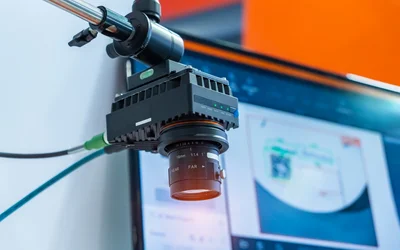
Understanding industrial vision systems by examining their components, imaging fundamentals, AI integration since 2020, and how to choose the right solution for every application.
Explore the rise of intelligent EV hardware and how real-time processing, ML acceleration, and hardware virtualization are enabling safer, smarter, software-defined electric vehicles.
A detailed engineering reference on performance, signaling, and power differences in current graphics memory standards.
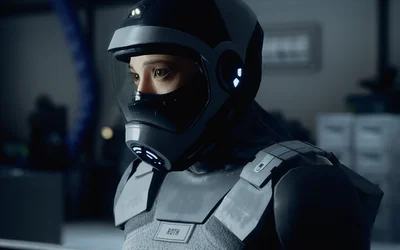
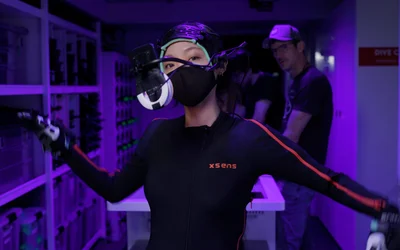
how Last Praetorian Interactive made Project Vesperi with one Xsens suit
With Xsens Motion Capture
With Xsens Indie Program
EPFL researchers have teamed up with Dartfish and the Lausanne Hockey Club to push the boundaries of sports-performance analysis by applying computer vision and machine-learning technology to action on the ice.

3 minutes read
with Xsens MVN Animate

5 minutes read
#10 of our Voice of Innovation fireside chat series: Robotics and AI reporter Rachel Gordon speaks to Daniel Situnayake, a founder, engineer, and teacher, on what it means to run sophisticated machine learning algorithms on small devices at the edge of a network.
In this episode, we talk about how perfectly tuning the curiosity of an AI results in more efficient and robust models.

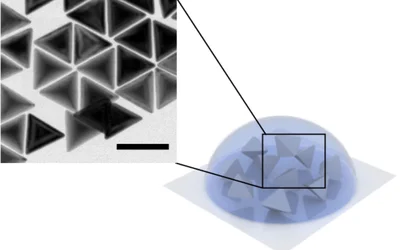
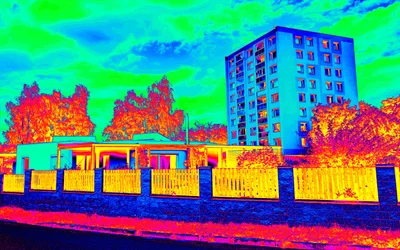
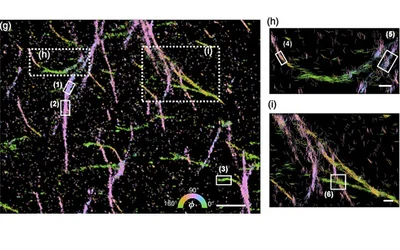
Producing chirality, a property found throughout nature, through large-scale self-assembly could lead to applications in sensing, machine perception and more.

4 minutes read
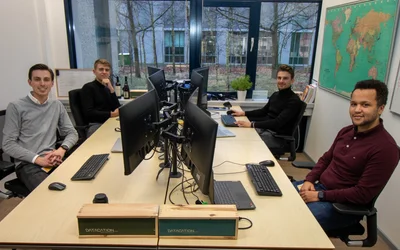
Datacation is a startup in a technology area so advanced it can't even be called 'next-generation'. Perhaps 'next next gen' because so far we don't know all the possible business applications of machine learning and AI, nor do we know the limits.

7 minutes read
Digital transformation and the Industrial Internet of Things (IIoT) continue to impact industry at all levels. While it's seen its earliest adoption in large-scale manufacturing and transport, it's spreading rapidly into other sectors.
Axl Chen is the founder and CEO of Surplex, a new full-body tracking technology company aiming to change the gaming industry and professional sports.
Last year, MIT researchers announced that they had built “liquid” neural networks, inspired by the brains of small species: a class of flexible, robust machine learning models that learn on the job and can adapt to changing conditions, for real-world safety-critical tasks, like driving and flying.
Article #5 of the "Why Edge?" Series Moving Computer Vision to the Edge offers advantages in security and latency.
Curiosity drives artificial intelligence to explore the world, now in boundless use cases — autonomous navigation, robotic decision-making, optimizing health outcomes, and more.
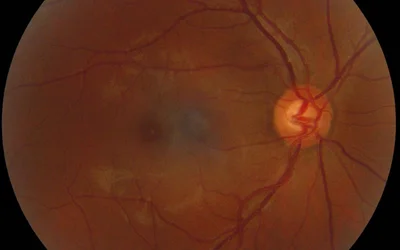
Matroid's deep-learning system comprising of 3D-CNN helps to automatically detect Glaucoma from a single raw Optical Coherence Tomography (OCT) scan. The results are close to human doctors across heterogeneous datasets and scanning environments.

ML at the edge is the main target in many IoT applications today. Learn why it is important to build energy-efficient embedded devices, and how to achieve it using cutting-edge technologies.
Newly developed method does it all with just a few pixels
In this episode, we talk about how a machine learning algorithm that can predict what sequence of actions a volleyball player will take next is being used to create more effective human/machine interactions for safer autonomy in our lives.