Featuredpodcast
In this episode, we talk about NeuralTree: a neural interface capable of detecting neural impulses associated with brain disorders and countering them.
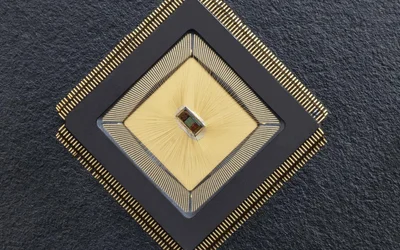
In this episode, we talk about NeuralTree: a neural interface capable of detecting neural impulses associated with brain disorders and countering them.
In this episode, we talk about NeuralTree: a neural interface capable of detecting neural impulses associated with brain disorders and countering them.
Without data, the IoT would be useless. The electromechanical and electronic sensors used to collect information are just as important to the IoT’s digital brains as sight, smell, hearing, and touch are to human organic ones.
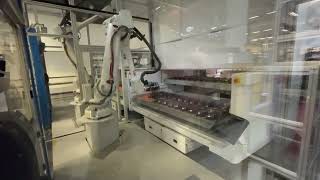
The MAAS project team developed a unique, end-to-end solution for the assembly of airplane wing parts, which uses Photoneo 3D vision technology to handle challenges such as screw hole misalignment, panel to panel step height, and gaps out of specification.
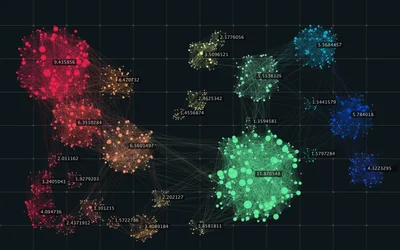
Unsupervised learning is a machine learning approach that finds patterns, structure, or useful representations in unlabeled data. It groups similar observations, compresses high-dimensional features, detects outliers, discovers item relationships, and supports modern representation learning.
13 minutes read.
17 minutes read.
11 minutes read.
16 minutes read.
14 minutes read.
14 minutes read.


High Tech
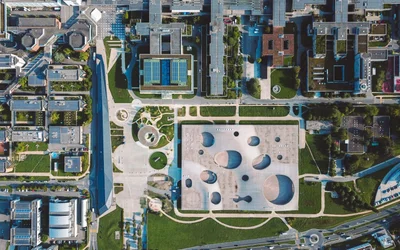
High Tech Campus Eindhoven is Europe's smartest square km and has the ultim...
49 Posts

University for science and technology
Freedom and individual responsibility, entrepreneurial spirit and open-min...
43 Posts
Protect the cloud by securing the edge with hardware-based security, TPMs, HSMs, and resilient edge computing architectures.
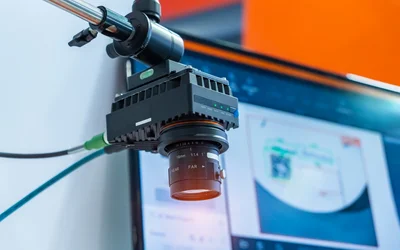
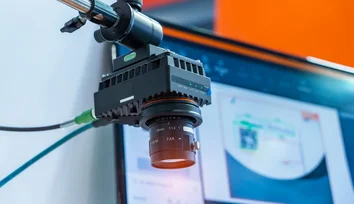
Understanding industrial vision systems by examining their components, imaging fundamentals, AI integration since 2020, and how to choose the right solution for every application.
Explore the rise of intelligent EV hardware and how real-time processing, ML acceleration, and hardware virtualization are enabling safer, smarter, software-defined electric vehicles.
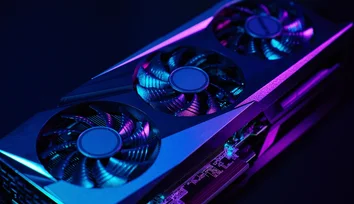
A detailed engineering reference on performance, signaling, and power differences in current graphics memory standards.
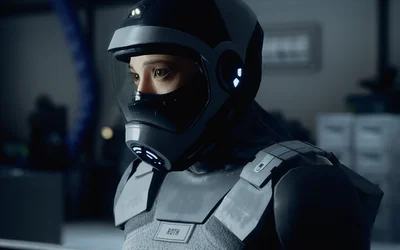
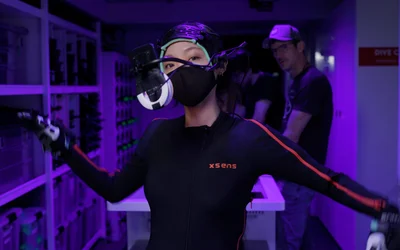
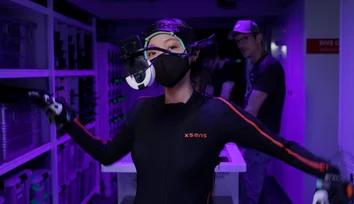
how Last Praetorian Interactive made Project Vesperi with one Xsens suit
With Xsens Motion Capture
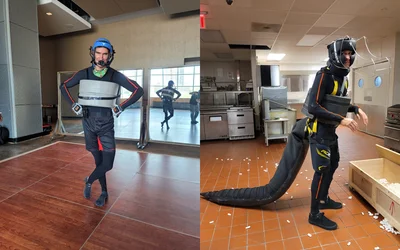
With Xsens Indie Program
In this episode, we talk about NeuralTree: a neural interface capable of detecting neural impulses associated with brain disorders and countering them.

Without data, the IoT would be useless. The electromechanical and electronic sensors used to collect information are just as important to the IoT’s digital brains as sight, smell, hearing, and touch are to human organic ones.

3 minutes read
The MAAS project team developed a unique, end-to-end solution for the assembly of airplane wing parts, which uses Photoneo 3D vision technology to handle challenges such as screw hole misalignment, panel to panel step height, and gaps out of specification.

4 minutes read
with Xsens MVN Animate

3 minutes read
with Xsens MVN Animate
4 minutes read
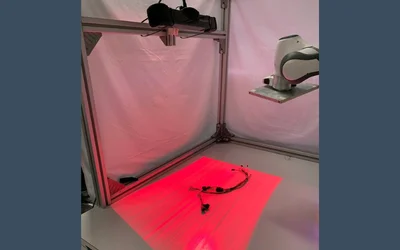
3D scanning and robotic manipulation of very thin objects such as wiring harnesses by the Department of Electrical, Electronic and Information Engineering at the University of Bologna.
In this episode, we talk about a research study from MIT that estimates the carbon emissions associated with autonomous vehicles will match that currently produced by all of the data centers in the world along with how to address it.
EPFL researchers have combined low-power chip design, machine learning algorithms, and soft implantable electrodes to produce a neural interface that can identify and suppress symptoms of various neurological disorders.

3 minutes read
Study shows that if autonomous vehicles are widely adopted, hardware efficiency will need to advance rapidly to keep computing-related emissions in check.
Trustworthy and reliable applications are fueling the worldwide IoT success story. This article explains why protecting IoT edge devices is crucial in an environment with threats on the rise.
Fast localization and picking of multiple objects with Photoneo's Locator Studio for 3D picking in collision-free environments, PhoXi 3D Scanner, and a universal gripper.
In this episode, we talk about about how an ant inspired robotics platform could be the future of swarm robotics due to its simple, affordable, flexible, and scalable nature.
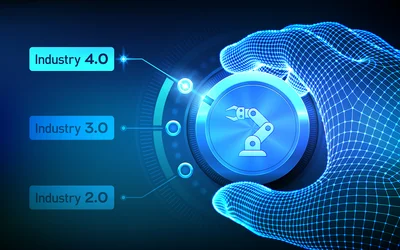
The Industrial Revolution began in Britain sometime around 1760. It ushered in a period where coal-fired steam engines powered increased mechanization and productivity and transformed a largely agrarian society into a manufacturing one.
4 minutes read
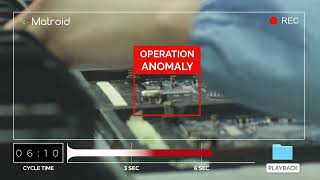
Deep-Learning technology helps industrial engineers with continuous improvement, line balancing, and optimizing manual labor.

2 minutes read
You've probably heard about the amazing capabilities of some recent AI models, such as GPT, AI21, or BLOOM. Perhaps you use one of these models yourself. Either directly, or through another product like Wordtune, YouWrite, Jasper – or ChatGPT. It turns out that while these models are trained on language data, they can be used for other applications as well. In my latest article, you can read more about applications in materials discovery, cybersecurity, and even building management.

5 minutes read