Featured
Article #4 of the Enabling IoT Series. Industrial enterprises are moving to a new approach to asset management, namely predictive maintenance by leveraging powerful new sensors and data.

Article #4 of the Enabling IoT Series. Industrial enterprises are moving to a new approach to asset management, namely predictive maintenance by leveraging powerful new sensors and data.
Article #4 of the Enabling IoT Series. Industrial enterprises are moving to a new approach to asset management, namely predictive maintenance by leveraging powerful new sensors and data.
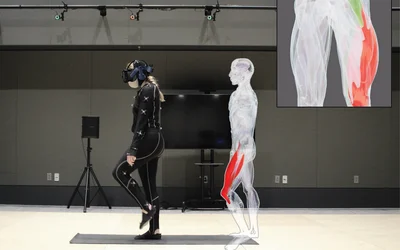
In this episode, we discuss how a wearable based sensing platform developed by MIT can provide detailed information about a user’s muscle activity and enable virtual physical therapy to increase access for this vital practice.
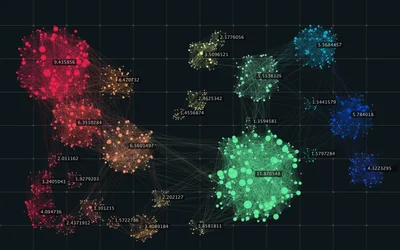
Unsupervised learning is a machine learning approach that finds patterns, structure, or useful representations in unlabeled data. It groups similar observations, compresses high-dimensional features, detects outliers, discovers item relationships, and supports modern representation learning.
13 minutes read.
17 minutes read.
11 minutes read.
16 minutes read.
14 minutes read.
14 minutes read.



High Tech
High Tech Campus Eindhoven is Europe's smartest square km and has the ultim...
49 Posts

University for science and technology
Freedom and individual responsibility, entrepreneurial spirit and open-min...
43 Posts
Protect the cloud by securing the edge with hardware-based security, TPMs, HSMs, and resilient edge computing architectures.
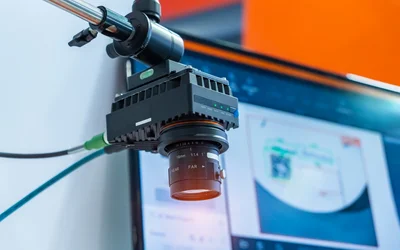
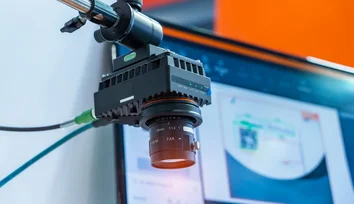
Understanding industrial vision systems by examining their components, imaging fundamentals, AI integration since 2020, and how to choose the right solution for every application.
Explore the rise of intelligent EV hardware and how real-time processing, ML acceleration, and hardware virtualization are enabling safer, smarter, software-defined electric vehicles.
A detailed engineering reference on performance, signaling, and power differences in current graphics memory standards.
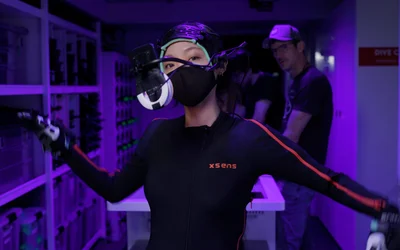
how Last Praetorian Interactive made Project Vesperi with one Xsens suit
With Xsens Motion Capture
With Xsens Indie Program
Article #4 of the Enabling IoT Series. Industrial enterprises are moving to a new approach to asset management, namely predictive maintenance by leveraging powerful new sensors and data.
By Using Movella’s Xsens Motion Capture Technology

3 minutes read
In this episode, we discuss how a wearable based sensing platform developed by MIT can provide detailed information about a user’s muscle activity and enable virtual physical therapy to increase access for this vital practice.

Someday autonomous vehicles and human-driven vehicles will share the road. How to manage the rise of AVs is the topic of a Carnegie Mellon policy brief.

3 minutes read
Article #1 of the "Why Edge?" Series. Edge AI presents a multitude of benefits for security across industry.
Computer vision brings an 80% reduction in illegal dumping. IoT surveillance company iDefigo partners with Matroid to apply AI-based computer vision for illegal trash dumping detection.

2 minutes read
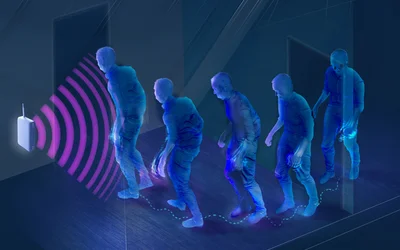
By continuously monitoring a patient’s gait speed, the system can assess the condition’s severity between visits to the doctor’s office.
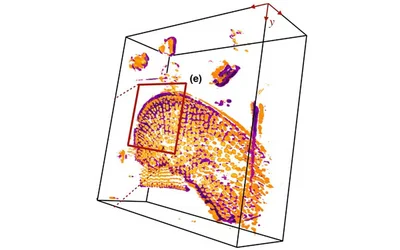
Neural field network doesn’t need to be trained on other samples
A short guide to understanding the edge neural network design.
Proven benchmarks provide a structured method for comparing ML/DL products and services.
Researchers develop a new method that uses multiple models to create more complex images with better understanding.
Interdisciplinary team builds multi-task machine learning model for randomized controlled trial
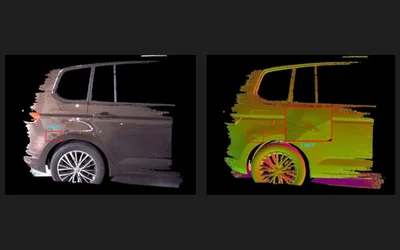
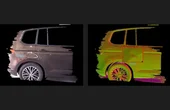
A car rental company uses the Photoneo 3D camera MotionCam-3D to inspect and identify defects on rental cars.

2 minutes read
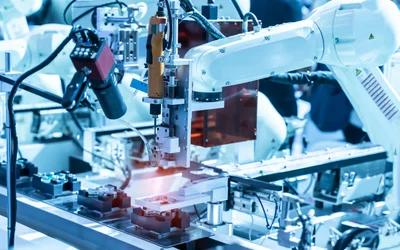
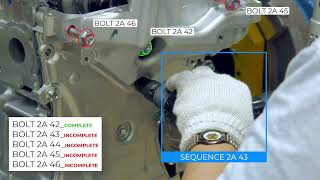
Deep-learning algorithms are enabling powerful video analytics. A practical use in manufacturing is monitoring human actions in manual operations. Some assemblies require specific torquing sequences, which can't always be tracked with traditional methods. AI-based Computer Vision advances quality management.
3 minutes read
Artificial intelligence (AI) is showing significant promise in medical imaging. To translate this promise to reality requires rigorous evaluation of these algorithms.