You've probably heard about the amazing capabilities of some recent AI models, such as GPT, AI21, or BLOOM. Perhaps you use one of these models yourself. Either directly, or through another product like Wordtune, YouWrite, Jasper – or ChatGPT.
It turns out that while these models are trained on language data, they can be used for other applications as well.
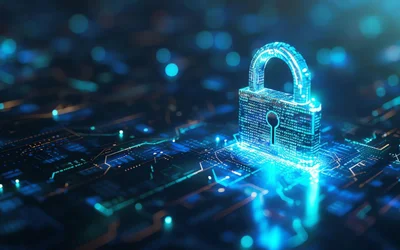
In my latest article, you can read more about applications in materials discovery, cybersecurity, and even building management.
EPFL researchers have teamed up with Dartfish and the Lausanne Hockey Club to push the boundaries of sports-performance analysis by applying computer vision and machine-learning technology to action on the ice.
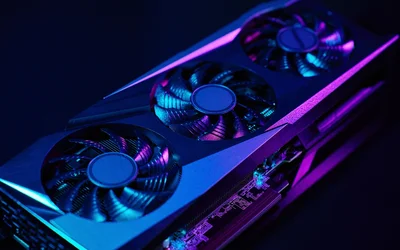
This article explores TPU vs GPU differences in architecture, performance, energy efficiency, cost, and practical implementation, helping engineers and designers choose the right accelerator for AI workloads today!
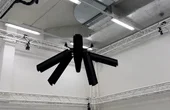
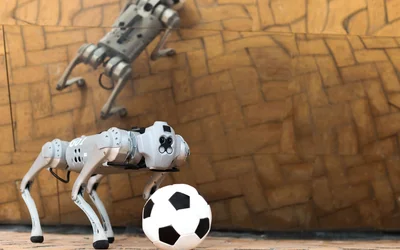
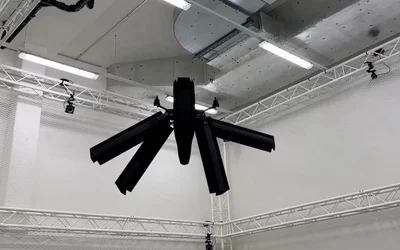
EPFL roboticists have shown that when a modular robot shares power, sensing, and communication resources among its individual units, it is significantly more resistant to failure than traditional robotic systems, where the breakdown of one element often means a loss of functionality.
MIT researchers' DiffSyn model offers recipes for synthesizing new materials, enabling faster experimentation and a shorter journey from hypothesis to use.
You've probably heard about the amazing capabilities of some recent AI models, such as GPT, AI21, or BLOOM. Perhaps you use one of these models yourself. Either directly, or through another product like Wordtune, YouWrite, Jasper – or ChatGPT.
It turns out that while these models are trained on language data, they can be used for other applications as well.
In my latest article, you can read more about applications in materials discovery, cybersecurity, and even building management.
EPFL researchers have teamed up with Dartfish and the Lausanne Hockey Club to push the boundaries of sports-performance analysis by applying computer vision and machine-learning technology to action on the ice.
#10 of our Voice of Innovation fireside chat series: Robotics and AI reporter Rachel Gordon speaks to Daniel Situnayake, a founder, engineer, and teacher, on what it means to run sophisticated machine learning algorithms on small devices at the edge of a network.
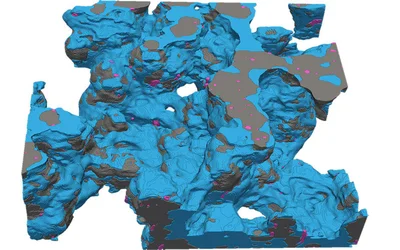
Producing chirality, a property found throughout nature, through large-scale self-assembly could lead to applications in sensing, machine perception and more.
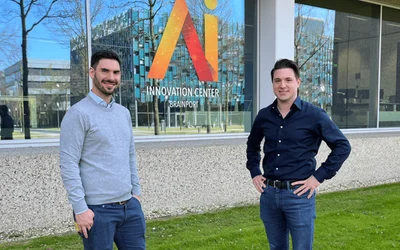
Datacation is a startup in a technology area so advanced it can't even be called 'next-generation'. Perhaps 'next next gen' because so far we don't know all the possible business applications of machine learning and AI, nor do we know the limits.
Digital transformation and the Industrial Internet of Things (IIoT) continue to impact industry at all levels. While it's seen its earliest adoption in large-scale manufacturing and transport, it's spreading rapidly into other sectors.
Last year, MIT researchers announced that they had built “liquid” neural networks, inspired by the brains of small species: a class of flexible, robust machine learning models that learn on the job and can adapt to changing conditions, for real-world safety-critical tasks, like driving and flying.
Curiosity drives artificial intelligence to explore the world, now in boundless use cases — autonomous navigation, robotic decision-making, optimizing health outcomes, and more.
Matroid's deep-learning system comprising of 3D-CNN helps to automatically detect Glaucoma from a single raw Optical Coherence Tomography (OCT) scan. The results are close to human doctors across heterogeneous datasets and scanning environments.
ML at the edge is the main target in many IoT applications today. Learn why it is important to build energy-efficient embedded devices, and how to achieve it using cutting-edge technologies.