Featured
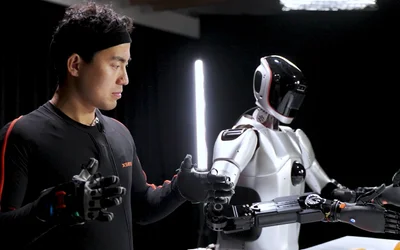
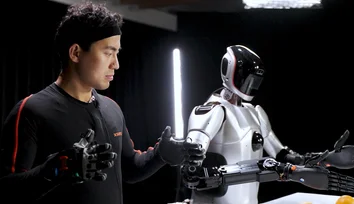
Discover how Shadow Robot’s DEX-EE gripper is advancing robotic dexterity with AI-driven precision.
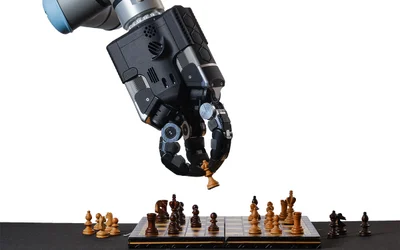
Discover how Shadow Robot’s DEX-EE gripper is advancing robotic dexterity with AI-driven precision.
Discover how Shadow Robot’s DEX-EE gripper is advancing robotic dexterity with AI-driven precision.
Inspired by large language models, researchers develop a training technique that pools diverse data to teach robots new skills.
In the current AI zeitgeist, sequence models have skyrocketed in popularity for their ability to analyze data and predict what to do next. For instance, you’ve likely used next-token prediction models like ChatGPT, which anticipate each word (token) in a sequence to form answers to users’ queries.
Unsupervised learning is a machine learning approach that finds patterns, structure, or useful representations in unlabeled data. It groups similar observations, compresses high-dimensional features, detects outliers, discovers item relationships, and supports modern representation learning.
13 minutes read.
17 minutes read.
11 minutes read.
16 minutes read.
14 minutes read.
14 minutes read.



High Tech
High Tech Campus Eindhoven is Europe's smartest square km and has the ultim...
49 Posts

University for science and technology
Freedom and individual responsibility, entrepreneurial spirit and open-min...
43 Posts
From leading experts at the CDFAM Computational Design Symposium
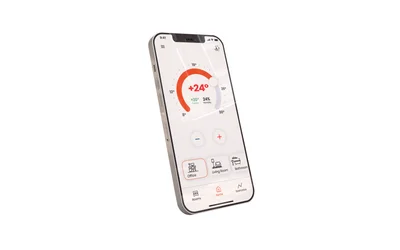
eCozy 2.0 system addresses the limitations of traditional thermostats for water heating radiators, delivering efficiency, convenience and sustainability benefits to households
Protect the cloud by securing the edge with hardware-based security, TPMs, HSMs, and resilient edge computing architectures.
Explore the rise of intelligent EV hardware and how real-time processing, ML acceleration, and hardware virtualization are enabling safer, smarter, software-defined electric vehicles.
With MVN Analyze
how Last Praetorian Interactive made Project Vesperi with one Xsens suit
With Xsens Motion Capture
Discover how Shadow Robot’s DEX-EE gripper is advancing robotic dexterity with AI-driven precision.
Inspired by large language models, researchers develop a training technique that pools diverse data to teach robots new skills.
In the current AI zeitgeist, sequence models have skyrocketed in popularity for their ability to analyze data and predict what to do next. For instance, you’ve likely used next-token prediction models like ChatGPT, which anticipate each word (token) in a sequence to form answers to users’ queries.
Alumni-founded Ambience Healthcare automates routine tasks for clinicians before, during, and after patient visits.
Robots, combined with artificial intelligence (AI), are transforming industries such as manufacturing, healthcare, and research.

10 minutes read
In this episode, we explore how AI technology is revolutionizing the detection and monitoring of infrastructure defects and learn how these innovative solutions are enhancing safety, improving maintenance, and preventing failures in critical infrastructure systems

11 minutes read
‘Industry 4.0’—the next stage of the Industrial Revolution—leans heavily on the Industrial Internet of Things (IIoT) to support large scale automation of traditional manufacturing practices.

4 minutes read
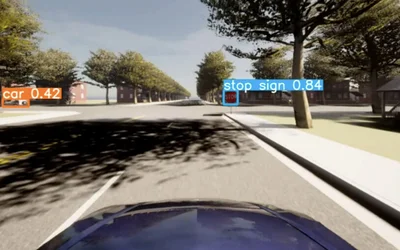
Ding Zhao is teaming up with the City of Pittsburgh to improve road safety and eliminate traffic fatalities using AI.

3 minutes read
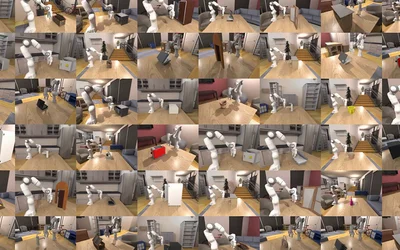
For robots, simulation is a great teacher for learning long-horizon (multi-step) tasks — especially compared to how long it takes to collect real-world training data.
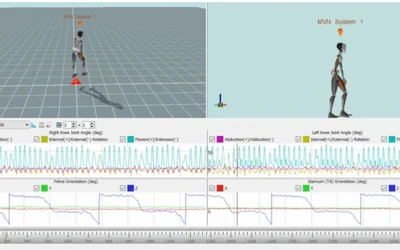
By Xsens MVN Analyze

4 minutes read
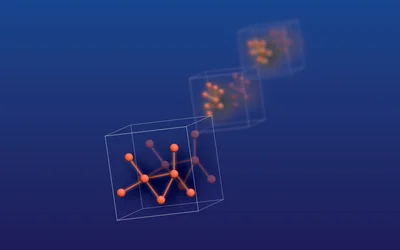
MIT CSAIL researchers developed an AI-driven approach to “low-discrepancy sampling,” a method that improves simulation accuracy by distributing data points more uniformly across space.
A team of EPFL researchers has demonstrated the feasibility of an AI-driven method for crack detection, growth and monitoring, and will soon test it on the railway section between Zermatt and Brig in Valais Canton.

2 minutes read
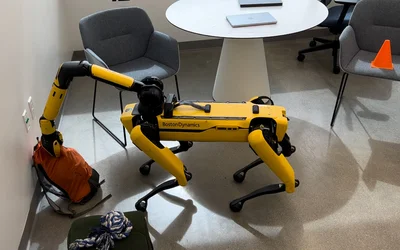
A new method called Clio enables robots to quickly map a scene and identify the items they need to complete a given set of tasks.
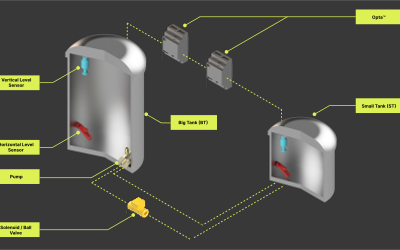
The need for advanced tank monitoring and pump control solutions is growing across industries – from water treatment to aquaculture to industrial utilities. Meanwhile, smart technology is transforming tank management for a variety of liquids, ensuring a streamlined process and minimizing risks.

3 minutes read
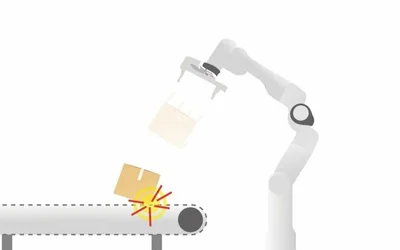
To achieve greater efficiency, robots must develop more human-like skills, such as fast physical interaction. That was the focus of the I.AM project.

4 minutes read