Featured
This new device uses light to perform the key operations of a deep neural network on a chip, opening the door to high-speed processors that can learn in real-time.

This new device uses light to perform the key operations of a deep neural network on a chip, opening the door to high-speed processors that can learn in real-time.
This new device uses light to perform the key operations of a deep neural network on a chip, opening the door to high-speed processors that can learn in real-time.
EPFL research investigating the potential impact on education of AI assistants has found that systems like GPT-4 can answer up to 85% of university assessment questions correctly.
Fine-tuning large language models adapts pre-trained models to specific tasks or domains using tailored datasets, while Retrieval-Augmented Generation (RAG) combines retrieval systems with generative models to dynamically incorporate external, up-to-date knowledge into outputs.
Unsupervised learning is a machine learning approach that finds patterns, structure, or useful representations in unlabeled data. It groups similar observations, compresses high-dimensional features, detects outliers, discovers item relationships, and supports modern representation learning.
13 minutes read.
17 minutes read.
11 minutes read.
16 minutes read.
14 minutes read.
14 minutes read.



High Tech
High Tech Campus Eindhoven is Europe's smartest square km and has the ultim...
49 Posts

University for science and technology
Freedom and individual responsibility, entrepreneurial spirit and open-min...
43 Posts
From leading experts at the CDFAM Computational Design Symposium
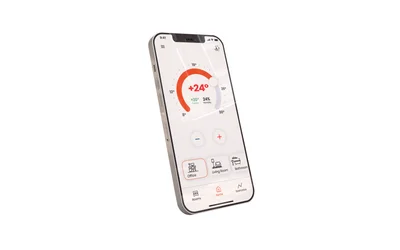
eCozy 2.0 system addresses the limitations of traditional thermostats for water heating radiators, delivering efficiency, convenience and sustainability benefits to households
Protect the cloud by securing the edge with hardware-based security, TPMs, HSMs, and resilient edge computing architectures.
Explore the rise of intelligent EV hardware and how real-time processing, ML acceleration, and hardware virtualization are enabling safer, smarter, software-defined electric vehicles.
With MVN Analyze
how Last Praetorian Interactive made Project Vesperi with one Xsens suit
With Xsens Motion Capture
This new device uses light to perform the key operations of a deep neural network on a chip, opening the door to high-speed processors that can learn in real-time.
EPFL research investigating the potential impact on education of AI assistants has found that systems like GPT-4 can answer up to 85% of university assessment questions correctly.

4 minutes read
Fine-tuning large language models adapts pre-trained models to specific tasks or domains using tailored datasets, while Retrieval-Augmented Generation (RAG) combines retrieval systems with generative models to dynamically incorporate external, up-to-date knowledge into outputs.
Optical sensors are the “eyes” of industrial systems, relying on robust peripherals for reliable image processing. As sensors grow more powerful, challenges like data management, mechanical stress, and thermal issues in compact designs demand innovative solutions.
The method could help communities visualize and prepare for approaching storms.
Stanford engineers are testing foods using an approach that combines a three-dimensional mechanical technique and AI to mimic our sensory experience.

4 minutes read
Similar to visual data, collecting and curating sound data that accurately reflects real-world scenarios is a major hurdle in training effective machine learning models.

2 minutes read
By Xsens MVN Analyze

4 minutes read
Large language models (LLMs) are increasingly automating tasks like translation, text classification and customer service. But tapping into an LLM’s power typically requires users to send their requests to a centralized server — a process that’s expensive, energy-intensive and often slow.

4 minutes read
A team of MIT CSAIL researchers have developed a novel approach to robot training that could significantly accelerate the deployment of adaptable, intelligent machines in real-world environments.
Beyond 5G (5th generation and later mobile communications system: hereinafter “B5G”) / 6G (6th generation mobile communications system) is expected to be applied and spread in popularity as a new form of information communications infrastructure from the 2030s.

5 minutes read
Discover how computer vision is solving quality challenges in metal manufacturing through enhanced defect detection, proactive process monitoring, and flexible integration solutions.
Smarter use of processor speeds saves energy without compromising training speed and performance.

3 minutes read
In this episode, we explore how AI co-pilots are equipping doctors with powerful tools to enhance decision-making and patient care and discuss how it could impact you - a potential patient - in the not distant future.

17 minutes read
Large Language Model (LLM) training involves teaching AI models to understand and generate human-like text by processing vast amounts of data, significantly enhancing their language comprehension and production capabilities.