Featured
Introducing the Improving Lives with Digital Healthcare Series: Modern biomedical instruments enhanced by the latest digital technologies can make healthcare more accessible, personalized, and proactive.
Introducing the Improving Lives with Digital Healthcare Series: Modern biomedical instruments enhanced by the latest digital technologies can make healthcare more accessible, personalized, and proactive.
Introducing the Improving Lives with Digital Healthcare Series: Modern biomedical instruments enhanced by the latest digital technologies can make healthcare more accessible, personalized, and proactive.
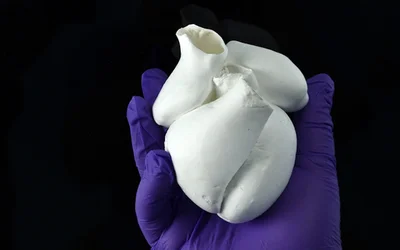
By recreating the helical structure of heart muscles, researchers improve understanding of how the heart beats
AI is transforming the pharma industry with a fast, reliable, inexpensive, and cruelty-free drug discovery and development process.
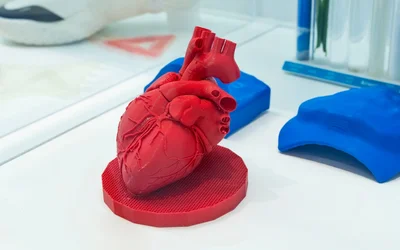
A technical analysis of 3D printing in healthcare, covering materials, clinical applications, and regulatory considerations for engineers.
18 minutes read.


High Tech
High Tech Campus Eindhoven is Europe's smartest square km and has the ultimate high-tech open innovation ecosystem.
49 Posts


Appliances, Electrical, and Electronics Manufacturing
Scalable, Cost-Effective, Protective Coating Services
Have you exercised today? How about training together with a robot? Please use robots in a friendly and safe manner, and keep a safe distance.
In this episode, we explore the engineering behind Unitree's newest boxing robot demo, the history of humanoid robots, and why robotics might create a new F1-esque sport in the combat sports realm.
Unitree welcomes users and developers worldwide to co-develop and share together. Exceptional developers will receive rewards. 转写文稿
Unitree 1.8m H2 Humanoid Robot, A Combat Sparring Test. H2's knee strike lifts G1 off the ground. This is to validate the overall reliability of the robot, please do not attempt to replicate this. Please use robots in a friendly manner.
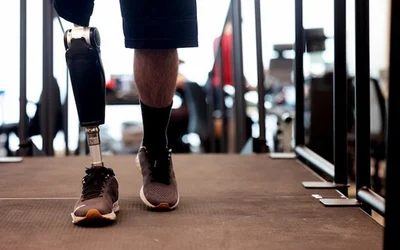
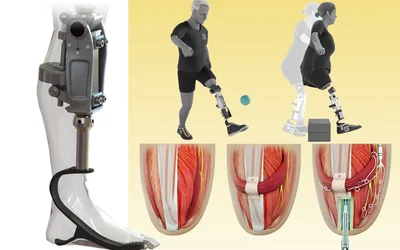
Paired with custom control software, Össur's powered knee prosthesis helped study participants sit, stand and walk more easily.
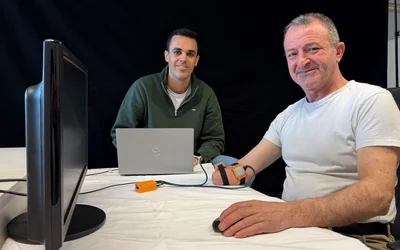
The human determinants of research are key for making progress, as championed by amputee Massimo Munzi who is helping improve prosthetics, as well as EPFL's neuroprosthetic researcher Jonathan Muheim.
In a small clinical study, users of this prosthesis navigated more easily and said the limb felt more like part of their body.
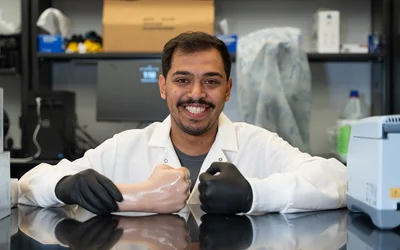
In a new study, Texas A&M researchers have used a skin-like material as a platform for investigating infections from intravenous catheters.
Introducing the Improving Lives with Digital Healthcare Series: Modern biomedical instruments enhanced by the latest digital technologies can make healthcare more accessible, personalized, and proactive.
By recreating the helical structure of heart muscles, researchers improve understanding of how the heart beats

5 minutes read
AI is transforming the pharma industry with a fast, reliable, inexpensive, and cruelty-free drug discovery and development process.
In this episode, we talk about why minimization of speakers and energy storage devices is crucial for the next generation of electronics and medical devices.

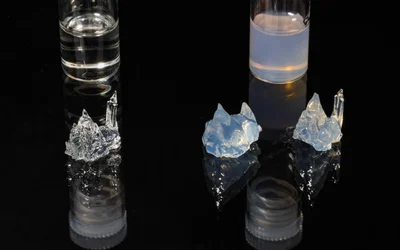
A team of EPFL engineers has developed a 3D-printing method that uses light to make objects out of opaque resin in a matter of seconds. Their breakthrough could have promising applications in the biomedical industry, such as to make artificial arteries.

3 minutes read
A team of researchers in Korea has been working on functional acoustic energy transmission (AET) systems, and their latest paper details a major breakthrough: Prototypes capable of powering LEDs, sensors, and Bluetooth transmitters at range and through materials include metal, tissue, and water.
Engineers have developed a glucose power source that could fuel miniature implants and sensors.
Axelera has recently joined the AI Innovation Center at High Tech Campus Eindhoven. The company is designing chips for AI on the edge with the aim to revolutionise the field and make AI accessible to everyone. They picked up an impressive 10 million euros in their seed investment round.

5 minutes read
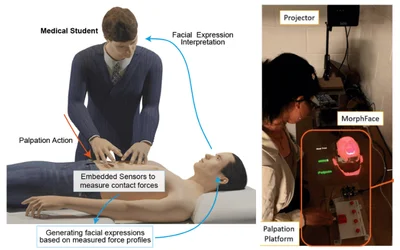
Researchers modeled dynamic facial expressions of pain using a data-driven perception-based psychophysical method with visual-haptic interaction of users.
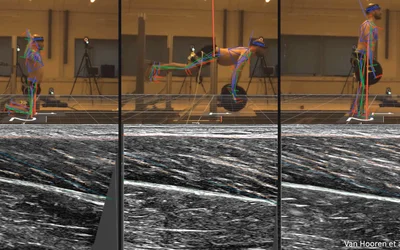
Researchers in Maastricht and Leuven used ProbeFix Dynamic for a pioneering study using dynamic ultrasound imaging and 3D motion tracking in Nordic hamstring curl, single-leg Roman chair, and single-leg deadlift.

3 minutes read
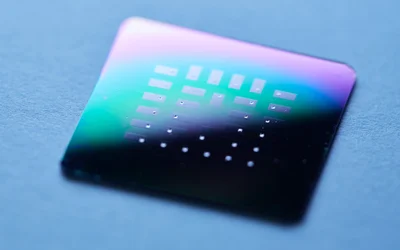
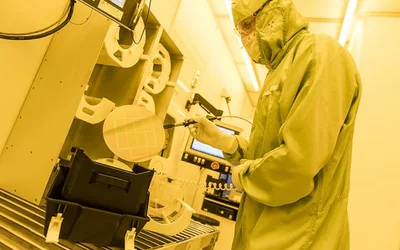
“Precision work down to the nanometer” is how Robbert van der Waal describes the work that Philips MEMS Foundry does. As part of Philips Engineering Solutions (PES), the company mainly makes a lot of components for customers outside of Philips. “Our technology is too good to keep to ourselves,” he says.
4 minutes read
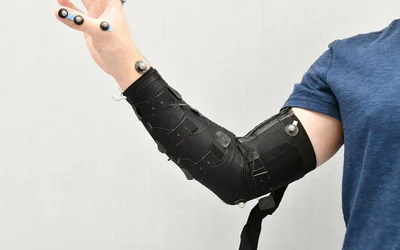
In this episode, we talk about how exoskeleton technology is being leveraged to treat parkinsons and how a new approach for more efficient, personalized exoskeletons could be the catalyst for wide scale adaptation.
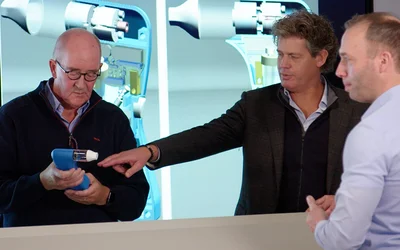
This is one of those startups that’s not quite a startup, but in its own niche, poised to become a medtech category killer. Gilbert Technologies has spent a decade developing their futuristic inhaler technology.
2 minutes read
Wireless technology has transformed the lives of hundreds of thousands of Type 1 diabetics. And the developments keep coming.

3 minutes read
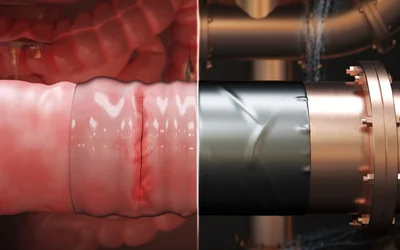
In this episode, we talk about how a new handheld 3D printer can revolutionize wound treatment in space and the duct tape inspired gel aiming to eliminate complications caused by gastrointestinal surgery.