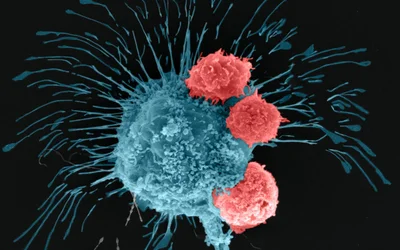
This article delves into the fundamental principles of SEM, various imaging modes and techniques, sample preparation methods, and the applications of SEM in different fields.
Unitree G1 has learned the "Anti-Gravity" mode: stability is greatly improved under any action sequence, and even if it falls, it can quickly get back up.
Everyone has fantasized about having an embodied avatar!
Full-body teleoperation and full-body data acquisition platform is waiting for you to try it out!
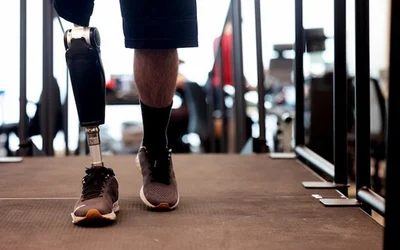
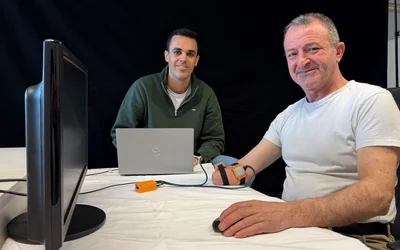
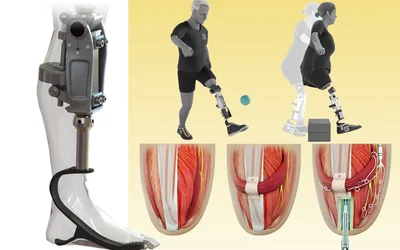
The human determinants of research are key for making progress, as championed by amputee Massimo Munzi who is helping improve prosthetics, as well as EPFL's neuroprosthetic researcher Jonathan Muheim.
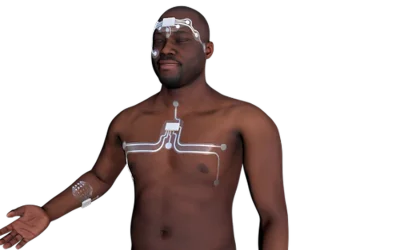
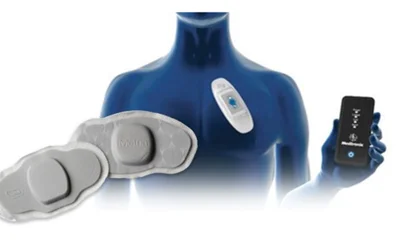
Article #1 of Improving Lives with Digital Healthcare Series: Developing wearable devices for consumer and medical applications can come with different sets of challenges.
Researchers at Texas A&M University and The University of Texas at Austin are working to change that, enabling continuous monitoring that can provide a more comprehensive look at blood pressure than the single snapshot that comes with the cuffs.
Introducing the Improving Lives with Digital Healthcare Series: Modern biomedical instruments enhanced by the latest digital technologies can make healthcare more accessible, personalized, and proactive.
In this episode, we talk about why minimization of speakers and energy storage devices is crucial for the next generation of electronics and medical devices.
A team of EPFL engineers has developed a 3D-printing method that uses light to make objects out of opaque resin in a matter of seconds. Their breakthrough could have promising applications in the biomedical industry, such as to make artificial arteries.
A team of researchers in Korea has been working on functional acoustic energy transmission (AET) systems, and their latest paper details a major breakthrough: Prototypes capable of powering LEDs, sensors, and Bluetooth transmitters at range and through materials include metal, tissue, and water.
Axelera has recently joined the AI Innovation Center at High Tech Campus Eindhoven. The company is designing chips for AI on the edge with the aim to revolutionise the field and make AI accessible to everyone. They picked up an impressive 10 million euros in their seed investment round.
Researchers modeled dynamic facial expressions of pain using a data-driven perception-based psychophysical method with visual-haptic interaction of users.
Researchers in Maastricht and Leuven used ProbeFix Dynamic for a pioneering study using dynamic ultrasound imaging and 3D motion tracking in Nordic hamstring curl, single-leg Roman chair, and single-leg deadlift.
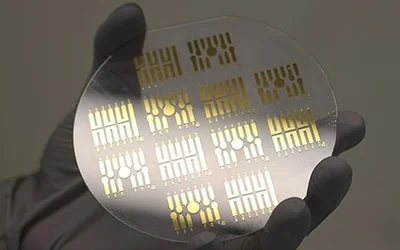
“Precision work down to the nanometer” is how Robbert van der Waal describes the work that Philips MEMS Foundry does. As part of Philips Engineering Solutions (PES), the company mainly makes a lot of components for customers outside of Philips. “Our technology is too good to keep to ourselves,” he says.
In this episode, we talk about how exoskeleton technology is being leveraged to treat parkinsons and how a new approach for more efficient, personalized exoskeletons could be the catalyst for wide scale adaptation.
This is one of those startups that’s not quite a startup, but in its own niche, poised to become a medtech category killer. Gilbert Technologies has spent a decade developing their futuristic inhaler technology.