This guide offers engineers an in-depth understanding of H Bridge motor control, explaining its basics, topologies, switching strategies, design, optimization, and practical considerations for next-generation engineering projects.
Discover how radar sensors enhance building safety, traffic control, and asset management with reliable vehicle detection solutions for docks, parking, drive-thrus, and toll applications.
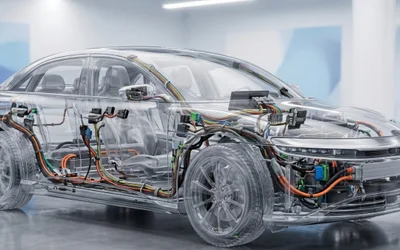
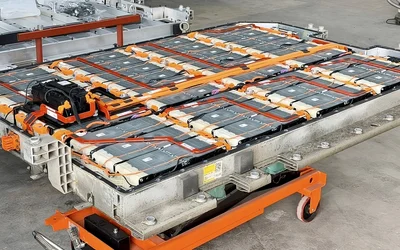
Modular high-voltage PDU architectures enable scalable power
distribution using standardized components. This approach
reduces tooling requirements, supports platform reuse, improves
serviceability, and accelerates integration in EV systems.
This guide offers engineers an in-depth understanding of H Bridge motor control, explaining its basics, topologies, switching strategies, design, optimization, and practical considerations for next-generation engineering projects.
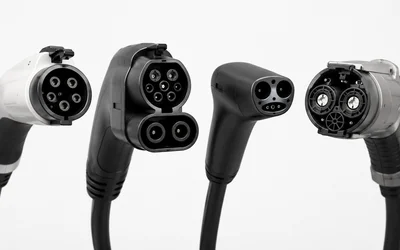
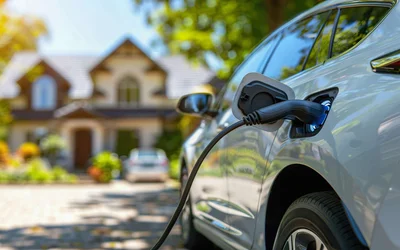
Electric vehicles face significant barriers to their adoption. Harwin delivers connectors to help designers create the next phase of charging infrastructure.

Molecular particle free inks can offer extreme formability and stretchability, allowing the design and production of 3D shaped and/or in-mold electronics parts with extreme curvatures and complex shapes.
As the University Technology Exposure Program 2022 enters its final month, we continue to receive submissions spanning different domains of technology. Submissions published in June included articles related to healthcare, electric vehicles, data analytics, smart cities, and smart manufacturing.
In this episode, we talk about how researchers plan to orchestrate the movement of a fleet of cars in real-time to avoid or minimize waiting periods at stoplights and how off-road navigation is being tackled in a way that’ll make your car understand the dynamics of its surroundings like a human.
Using public electricity and solar panels for the easy and hassle-free charging of Electric Vehicles is an interesting solution to combat the problem of the unavailability of Electric Vehicle Charging Stations.
EPFL scientists have built a compact waveguide amplifier by successfully incorporating rare-earth ions into integrated photonic circuits. The device produces record output power compared to commercial fiber amplifiers, a first in the development of integrated photonics over the last decades.
Local governments and policymakers are anxious about the U.S. grid’s ability to withstand ever-increasing demand. Consumers could hold the key to an untapped resource.
Battery cells come in rigid form factors that limit where and how they can be implemented in electric vehicles without forcing major design tradeoffs. Capacitech’s flexible energy storage products complements batteries, improves performance, enable features, and streamlines design.
In the not-too-distant future, autonomous, networked vehicles will be able to handle most tasks independently. However, they are not yet capable of dealing with all traffic situations. If they encounter a problem that they do not know how to solve, safety comes first.
Besides being a product manager for robotics and autonomous vehicles at Vanderlande and a former member of the Stella Team, a research group within TU/e that develops solar-powered family cars, Liselotte Graas is a singer, a documentary creator and host
Light Electric Vehicles (LEVs) have great potential to significantly reduce greenhouse gas emissions from the transport sector and thus contribute to climate protection. Half of the kilometres currently driven by car in Germany could theoretically be covered by LEVs.
With the Interurban Vehicle (IUV), the German Aerospace Center (Deutsches Zentrum für Luft- und Raumfahrt; DLR) has developed a ground-breaking concept for mid- and upper range vehicles.
Using satellite imagery or road schematic maps as "side information," the ViKiNG robot can plan its own miles-long route to a goal — measurably outperforming its strongest competitors, even when its side information is inaccurate or outdated.