Featured
A new computer vision system turns any shiny object into a camera of sorts, enabling an observer to see around corners or beyond obstructions.
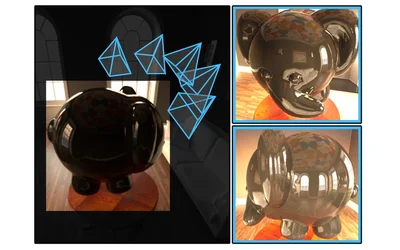
A new computer vision system turns any shiny object into a camera of sorts, enabling an observer to see around corners or beyond obstructions.
A new computer vision system turns any shiny object into a camera of sorts, enabling an observer to see around corners or beyond obstructions.
The CeCaS research project creates processors, interfaces and system architectures for highly automated networked vehicles - KIT develops hardware accelerators and benchmarking software
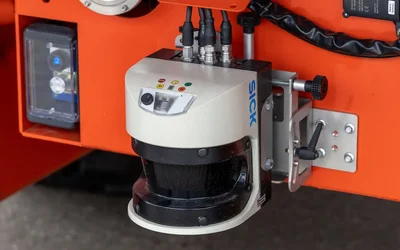
In this article, we will dive deep into the world of simultaneous localization and mapping using Lidar technology. Lidar SLAM has been gaining popularity in recent years, thanks to its versatility and applications across various domains, including autonomous vehicles, mobile robotics, and indoor mapping.
A PEM fuel cell converts hydrogen and oxygen into electricity at around 80 degrees C, with water and heat as the only products. This guide covers electrochemistry, layer materials, efficiency limits, and cost and durability to help you understand the practical applications of this technology.
14 minutes read.
14 minutes read.
12 minutes read.
13 minutes read.
15 minutes read.
14 minutes read.


Electronics
Mouser Electronics is a worldwide leading authorized distributor of semiconductors and electronic components.
219 Posts

Electrical and Electronic Manufacturing
Drop-in power cords that improve battery performance.
18 Posts
As robotics shifts from innovation showcases to real-world deployment, motion systems play a vital role in this next stage of robotics.
Specialized design and manufacturing of robotic systems for chemical, nuclear, and high-risk industrial applications.
The Companies and Concepts Redefining Tomorrow's Industries
Safe autonomy in various vehicle systems and in uncertain conditions.
The connectivity foundation for advanced driver assistance systems, software-defined vehicles, zonal architectures and electrified powertrains.
Engineering principles, BTMS architectures, and design tradeoffs.
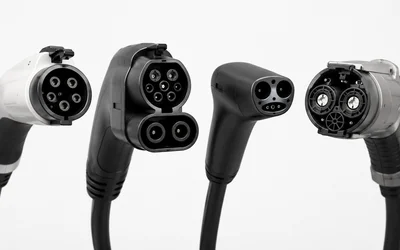
This article explains EV charging connector types, including AC, CCS, Tesla, CHAdeMO, GB/T, and NACS, with regional compatibility.
This article details EV charging levels, covering AC charging, DC fast charging, power delivery, infrastructure needs, and key trade-offs.
A new computer vision system turns any shiny object into a camera of sorts, enabling an observer to see around corners or beyond obstructions.
The CeCaS research project creates processors, interfaces and system architectures for highly automated networked vehicles - KIT develops hardware accelerators and benchmarking software

3 minutes read
In this article, we will dive deep into the world of simultaneous localization and mapping using Lidar technology. Lidar SLAM has been gaining popularity in recent years, thanks to its versatility and applications across various domains, including autonomous vehicles, mobile robotics, and indoor mapping.
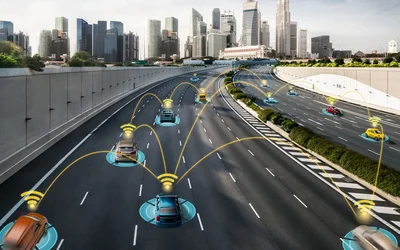
Cellular Vehicle-to-Everything (C-V2X) technology is transforming the transportation industry by enabling advanced communication between vehicles, infrastructure, and other road users. This breakthrough technology has the potential to improve road safety, reduce traffic congestion, and support the development of autonomous vehicles.
Explore the key differences, advantages, and applications of lidar and radar technologies in modern engineering projects.
Considering a quick IoT solution that will get your product deployed faster? Here’s why you should reconsider.

3 minutes read
To help meet climate targets, the world is transitioning from internal combustion engine (ICE) vehicles to electric vehicles (EVs). The move to EVs, particularly if they can be recharged with renewable resources, eliminates emissions at the tailpipe and those associated with extracting and refining the fuel for conventional engines. In short, EVs promise a greener future.

4 minutes read
Article #8 of Innovations in Electric and Autonomous Vehicles Series: Advancements in voice recognition, touch displays, and other HMI technologies of next-gen vehicles are all set to transform the way we interact with our rides. Car dashboards will be safer, non-distracting, and highly intuitive.
Article #7 of Innovations in Electric and Autonomous Vehicles Series: As electric vehicles (EVs) gain traction, challenges surrounding noise cancellation are dramatically changing, and the desire to reduce the weight of EVs is driving engineers toward active noise-cancellation solutions.
Article #6 of Innovations in Electric and Autonomous Vehicles Series: Getting the capital equipment in place and ramping up the supply of batteries will help transition the market from liquid- to solid-state. Industry and consumers will both benefit.
Reducing CO2 emissions from road transport presents a key challenge and opportunity for the automotive industry.
Take advantage of the low cost and high energy efficiency of SBCs to design your own tracking systems
A GTC Session Watch Party is a replay of an original GTC talk hosted by NVIDIA.
Article #5 of Innovations in Electric and Autonomous Vehicles Series: EV batteries and chargers evolve, and as traditional auto sales dropped, EV sales continued to rise over the past years. What will this mean for investors and consumers? Where is the tech taking us and what stands in the way?
Single-board computers (SBCs) are the brain of an EV charger. With the EV charging market taking off, SBCs are at the centre of the electrification movement. But what are the challenges that lay ahead? And what do cutting-edge SBCs bring forth?