Featured
Article #3 of the "Why Edge?" Series. From soaring costs to dwindling resources, the energy and utility sectors face unprecedented challenges in the coming years.
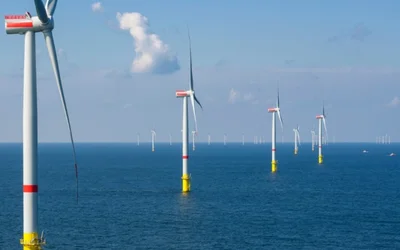
Article #3 of the "Why Edge?" Series. From soaring costs to dwindling resources, the energy and utility sectors face unprecedented challenges in the coming years.
Article #3 of the "Why Edge?" Series. From soaring costs to dwindling resources, the energy and utility sectors face unprecedented challenges in the coming years.
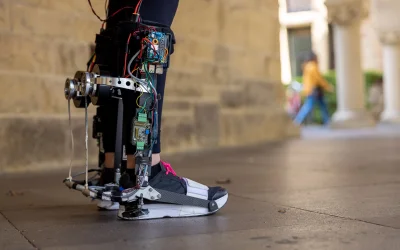
After years of careful development, engineers have created a boot-like exoskeleton that increases walking speed and reduces effort outside of the lab.
Article #2 of the "Why Edge?" Series. Edge AI increases battery life, reduces latency, and in many cases, eliminates the need for cloud communication, making wearable devices more user-friendly and secure.
Artificial intelligence (AI) is a wide-ranging tool that enables people to rethink how we integrate information, analyze data, and use the resulting insights to improve decision making
15 minutes read.
20 minutes read.
13 minutes read.
17 minutes read.
25 minutes read.
11 minutes read.


Entertainment
The Next Byte Podcast is hosted by two young engineers - Daniel and Farbod - who select the most interesting tech/engineering cont...
165 Posts

High Tech
High Tech Campus Eindhoven is Europe's smartest square km and has the ultim...
49 Posts

University for science and technology
Freedom and individual responsibility, entrepreneurial spirit and open-min...
43 Posts
From leading experts at the CDFAM Computational Design Symposium
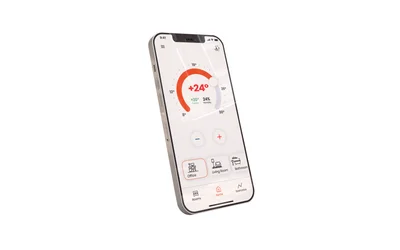
eCozy 2.0 system addresses the limitations of traditional thermostats for water heating radiators, delivering efficiency, convenience and sustainability benefits to households
Protect the cloud by securing the edge with hardware-based security, TPMs, HSMs, and resilient edge computing architectures.
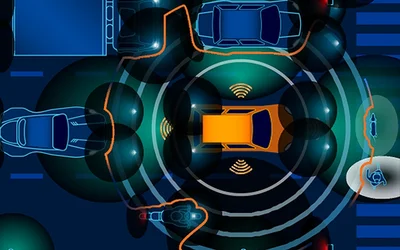
Explore the rise of intelligent EV hardware and how real-time processing, ML acceleration, and hardware virtualization are enabling safer, smarter, software-defined electric vehicles.
EPFL researchers are developing AI models that could one day enable vision prosthetics able to restore meaningful, object-level sight for the blind.
A deep-dive listicle guiding controls, automation, and quality engineers toward the best vision systems for manufacturing applications in 2026.
Understanding industrial vision systems by examining their components, imaging fundamentals, AI integration since 2020, and how to choose the right solution for every application.
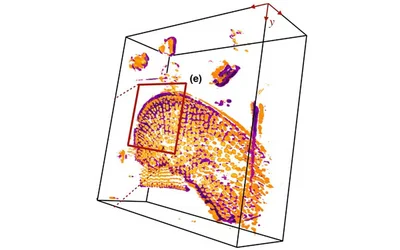
The AI-powered tool could inform the design of better sensors and cameras for robots or autonomous vehicles.
Article #3 of the "Why Edge?" Series. From soaring costs to dwindling resources, the energy and utility sectors face unprecedented challenges in the coming years.
After years of careful development, engineers have created a boot-like exoskeleton that increases walking speed and reduces effort outside of the lab.

4 minutes read
Article #2 of the "Why Edge?" Series. Edge AI increases battery life, reduces latency, and in many cases, eliminates the need for cloud communication, making wearable devices more user-friendly and secure.
Someday autonomous vehicles and human-driven vehicles will share the road. How to manage the rise of AVs is the topic of a Carnegie Mellon policy brief.

3 minutes read
Art and science are usually thought of as opposites. AI-powered systems like MidJourney smash that paradigm out of the water.
Article #1 of the "Why Edge?" Series. Edge AI presents a multitude of benefits for security across industry.
This article taps into discussing problems met by retailers and ways in which they can be solved with robotic automation.

6 minutes read
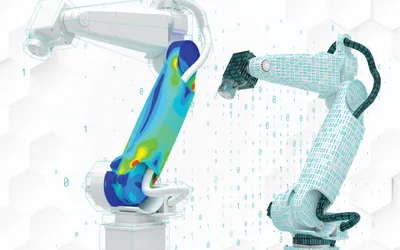
Digital twins, edge processing, and addressing bias are at the center of AI research and development.
Computer vision brings an 80% reduction in illegal dumping. IoT surveillance company iDefigo partners with Matroid to apply AI-based computer vision for illegal trash dumping detection.

2 minutes read
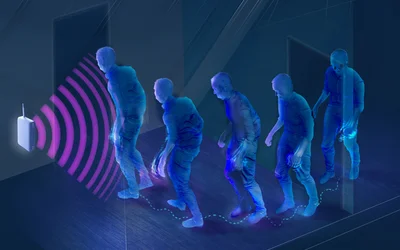
By continuously monitoring a patient’s gait speed, the system can assess the condition’s severity between visits to the doctor’s office.
Neural field network doesn’t need to be trained on other samples
A short guide to understanding the edge neural network design.
In this episode, we talk about how a team from MIT is making the most well known creative AI - Dall-E - even better at creativity!

Proven benchmarks provide a structured method for comparing ML/DL products and services.
Researchers develop a new method that uses multiple models to create more complex images with better understanding.