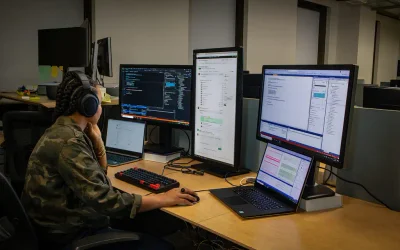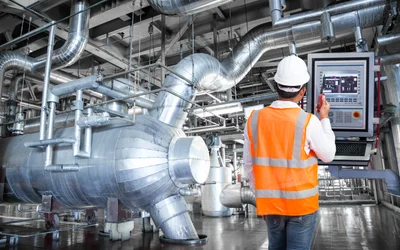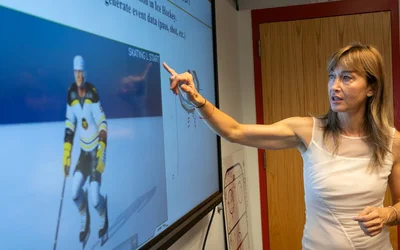
Artificial intelligence (AI) is a wide-ranging tool that enables people to rethink how we integrate information, analyze data, and use the resulting insights to improve decision making
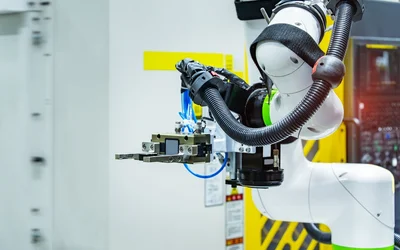
In large-scale warehousing and distribution operations, conveyor belts are an essential infrastructure that must operate with near-zero downtime to ensure the timely delivery of products. The presence of loose or foreign items on a conveyor belt can pose a serious risk to these operations.
To reduce waste, the Refashion program helps users create outlines for adaptable clothing, such as pants that can be reconfigured into a dress. Each component of these pieces can be replaced, rearranged, or restyled.
Smart eyewear promises to transform how we see and interact with the world. Among its many potential advantages, the technology offers hands-free access to information, vision enhancement, and accessibility tools.
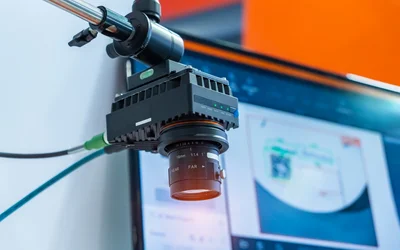
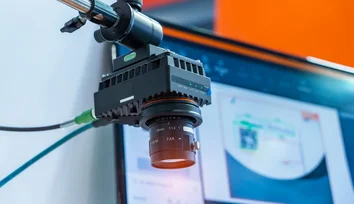
Matroid builds no-code computer-vision detectors that can spot everything from microscopic material defects to real-time safety hazards on a factory floor.
In large-scale warehousing and distribution operations, conveyor belts are an essential infrastructure that must operate with near-zero downtime to ensure the timely delivery of products. The presence of loose or foreign items on a conveyor belt can pose a serious risk to these operations.
In this post, we'll walk through how to evaluate that progress using the same metrics our platform provides automatically, so you can build detectors that get smarter, sharper, and more reliable over time.
The no-code platform from Matroid trains ordinary cameras to act like expert inspectors, turning simple footage into a pixel-level defect checklist. Even a handheld GoPro can spot issues human eyes miss—using remarkably small datasets.
Designed to address the risk to front-line staff from COVID-19, this autonomous swab-sampling robot is designed to take the human element out of sample gathering.

Using a now public-access dataset, a research team has created a robotics control system which can generalize to unseen related tasks — allowing robots to interpret natural-language commands and video demonstrations.
Intelligent Automation (IA) is a set of technologies and methods for automating the work of white-collar professionals and knowledge workers. Here, we present a framework for explaining its power in terms of four main capabilities—Vision, Execution, Language, and Thinking & Learning—and how they can enable business transformations, with people and business goals at the center.
With research suggesting feral pigeons do as much as $1.1 billion in damage in the US alone, a project which pairs a commercial drone with machine learning to scare them away — without injury — could prove key to their control.
A team of experts in artificial intelligence and animal ecology have put forth a new, cross-disciplinary approach intended to enhance research on wildlife species and make more effective use of the vast amounts of data now being collected thanks to new technology.
A system developed by Grégoire Courtine and Jocelyne Bloch now enables patients with a complete spinal cord injury to stand, walk and even perform recreational activities like swimming, cycling and canoeing.
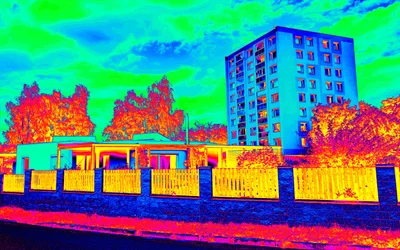
5 Questions to Ask Before Getting Started with Data Annotation:
What is data annotation? Why is it essential? What are common label types for models? How do AI-powered data annotation tools help with the computer vision labeling process? What’s the best way to get started?
By reconfiguring neural networks in artificial intelligence (AI) devices, a multi-institute team that included Penn State researchers facilitated AI systems to continually learn and adapt new data and tasks in ways that were not possible or practical before.
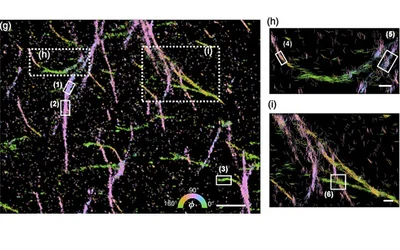
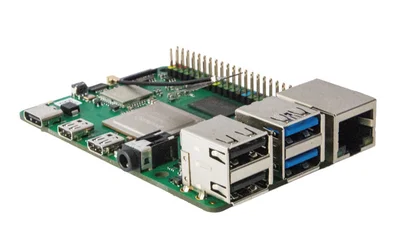
The CyberSpec framework is designed to detect anomalous behavior linked to cyber-attacks against crowd-sensing spectrum sensors, even when said sensors are running on lightweight resource-constrained hardware like a Raspberry Pi.
Developed at Google Research, HyperTransformer decouples the task space and individual task complexity to generate all model weights in just one pass — while also offering support for unlabeled sample ingestion.
Hardware and software engineers will be the lifeblood of tomorrow's connected world. Academia is working hard to ensure a steady supply, in part by adapting engineering education to train the next generation of IoT innovators.