Featured
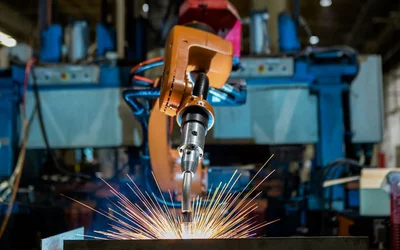
The Industrial Revolution began in Britain sometime around 1760. It ushered in a period where coal-fired steam engines powered increased mechanization and productivity and transformed a largely agrarian society into a manufacturing one.
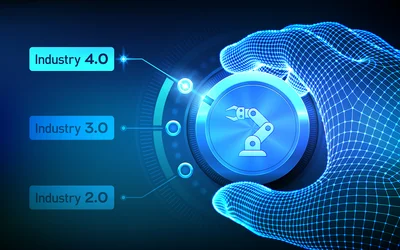
The Industrial Revolution began in Britain sometime around 1760. It ushered in a period where coal-fired steam engines powered increased mechanization and productivity and transformed a largely agrarian society into a manufacturing one.
The Industrial Revolution began in Britain sometime around 1760. It ushered in a period where coal-fired steam engines powered increased mechanization and productivity and transformed a largely agrarian society into a manufacturing one.
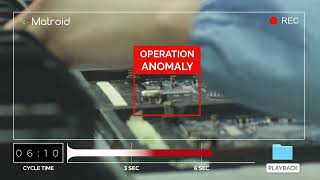
Deep-Learning technology helps industrial engineers with continuous improvement, line balancing, and optimizing manual labor.
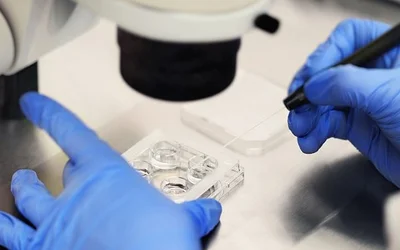
An artificial intelligence algorithm can determine non-invasively, with about 70% accuracy, if an in vitro fertilized embryo has a normal or abnormal number of chromosomes, according to a new study from researchers at Weill Cornell Medicine.
Artificial intelligence (AI) is a wide-ranging tool that enables people to rethink how we integrate information, analyze data, and use the resulting insights to improve decision making
15 minutes read.
20 minutes read.
13 minutes read.
17 minutes read.
25 minutes read.
11 minutes read.


Entertainment
The Next Byte Podcast is hosted by two young engineers - Daniel and Farbod - who select the most interesting tech/engineering cont...
165 Posts

High Tech
High Tech Campus Eindhoven is Europe's smartest square km and has the ultim...
49 Posts

University for science and technology
Freedom and individual responsibility, entrepreneurial spirit and open-min...
43 Posts
From leading experts at the CDFAM Computational Design Symposium
eCozy 2.0 system addresses the limitations of traditional thermostats for water heating radiators, delivering efficiency, convenience and sustainability benefits to households
Protect the cloud by securing the edge with hardware-based security, TPMs, HSMs, and resilient edge computing architectures.
Explore the rise of intelligent EV hardware and how real-time processing, ML acceleration, and hardware virtualization are enabling safer, smarter, software-defined electric vehicles.
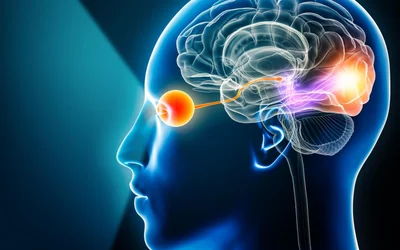
EPFL researchers are developing AI models that could one day enable vision prosthetics able to restore meaningful, object-level sight for the blind.
A deep-dive listicle guiding controls, automation, and quality engineers toward the best vision systems for manufacturing applications in 2026.
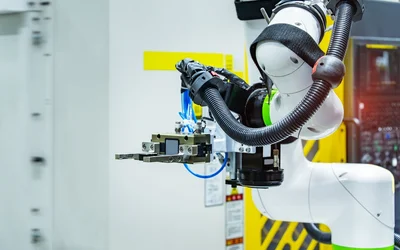
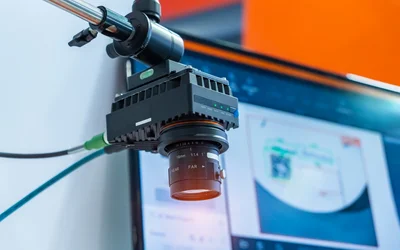
Understanding industrial vision systems by examining their components, imaging fundamentals, AI integration since 2020, and how to choose the right solution for every application.
The AI-powered tool could inform the design of better sensors and cameras for robots or autonomous vehicles.
The Industrial Revolution began in Britain sometime around 1760. It ushered in a period where coal-fired steam engines powered increased mechanization and productivity and transformed a largely agrarian society into a manufacturing one.

4 minutes read
Deep-Learning technology helps industrial engineers with continuous improvement, line balancing, and optimizing manual labor.

2 minutes read
An artificial intelligence algorithm can determine non-invasively, with about 70% accuracy, if an in vitro fertilized embryo has a normal or abnormal number of chromosomes, according to a new study from researchers at Weill Cornell Medicine.

4 minutes read
Combining Digital Twins with Artificial Intelligence (AI) decision-making technologies can transform agrifood production systems and supply chains – offering possible remedies to the problems of malnutrition, greenhouse gas (GHG) emissions, and food waste, say researchers.
#10 of our Voice of Innovation fireside chat series: Robotics and AI reporter Rachel Gordon speaks to Daniel Situnayake, a founder, engineer, and teacher, on what it means to run sophisticated machine learning algorithms on small devices at the edge of a network.
Everything you need to know about various types of automation and their role in modern manufacturing systems.
You've probably heard about the amazing capabilities of some recent AI models, such as GPT, AI21, or BLOOM. Perhaps you use one of these models yourself. Either directly, or through another product like Wordtune, YouWrite, Jasper – or ChatGPT. It turns out that while these models are trained on language data, they can be used for other applications as well. In my latest article, you can read more about applications in materials discovery, cybersecurity, and even building management.

5 minutes read
EPFL researchers have teamed up with Dartfish and the Lausanne Hockey Club to push the boundaries of sports-performance analysis by applying computer vision and machine-learning technology to action on the ice.

3 minutes read
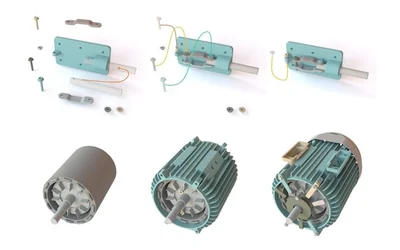
The manufacturing industry (largely) welcomed artificial intelligence with open arms. Less of the dull, dirty, and dangerous? Say no more. Planning for mechanical assemblies still requires more than scratching out some sketches, of course — it’s a complex conundrum that means dealing with arbitrary 3D shapes and highly constrained motion required for real-world assemblies.
Cybernetics can help to create a safe, sustainable and responsible future in a complex world.
In this episode, we talk about how perfectly tuning the curiosity of an AI results in more efficient and robust models.

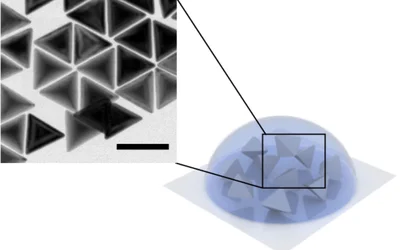
Producing chirality, a property found throughout nature, through large-scale self-assembly could lead to applications in sensing, machine perception and more.

4 minutes read
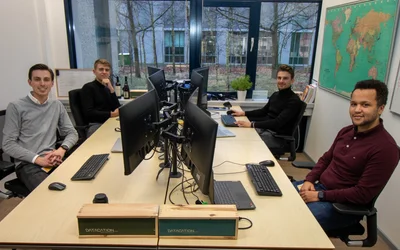
Datacation is a startup in a technology area so advanced it can't even be called 'next-generation'. Perhaps 'next next gen' because so far we don't know all the possible business applications of machine learning and AI, nor do we know the limits.

7 minutes read
Digital transformation and the Industrial Internet of Things (IIoT) continue to impact industry at all levels. While it's seen its earliest adoption in large-scale manufacturing and transport, it's spreading rapidly into other sectors.
Intelligent Flying Robots is a revolutionary approach to Non-Destructive Testing (NDT) that enables accurate contact-based inspection to fulfill industrial asset inspection standards with many advantages.

3 minutes read