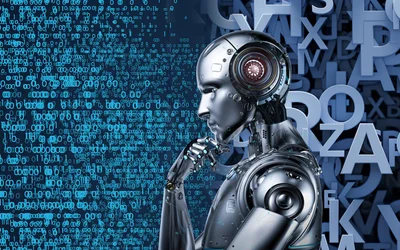
Artificial intelligence (AI) is a wide-ranging tool that enables people to rethink how we integrate information, analyze data, and use the resulting insights to improve decision making
In large-scale warehousing and distribution operations, conveyor belts are an essential infrastructure that must operate with near-zero downtime to ensure the timely delivery of products. The presence of loose or foreign items on a conveyor belt can pose a serious risk to these operations.
To reduce waste, the Refashion program helps users create outlines for adaptable clothing, such as pants that can be reconfigured into a dress. Each component of these pieces can be replaced, rearranged, or restyled.
Smart eyewear promises to transform how we see and interact with the world. Among its many potential advantages, the technology offers hands-free access to information, vision enhancement, and accessibility tools.
Matroid builds no-code computer-vision detectors that can spot everything from microscopic material defects to real-time safety hazards on a factory floor.
In large-scale warehousing and distribution operations, conveyor belts are an essential infrastructure that must operate with near-zero downtime to ensure the timely delivery of products. The presence of loose or foreign items on a conveyor belt can pose a serious risk to these operations.
In this post, we'll walk through how to evaluate that progress using the same metrics our platform provides automatically, so you can build detectors that get smarter, sharper, and more reliable over time.
The no-code platform from Matroid trains ordinary cameras to act like expert inspectors, turning simple footage into a pixel-level defect checklist. Even a handheld GoPro can spot issues human eyes miss—using remarkably small datasets.

Trained on a dataset that includes all known living species—and a few extinct ones, Evo2 can predict the form and function of proteins in the DNA of all domains of life, identify molecules useful for bioengineering and medicine
To advance modern medicine, EPFL researchers are developing AI-based diagnostic tools. Their goal is to predict the best treatment a patient should receive.
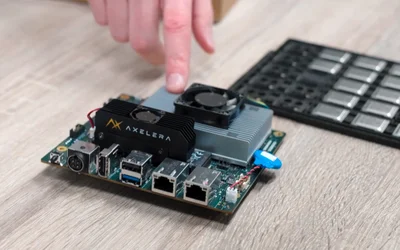
As the demand for smarter, faster, and more efficient electronic devices grows, the development of advanced circuits is becoming central to the evolution of next-generation technologies.
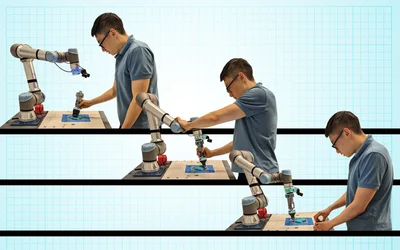
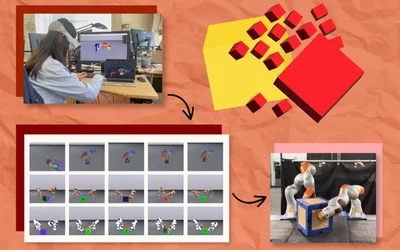
New research uses AI to improve training of sensorimotor skills in human subjects, with potential applications ranging from performing surgery to perfecting tennis serves.
Shadow Robot’s partnership with Google DeepMind exemplifies how collaboration drives innovation in robotics and AI. This article explores how their expertise in dexterous robotic hands, particularly the DEX-EE, is advancing machine learning research.
Building on the success of conventional wearables, smart rings have been enthusiastically embraced by early adopters with a finger on the pulse of cutting-edge yet fashionable health and fitness wireless products.