Featuredpodcast
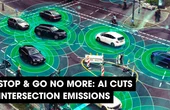
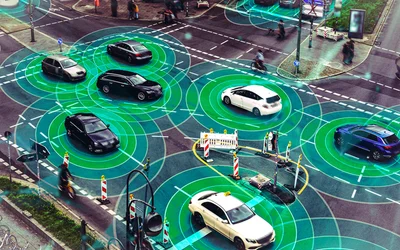
In this episode, we explore how AI-powered eco-driving—smartly adjusting vehicle speeds to minimize stops and unnecessary acceleration—can reduce carbon emissions at city intersections by 11 to 22 percent.
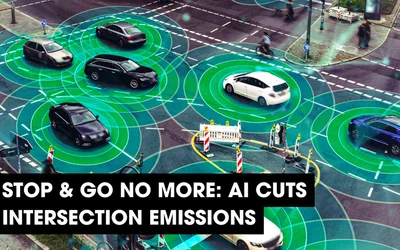
In this episode, we explore how AI-powered eco-driving—smartly adjusting vehicle speeds to minimize stops and unnecessary acceleration—can reduce carbon emissions at city intersections by 11 to 22 percent.
In this episode, we explore how AI-powered eco-driving—smartly adjusting vehicle speeds to minimize stops and unnecessary acceleration—can reduce carbon emissions at city intersections by 11 to 22 percent.
Storage systems from Cloudian, co-founded by an MIT alumnus, are helping businesses feed data-hungry AI models and agents at scale.
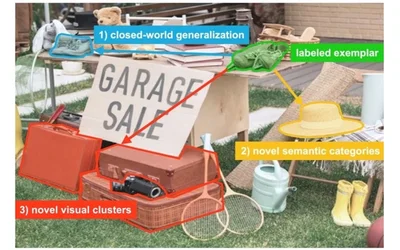
Open ad-hoc categorization approach combines language guidance with visual clustering to learn contextualized features for flexible image interpretation.
Artificial intelligence (AI) is a wide-ranging tool that enables people to rethink how we integrate information, analyze data, and use the resulting insights to improve decision making
15 minutes read.
20 minutes read.
13 minutes read.
17 minutes read.
25 minutes read.
11 minutes read.


Entertainment
The Next Byte Podcast is hosted by two young engineers - Daniel and Farbod - who select the most interesting tech/engineering cont...
165 Posts

High Tech
High Tech Campus Eindhoven is Europe's smartest square km and has the ultim...
49 Posts

University for science and technology
Freedom and individual responsibility, entrepreneurial spirit and open-min...
43 Posts
From leading experts at the CDFAM Computational Design Symposium
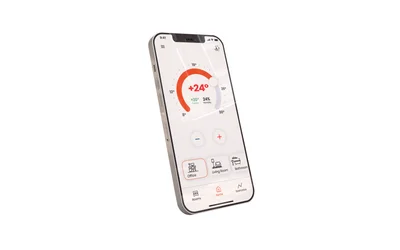
eCozy 2.0 system addresses the limitations of traditional thermostats for water heating radiators, delivering efficiency, convenience and sustainability benefits to households
Protect the cloud by securing the edge with hardware-based security, TPMs, HSMs, and resilient edge computing architectures.
Explore the rise of intelligent EV hardware and how real-time processing, ML acceleration, and hardware virtualization are enabling safer, smarter, software-defined electric vehicles.
EPFL researchers are developing AI models that could one day enable vision prosthetics able to restore meaningful, object-level sight for the blind.
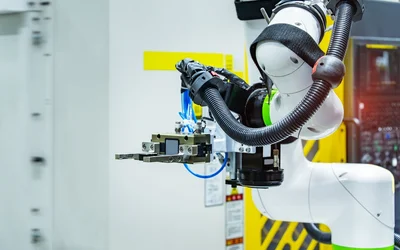
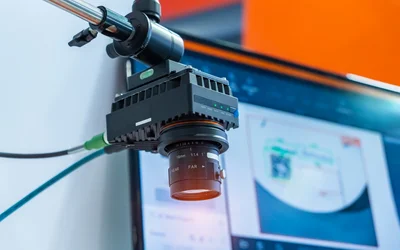
A deep-dive listicle guiding controls, automation, and quality engineers toward the best vision systems for manufacturing applications in 2026.
Understanding industrial vision systems by examining their components, imaging fundamentals, AI integration since 2020, and how to choose the right solution for every application.
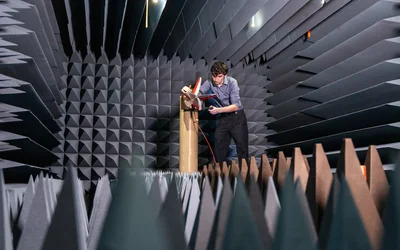
The AI-powered tool could inform the design of better sensors and cameras for robots or autonomous vehicles.
In this episode, we explore how AI-powered eco-driving—smartly adjusting vehicle speeds to minimize stops and unnecessary acceleration—can reduce carbon emissions at city intersections by 11 to 22 percent.

13 minutes read
Storage systems from Cloudian, co-founded by an MIT alumnus, are helping businesses feed data-hungry AI models and agents at scale.
Open ad-hoc categorization approach combines language guidance with visual clustering to learn contextualized features for flexible image interpretation.

4 minutes read
New research shows automatically controlling vehicle speeds to mitigate traffic at intersections can cut carbon emissions between 11 and 22 percent.
Artificial intelligence shows researchers that pollution increases may be more likely following natural hazards.

3 minutes read
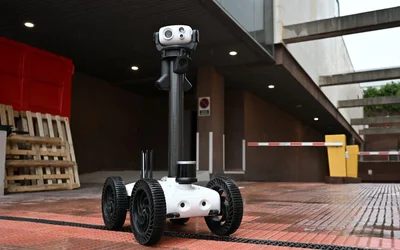
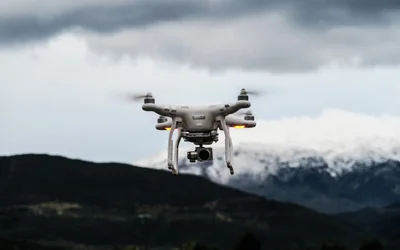
Outdoor robots operate in unpredictable terrain, shifting weather, and continuous workloads. Reliable navigation requires precise visual processing enabled by seamlessly integrated compute and vision systems.
Article #6 of Confronting AI Series: AI's rapid evolution has outpaced regulation. In this Q&A, Jared Bowns explores how adaptive frameworks, accountability, and ethical oversight can help engineers manage the risks and responsibilities of building trustworthy AI systems.
To bring AI into the real world, we often need a "bridge" to close the gap between those giant machines and the cameras and robot arms on the production line. At Matroid, we call these "AI Edge Compute Units".
Drs. Linda Katehi and Jian Tao are developing digital twin technology to create customizable, AI-powered sensor systems that can be built faster, more affordably and with better performance.
3 minutes read
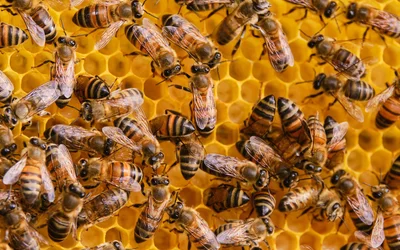
EPFL researchers are developing robotic beehive frames that help locate honey stores inside of beehives over time, without relying on cameras. The aim is to develop new observation tools to study honeybee behavior that better fit the bees' natural way to occupy space compared to current methods.

3 minutes read
Did you miss ATCx AI for Engineers 2025? Catch up on key insights, real-world AI use cases, and how the event showcased AI's growing role in transforming engineering workflows, design, and smart manufacturing.
Researchers blend theoretical insight and precision experiments to entangle photons on an ultra-thin chip

3 minutes read
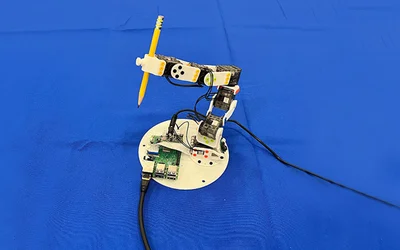
Neural Jacobian Fields, developed by MIT CSAIL researchers, can learn to control any robot from a single camera, without any other sensors.
Article #5 of Confronting AI Series: Smart ML on embedded systems demands efficiency under tight memory, compute, and latency constraints. Techniques like pruning, quantization, low-rank decomposition, and federated learning enable compact, fast, and reliable models for edge intelligence.
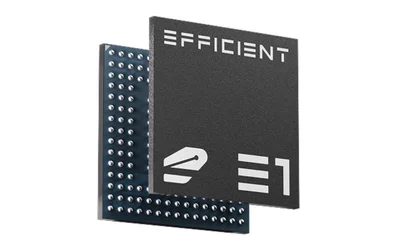
Traditional processors are inefficient in certain contexts, wasting energy on data movement rather than computation. As a result, the industry is shifting focus to maximizing performance per watt, highlighting the need to rethink compute architecture to meet real-world constraints.