Featured
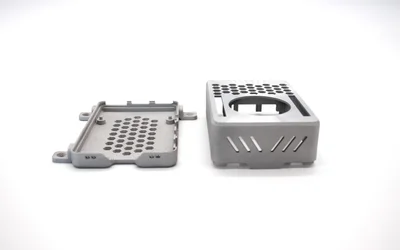
AlSi10Mg (3.2382) is a high-performance material widely used in metal 3D printing for various advanced applications. Let's take an in-depth look at its properties, applications, and mechanical characteristics.
This Report shows how tools like artificial intelligence, digital twins, and on-demand manufacturing are no longer emerging concepts, but are already delivering measurable impact across the product lifecycle.
Glossary of 3D Printing Terms
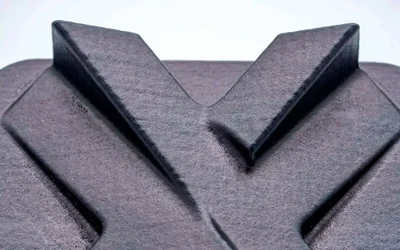
AlSi10Mg (3.2382) is a high-performance material widely used in metal 3D printing for various advanced applications. Let's take an in-depth look at its properties, applications, and mechanical characteristics.
Metal 3D printing offers significant design opportunities with its high geometrical freedom, but it requires careful design for additive manufacturing (DfAM) to address equipment and material constraints, a process supported by DfAM and 3D printing simulation tools in most major CAD software.
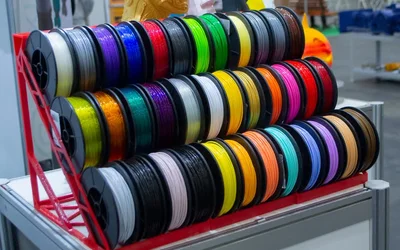
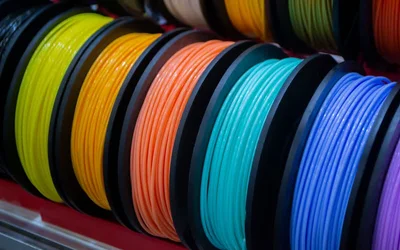
In this guide, we cover all the different types of polymer FDM 3D printing filament, from standard grades like PLA and ABS to advanced high-performance filaments like PEEK and fiber-reinforced materials.
What is 3D printing? This article goes over the basics of 3D printing, otherwise known as additive manufacturing, covering its engineering principles and applications.
15 minutes read.
22 minutes read.
11 minutes read.
18 minutes read.
12 minutes read.
16 minutes read.


Entertainment
The Next Byte Podcast is hosted by two young engineers - Daniel and Farbod - who select the most interesting tech/engineering cont...
165 Posts
E2IP Technologies manufactures Flexible Heaters using Screen Printing Technology. This is one of the most important segments of printed and additive electronics with applications in cars, homes, and industrial settings.
Here’s what to do if you notice clicking noises, under-extrusion, or other print quality issues caused by extruder skipping on the Ender 3 by Creality.
Unwanted lines in 3D prints can show up for many reasons and take different forms. Here we look at the most common types of lines in 3D prints and how to eliminate them.
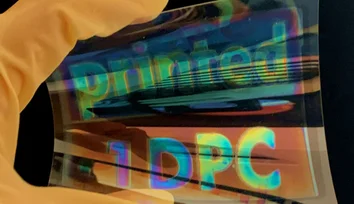
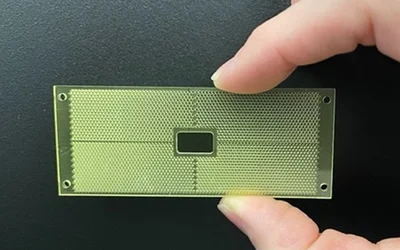
KIT researchers are developing a process with which, for the first time, mirrors with a reflection of more than 99 percent can be printed in variable sizes
Following a successful crowdfunding campaign, the FibreSeeker 3 from FibreSeek is bringing continuous carbon fiber printing to a new audience.
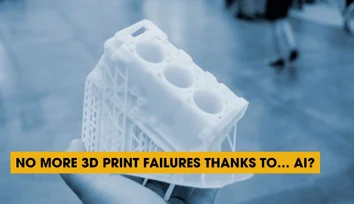
In this episode, we explore how researchers have developed an AI system that can watch a 3D print as it's being made, detect mistakes, and automatically correct them before the print fails
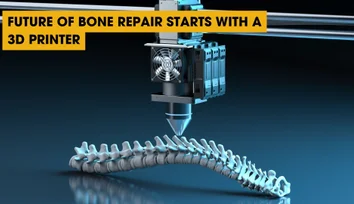
In this episode, we explore a new 3D printable material that can quickly transform into a strong, bone-like scaffold capable of supporting new bone growth. Learn how this breakthrough could lead to faster recovery times and improve treatments for patients with serious bone injuries.
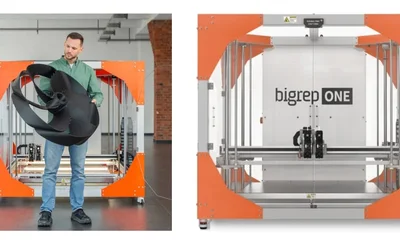
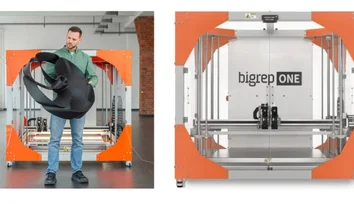
Unlock increased productivity with the BigRep ONE.5X, a cutting-edge large-scale FDM 3D printing.
AlSi10Mg (3.2382) is a high-performance material widely used in metal 3D printing for various advanced applications. Let's take an in-depth look at its properties, applications, and mechanical characteristics.

2 minutes read
Metal 3D printing offers significant design opportunities with its high geometrical freedom, but it requires careful design for additive manufacturing (DfAM) to address equipment and material constraints, a process supported by DfAM and 3D printing simulation tools in most major CAD software.
In this guide, we cover all the different types of polymer FDM 3D printing filament, from standard grades like PLA and ABS to advanced high-performance filaments like PEEK and fiber-reinforced materials.
From entry-level FDM machines to industrial-grade metal printers, this guide demystifies the many types of 3D printers available to businesses and consumers.
This article explores the thermal properties of TPU, including TPU glass transition temperature, extrusion and bed temperatures, and best practices for successful 3D printing.
The italian company MDE shows how they are using metal 3D printing in their daily business.
High-precision is no longer just for micro parts. Boston Micro Fabrication (BMF) emerged as a pioneering force in the 3D printing landscape with its global commercial launch in 2020, driven by a vision to address an underserved market —the micro-scale 3D printing market.

3 minutes read
In this chapter, we separate metal AM post-processing into four categories: debinding and sintering, CNC machining and milling, heat treatment, and quality assurance.
The most commonly used 3D printing filament, PLA is not known for its flexibility. We explore why that is and list some alternative 3D printing materials can be used when flexibility is needed.
Tips on how to design for Carbon’s additive manufacturing technology, and how Carbon stacks up against stereolithography and Multi Jet Fusion 3D printing.

5 minutes read
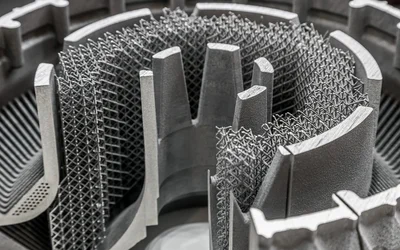
One of the most transformative elements in the design process for metal 3D printed parts is the integration of lattice structures as these can drastically improve the efficiency and performance of a component.
3 minutes read
As global supply chains face increasing pressure and manufacturing demands grow more complex, 3D printing is moving to the forefront of additive manufacturing as a cost-efficient, reliable, and flexible tool that is changing how companies view workflow optimization and production uptimes.

3 minutes read
The metal additive manufacturing market features various feedstock types, with powder being the dominant choice for LPBF, some DED methods, and binder jetting. Metal wire and bound metal filament are also used in specific technologies.
Every day, more companies discover the transformative benefits of 3D printing. Although the technology has become significantly more accessible over the years, some businesses may still encounter initial challenges in adopting 3D printing.
4 minutes read
What if the secret to transforming manufacturing lies in how we print? The answer may lie in a single layer, as the ability to precisely jet valuable materials layer by layer offers a new level of manufacturing freedom.