Featured
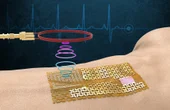
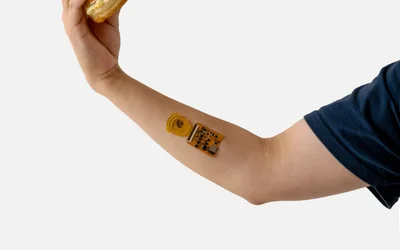
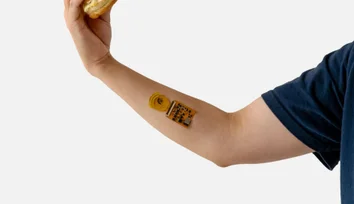
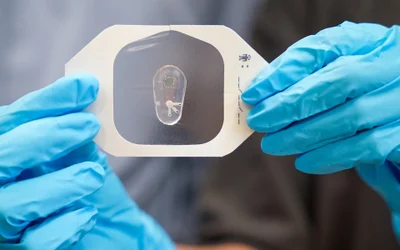
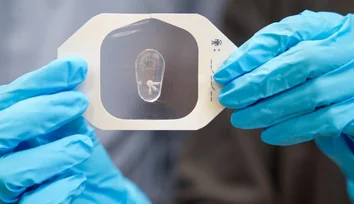
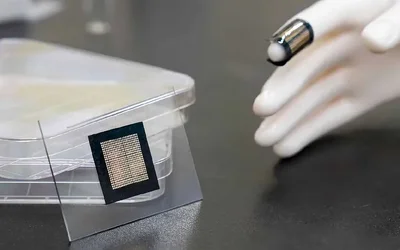
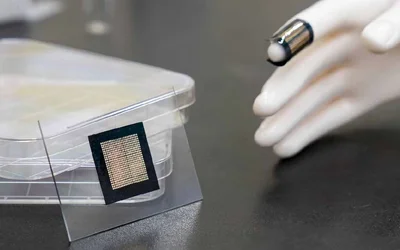
The device senses and wirelessly transmits signals related to pulse, sweat, and ultraviolet exposure, without bulky chips or batteries.
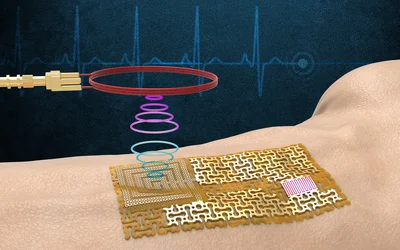
The device senses and wirelessly transmits signals related to pulse, sweat, and ultraviolet exposure, without bulky chips or batteries.
The device senses and wirelessly transmits signals related to pulse, sweat, and ultraviolet exposure, without bulky chips or batteries.
The sophisticated artificial skin sweats where and how much the researchers want it to. This was reported in an Angewandte Chemie article by Danqing Liu and first author Yuanyuan Zhan.
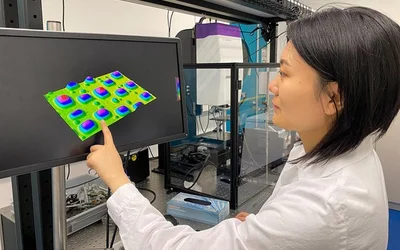
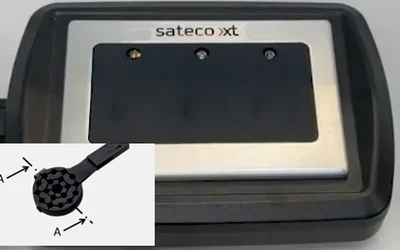
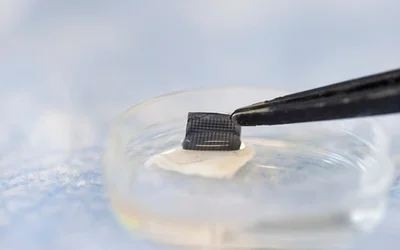
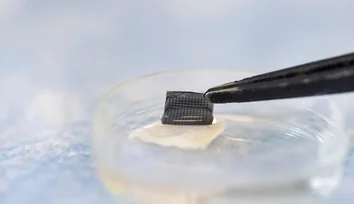
Technology for creating 3D force and proximity sensors based on silicone, offering also the ability to customize shape and characteristcs. Key application is in collaborative robots
Sensors are ubiquitous in our modern world, playing pivotal roles in numerous sectors. This article delves into their fundamental principles, diverse types, and their significant impact across industries.
13 minutes read.
13 minutes read.
14 minutes read.

Robotics
This podcast is dedicated to the (soft) robotics community and audience who...
6 Posts

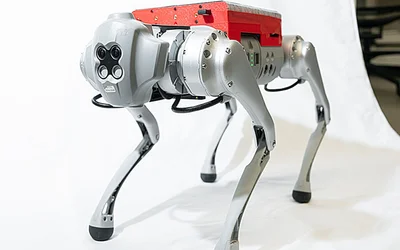
A new quadrupedal system with tactile sensing, LocoTouch, enables robot dogs to transport unsecured cylindrical objects on their backs for more than 60 meters while navigating around cones and over obstacles.
Researchers from ITMO and Almazov National Medical Research Centre have created a new metal-organic framework-based material that can be used to make fast-acting, durable sensors for detecting water and toxic molecules.
Columbia Engineering computer scientists introduce a novel system that mimics human tactile sensing capabilities in robots.
In this episode, we explore an innovative and sustainable wearable device designed by researchers at the Karlsruhe Institute of Technology to improve posture and we discuss why AI isn’t just a novelty in this product but a core feature that sets it apart from the rest!
The new noninvasive sensor uses machine learning to estimate levels of lipids in the blood based on what is measured in the sweat.
Non-invasive, wearable sensor can identify and track lactate in low-perspiration conditions, researchers say
Researchers at Penn State develop a wearable sensor that can accurately measure the chloride ion levels of sweat in real time
A microneedle patch captures cancer biomarkers in the top-most layer of skin to detect melanoma in animal tissue samples.
The device senses and wirelessly transmits signals related to pulse, sweat, and ultraviolet exposure, without bulky chips or batteries.
The sophisticated artificial skin sweats where and how much the researchers want it to. This was reported in an Angewandte Chemie article by Danqing Liu and first author Yuanyuan Zhan.
Technology for creating 3D force and proximity sensors based on silicone, offering also the ability to customize shape and characteristcs. Key application is in collaborative robots

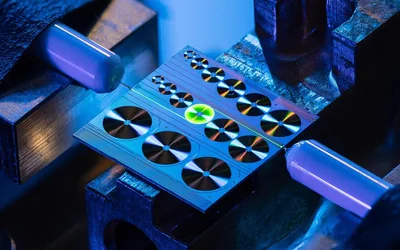
EPFL scientists have built a compact waveguide amplifier by successfully incorporating rare-earth ions into integrated photonic circuits. The device produces record output power compared to commercial fiber amplifiers, a first in the development of integrated photonics over the last decades.

3 minutes read
Penn State-led researchers develop first artificial skin to maintain cognitive characteristics when deformed.

2 minutes read
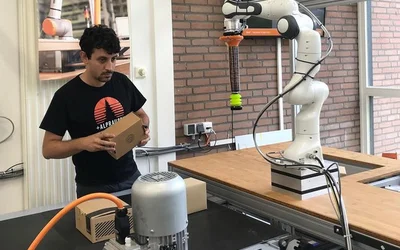
Robot arms could become safer in industrial settings by applying an artificial skin containing proximity heat sensors to detect humans in all directions.
In this episode, we talk about how a group of researchers were inspired by the adaptive immune system found in humans to fortify vulnerable neural networks and a joint effort between universities to create electric skin with unmatched performance.

Using a highly-scalable approach to creating dense sensor networks, yet requiring only a pair of address lines, these researchers have taken inspiration from the human somatosensory system for a rapid-response sensitive sense of electronic touch.
A team at the Technical University of Munich (TUM) has developed software which lets race cars compete in motor sports without a driver. The TUM Autonomous Motorsport Team was able to take 1st and 2nd place at the Autonomous Challenges in Indianapolis and most recently at the CES in Las Vegas.
Researchers have developed the first LiDAR-based augmented reality head-up display for use in vehicles. Tests on a prototype version of the technology suggest that it could improve road safety by ‘seeing through’ objects to alert of potential hazards without distracting the driver.
Integrated photonics offers promising solutions in a range of automotive applications.

5 minutes read
Cutkosky applies analyses, simulations, and experiments to the design and control of robotic hands, tactile sensors, and devices for human/computer interaction. In manufacturing, his work focuses on design tools for rapid prototyping.

LiDARs have grown in popularity in recent years as better manufacturing techniques and mass production have lowered the price of this technology.

5 minutes read
Announcing the open source release of the structure from motion and visual localization data format kapture!

5 minutes read
The ability to integrate location and movement sensors with wireless technology in sports equipment is revolutionizing the way athletic performance can be monitored, analyzed and improved.

3 minutes read