Featured
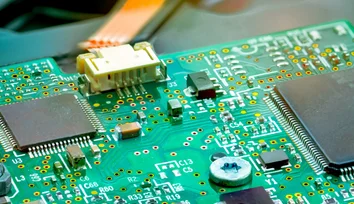
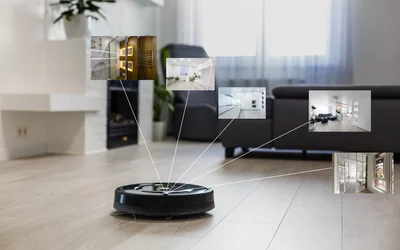
Low-power computer vision provides a new opportunity to gain a practical understanding of the world through data collection and vision in remote areas.
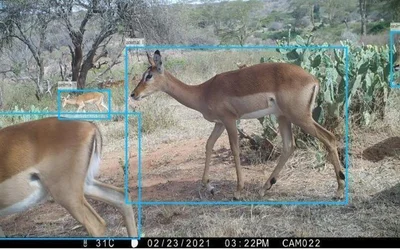
Low-power computer vision provides a new opportunity to gain a practical understanding of the world through data collection and vision in remote areas.
Low-power computer vision provides a new opportunity to gain a practical understanding of the world through data collection and vision in remote areas.
Harnessing the Power of TinyML and Machine Learning: A Deep Dive into Modern Healthcare Innovations
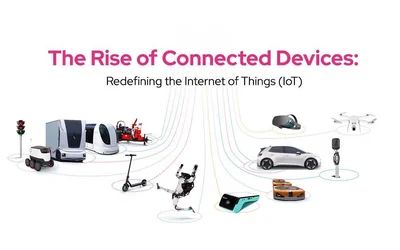
The world of technology is in a constant state of flux, and the Internet of Things (IoT) is no exception.
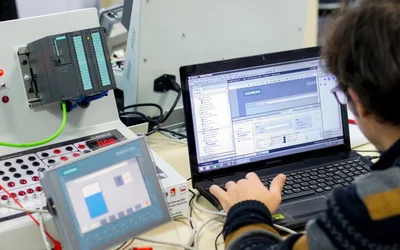
This article is a practical PLC programming guide covering the five IEC 61131-3 languages, the scan cycle that governs how your code actually runs, ladder and structured text examples, and the mistakes that cost engineers the most commissioning time.
23 minutes read.
18 minutes read.
18 minutes read.
15 minutes read.
13 minutes read.
17 minutes read.

Semiconductors
Nordic Semiconductor is a fabless semiconductor company specializing in wireless technology that powers the IoT.
181 Posts

High Tech
High Tech Campus Eindhoven is Europe's smartest square km and has the ultim...
49 Posts

University for science and technology
Freedom and individual responsibility, entrepreneurial spirit and open-min...
43 Posts

Higher Education
Work together. Create smart machines. Serve society. University of Michiga...
40 Posts
embedded world North America is the premier trade show and conference dedicated to the community of innovators and developers in the embedded tech ecosystem.
How Embedded Systems, AI, and Human-Centered Design Are Driving the Future of Robotics
Learn why teams still lose half their development time to test and fix, and what changes when you get real visibility into the target.
Mario Mauerer, maxon's Global Business Development Manager, Robotics, discusses what it takes for robotic deployments to be successful in complex real-world environments.
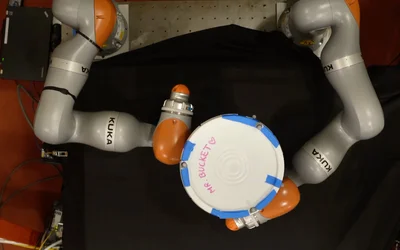
Join Prof. Fei Chen as he explores advanced bimanual manipulation and teleoperation techniques shaping the future of intelligent human-like robots in this expert-led robotics session.
'Link-bots' can move, explore, cooperate without sensing or computation
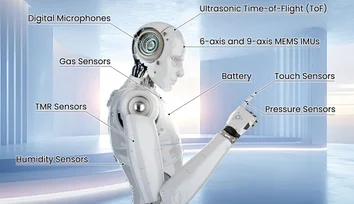
This article is part 4 of a 4-part article series on TDK's advanced robotics.
Low-power computer vision provides a new opportunity to gain a practical understanding of the world through data collection and vision in remote areas.
Harnessing the Power of TinyML and Machine Learning: A Deep Dive into Modern Healthcare Innovations
The world of technology is in a constant state of flux, and the Internet of Things (IoT) is no exception.

3 minutes read
Electronic Technology Supporting the Evolution of “Next Tech”

6 minutes read
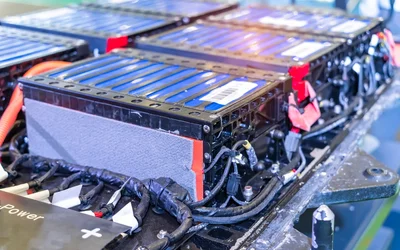
Edge AI platforms can assist engineers to monitor battery health systems.
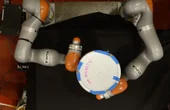
With a new technique, a robot can reason efficiently about moving objects using more than just its fingertips.
A positive shift is taking place towards more advanced and specific digital healthcare for women. The so-called ‘femtech’ (female technology) industry has belatedly begun to deliver on the promise of solutions using wireless connectivity to help address women’s health issues.

5 minutes read
Automating the food supply is key to securing future food supply chains.
Sensor and actuator networks are systems that collect and transmit data from a physical environment for digital processing. Data is collected at sensors and actuators in the field, then digitized at the sensor or actuator. The digitized data can be used for a variety of applications, and the method for data processing depends on the application
Join us for the premier edge AI event, with presentations and demonstrations from top technology leaders and innovators.
A pivotable moment in the remarkable rise of wireless innovation can be traced back a quarter of a century to the emergence of Bluetooth – an interoperable protocol that became a standard, accompanied by an open specification for both hardware and software. In its various forms, Bluetooth has powered a significant segment of the connected world ever since.
4 minutes read
Energy harvesting for IoT provides a sustainable power solution, enabling self-sufficient devices that extract energy from their surrounding environment, enhancing longevity and reducing maintenance requirements
Article 3 of Bringing Intelligence to the Edge Series: Balancing the critical metrics of accuracy, power consumption, latency, and memory requirements is key to unlocking the potential of Tiny Machine Learning (TinyML) in low-power microcontrollers and edge computing.
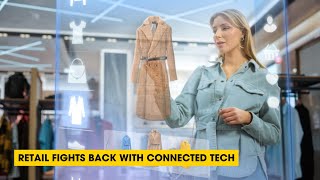
In this episode, we explore the dynamic landscape of retail transformation in the digital age. Learn how the integration of cutting-edge technology is reshaping shopping experiences and customer engagement. From real-time supply monitoring to digital shelves enabling dynamic pricing based on demand, discover how retailers adapt to changing consumer behaviors and preferences.

21 minutes read
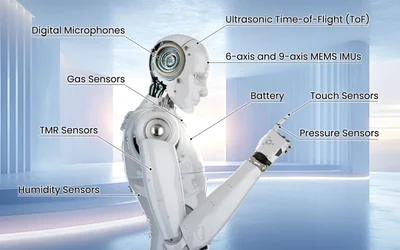
Exploring the working principles, applications, and benefits of ToF sensors in robotics.