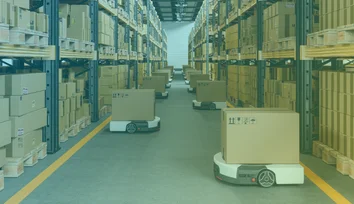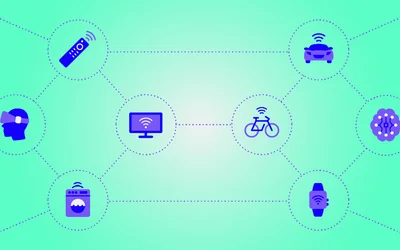
Enterprise IoT is another direction of IoT industry development, which businesses are actively adopting. Embedded technologies for large organizations bring new challenges in terms of connectivity, network stability, and data security.
Ultra-Wideband (UWB) has moved from niche industrial RTLS to mainstream, with easier deployment via enterprise access points and standards. Discover how UWB is transforming asset tracking, logistics, and manufacturing with cost-effective, sub-meter accuracy.
Explore the top 5 use cases of Software-Defined Connectivity (SDC) and learn how SDC reduces costs, improves compliance, and accelerates IoT innovation.
Today almost 30 percent of embedded projects have over 100,000 lines of code, and this increasing complexity is now the number one driver of project delays, and the reason 60 percent of an embedded development project's cost is software.
Integrating Non-Terrestrial Networks (NTN) with cellular IoT delivers seamless global connectivity, powered by the nRF9151 module for hybrid GEO, LEO, and terrestrial communication.
Lights-out manufacturing refers to the manufacturing methodology where factories are fully-automated. While true lights-out factories are still rare today, manufacturers can look to companies like FANUC, in Japan, for inspiration.
Metasphere’s ART Sewer wastewater and sewerage spill monitoring solution combines cellular IoT and AI/machine learning (ML) to protect freshwater and marine ecosystems in a way that Metasphere says hasn’t been commercially or technologically viable until now.
What is IoT Device Management and why do you need it? With IoT device management, you provision, authenticate, configure, monitor, update and diagnose the connected devices running in your IoT environment.
According to research from analyst GWI, while consumers still consider fitness tracking the leading reason for owning a wearable, nearly half of all owners also expect their wearable to monitor their health.
This article aims to provide a comprehensive comparison between contactors and relays, highlighting their key differences, applications, and factors to consider when choosing the right device for your needs.
Understanding your rights and responsibilities is essential to securing your innovation. Further, taking advantage of cloud manufacturing can mitigate substantial risk.
Although the billions of battery-powered wireless IoT sensors connecting tomorrow's world will undoubtedly have an upstream energy impact, research suggests considerable net savings will be realized in the future.

Article #1 Electronics Innovation Series. Enabling continued innovation while dealing with the constraints of supply chain uncertainty is a task for both designers and suppliers.

Article #1 of the Enabling IoT Series. "Intuitive sensing” applications enable humans to interact with smart devices in a more natural and seamless way.