Featured
Article #3 Electronics Innovation Series. As offices re-open the must embrace the use of data at a smart home scale.

Article #3 Electronics Innovation Series. As offices re-open the must embrace the use of data at a smart home scale.
Article #3 Electronics Innovation Series. As offices re-open the must embrace the use of data at a smart home scale.
New research from Carnegie Mellon University’s Bin He introduces a novel, AI-based dynamic brain imaging technology alternative which could map out rapidly changing electrical activity in the brain with high speed, high resolution, and low cost.
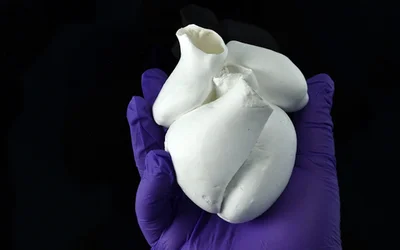
In this episode, we talk about how researchers are developing tools to better understand how different microbial communities impact our health in an effort to reverse engineer them and the critical methodology used to 3D print functional heart ventricles.
Active high-pass filters remove unwanted low-frequency signals while preserving useful higher frequencies. This article covers first- and second-order filter design, Sallen-Key and multiple-feedback topologies, and practical applications in audio electronics, instrumentation, and signal processing.
16 minutes read.
15 minutes read.
19 minutes read.
12 minutes read.
14 minutes read.


Entertainment
The Next Byte Podcast is hosted by two young engineers - Daniel and Farbod - who select the most interesting tech/engineering cont...
165 Posts

High Tech
High Tech Campus Eindhoven is Europe's smartest square km and has the ultim...
49 Posts

University for science and technology
Freedom and individual responsibility, entrepreneurial spirit and open-min...
43 Posts

University
At the Harvard John A. Paulson School of Engineering and Applied Sciences (...
42 Posts
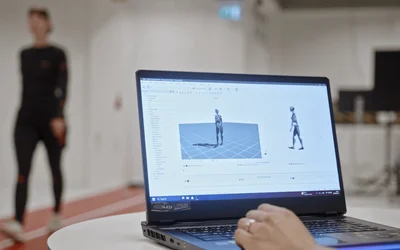
with Xsens motion capture
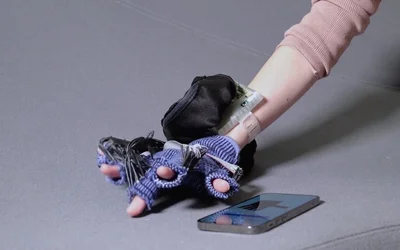
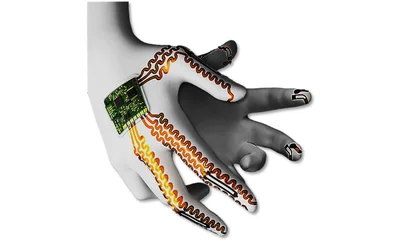
A new glove with more than three dozen actuators across all five fingers and the palm, developed by Cornell researchers, aims to reduce swelling for people suffering from edema.
AI-powered artificial muscles made from pliable materials are reshaping recovery, from stroke rehabilitation to prosthetic design. These machines help people regain motion, strength, and confidence.
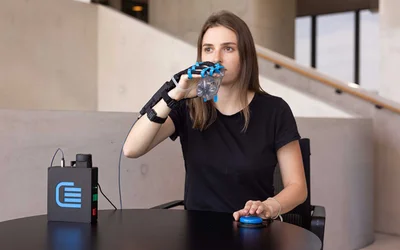
Researchers at ETH Zurich have developed an innovative hand exoskeleton that helps persons after stroke re-learn how to grasp. Its accordion-like structure makes it light, robust and easy to integrate into everyday life.
AI-powered artificial muscles made from pliable materials are reshaping recovery, from stroke rehabilitation to prosthetic design. These machines help people regain motion, strength, and confidence.
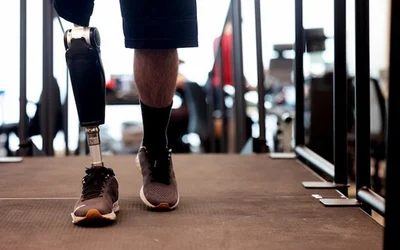
Paired with custom control software, Össur's powered knee prosthesis helped study participants sit, stand and walk more easily.
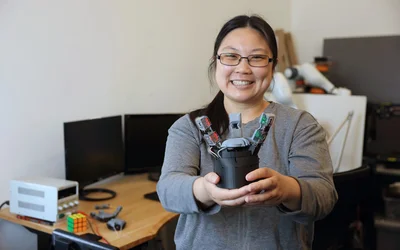
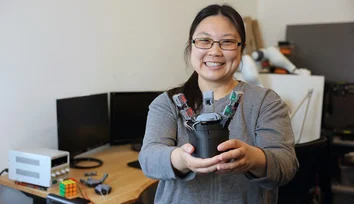
MIT CSAIL researchers enhance robotic precision with sophisticated tactile sensors in the palm and agile fingers, setting the stage for improvements in human-robot interaction and prosthetic technology.
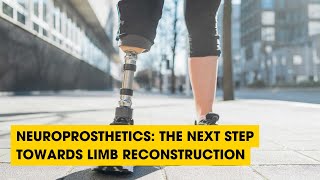
In this episode, we discuss a breakthrough from ETH Zurich to mimic natural foot signals to the brain using state of the art neuroprosthetics.
Article #3 Electronics Innovation Series. As offices re-open the must embrace the use of data at a smart home scale.
New research from Carnegie Mellon University’s Bin He introduces a novel, AI-based dynamic brain imaging technology alternative which could map out rapidly changing electrical activity in the brain with high speed, high resolution, and low cost.

3 minutes read
In this episode, we talk about how researchers are developing tools to better understand how different microbial communities impact our health in an effort to reverse engineer them and the critical methodology used to 3D print functional heart ventricles.

Startups are pioneering a new era of drug discovery that’s cheaper, faster, and more accurate.
This student article proposes rapid protocols for clinical diagnosis of COVID-19 through the automatic analysis of hematological parameters using Evolutionary Computing and Machine Learning. These hematological parameters are obtained from blood tests common in clinical practice.
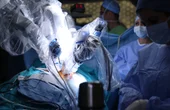
Article #8 of Improving Lives with Digital Healthcare Series: Advancements in electronics have transformed the healthcare sector. The focus is on improving the experiences of users by utilizing cutting-edge technologies like advanced drug delivery systems, wearables, surgical robots, and more.
Article #7 of Improving Lives with Digital Healthcare Series: Real-time monitoring of multiple physiological health parameters can be an effective way of preventing and early diagnosis of several diseases.
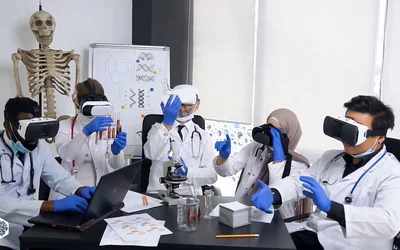
Article #6 of Improving Lives with Digital Healthcare Series: Immersive technologies enabled by modern sensing and connectivity systems can be effective pedagogical tools in making medical education safer, accessible, personalized, and engaging.
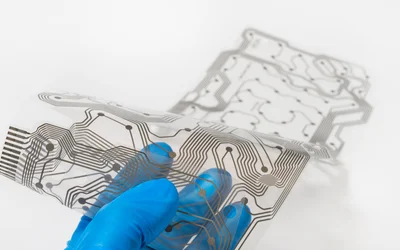
Article #5 of Improving Lives with Digital Healthcare Series: Intelligent software, wireless connectivity systems along with developments in flexible circuits have enabled electronic part manufacturers to provide OEMs the support required to implement better medical solutions.
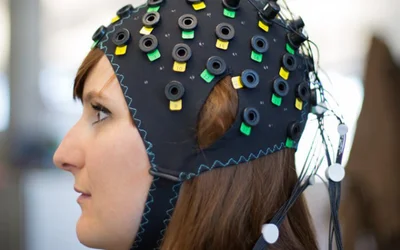
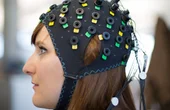
Article #4 of Improving Lives with Digital Healthcare Series: Transferring information directly between the human brain and a computer can unlock the possibilities of using machines as extended parts of the human body.
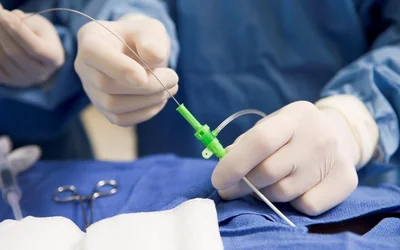
Article #3 of Improving Lives with Digital Healthcare Series: Using real-time sensing, new energy sources, and multifunctional connectors, it's possible to carry out cardiovascular operations with reduced risks and faster recovery time.
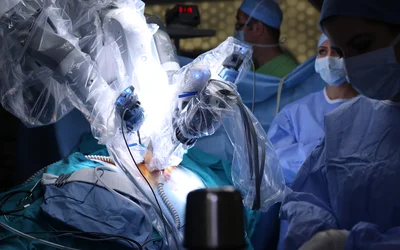
Article #2 of Improving Lives with Digital Healthcare Series: Improved healthcare robots facilitate minimally invasive surgical procedures with features like visualization, precision movement, and tactile feedback. Having a good connectivity infrastructure supporting the devices ensures reliability
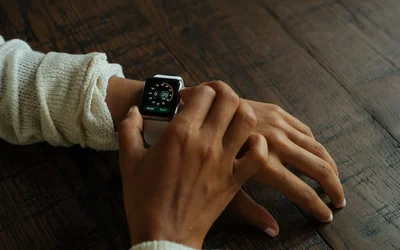
Article #1 of Improving Lives with Digital Healthcare Series: Developing wearable devices for consumer and medical applications can come with different sets of challenges.
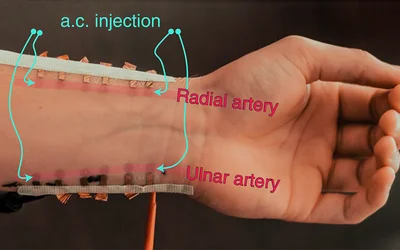
Researchers at Texas A&M University and The University of Texas at Austin are working to change that, enabling continuous monitoring that can provide a more comprehensive look at blood pressure than the single snapshot that comes with the cuffs.
Introducing the Improving Lives with Digital Healthcare Series: Modern biomedical instruments enhanced by the latest digital technologies can make healthcare more accessible, personalized, and proactive.