Featuredpodcast
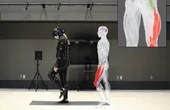
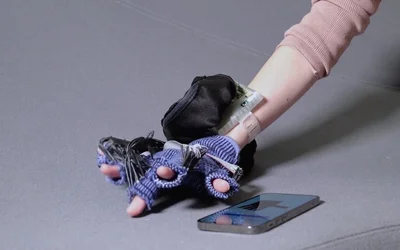
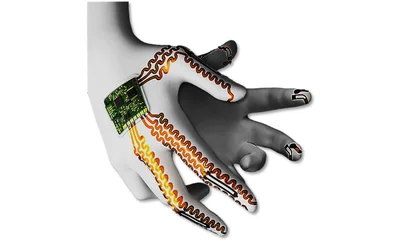
In this episode, we discuss how a wearable based sensing platform developed by MIT can provide detailed information about a user’s muscle activity and enable virtual physical therapy to increase access for this vital practice.
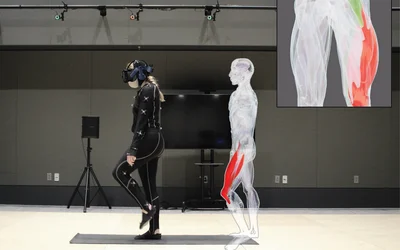
In this episode, we discuss how a wearable based sensing platform developed by MIT can provide detailed information about a user’s muscle activity and enable virtual physical therapy to increase access for this vital practice.
In this episode, we discuss how a wearable based sensing platform developed by MIT can provide detailed information about a user’s muscle activity and enable virtual physical therapy to increase access for this vital practice.
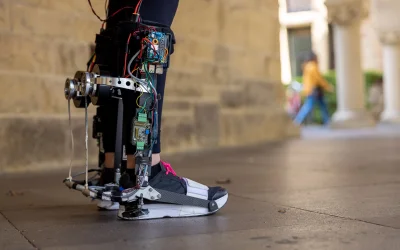
After years of careful development, engineers have created a boot-like exoskeleton that increases walking speed and reduces effort outside of the lab.
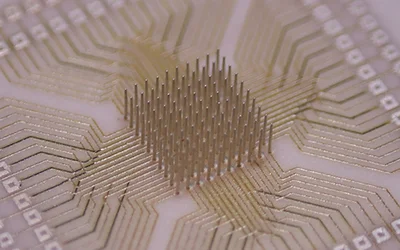
Carnegie Mellon University collaborators pioneer the CMU Array—a customizable, 3D nano-printed, ultra-high-density microelectrode array platform for next-generation brain-computer interfaces. This technology can transform the way doctors are able to treat neurological disorders.
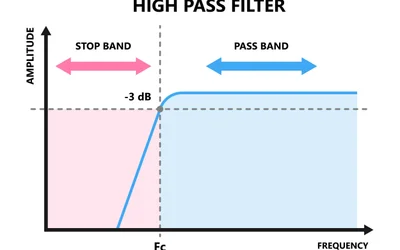
Active high-pass filters remove unwanted low-frequency signals while preserving useful higher frequencies. This article covers first- and second-order filter design, Sallen-Key and multiple-feedback topologies, and practical applications in audio electronics, instrumentation, and signal processing.
16 minutes read.
15 minutes read.
19 minutes read.
12 minutes read.
14 minutes read.


Entertainment
The Next Byte Podcast is hosted by two young engineers - Daniel and Farbod - who select the most interesting tech/engineering cont...
165 Posts

High Tech
High Tech Campus Eindhoven is Europe's smartest square km and has the ultim...
49 Posts

University for science and technology
Freedom and individual responsibility, entrepreneurial spirit and open-min...
43 Posts

University
At the Harvard John A. Paulson School of Engineering and Applied Sciences (...
42 Posts
with Xsens motion capture
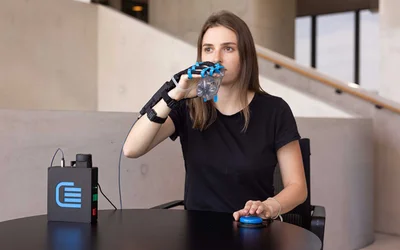
A new glove with more than three dozen actuators across all five fingers and the palm, developed by Cornell researchers, aims to reduce swelling for people suffering from edema.
AI-powered artificial muscles made from pliable materials are reshaping recovery, from stroke rehabilitation to prosthetic design. These machines help people regain motion, strength, and confidence.
Researchers at ETH Zurich have developed an innovative hand exoskeleton that helps persons after stroke re-learn how to grasp. Its accordion-like structure makes it light, robust and easy to integrate into everyday life.
AI-powered artificial muscles made from pliable materials are reshaping recovery, from stroke rehabilitation to prosthetic design. These machines help people regain motion, strength, and confidence.
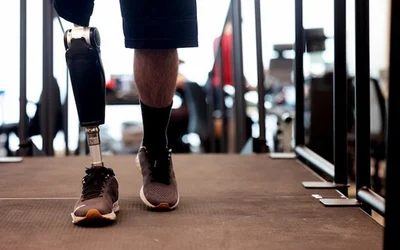
Paired with custom control software, Össur's powered knee prosthesis helped study participants sit, stand and walk more easily.
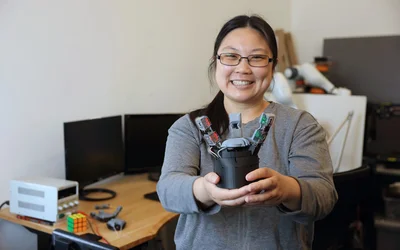
MIT CSAIL researchers enhance robotic precision with sophisticated tactile sensors in the palm and agile fingers, setting the stage for improvements in human-robot interaction and prosthetic technology.
In this episode, we discuss a breakthrough from ETH Zurich to mimic natural foot signals to the brain using state of the art neuroprosthetics.
In this episode, we discuss how a wearable based sensing platform developed by MIT can provide detailed information about a user’s muscle activity and enable virtual physical therapy to increase access for this vital practice.

After years of careful development, engineers have created a boot-like exoskeleton that increases walking speed and reduces effort outside of the lab.

4 minutes read
Carnegie Mellon University collaborators pioneer the CMU Array—a customizable, 3D nano-printed, ultra-high-density microelectrode array platform for next-generation brain-computer interfaces. This technology can transform the way doctors are able to treat neurological disorders.

3 minutes read
Real-time monitoring of the situation in an ambulance. This provides enormous benefits for both the doctor and the patient. It could even save lives. The Connected Ambulance makes it possible.

In this episode, we talk about how consumer grade wearable technology could be used to diagnose sleep disorders impacting ~1 billion people.
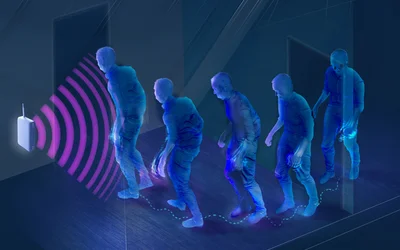
By continuously monitoring a patient’s gait speed, the system can assess the condition’s severity between visits to the doctor’s office.
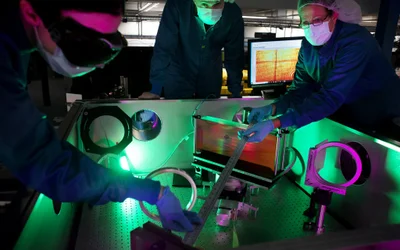
The ZEUS laser at the University of Michigan has begun its commissioning experiments

4 minutes read
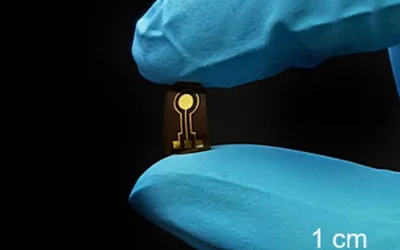
International team develops device for continuous, wireless nitric oxide monitoring

3 minutes read
Interdisciplinary team builds multi-task machine learning model for randomized controlled trial
Artificial intelligence (AI) is showing significant promise in medical imaging. To translate this promise to reality requires rigorous evaluation of these algorithms.
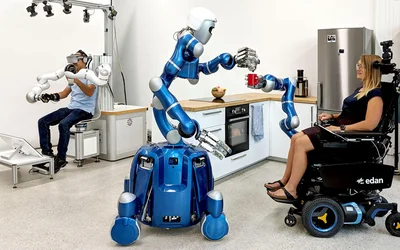
Although robots cannot replace human caregivers, they can provide support so that caregivers have more time to provide the personal, human touch.

3 minutes read
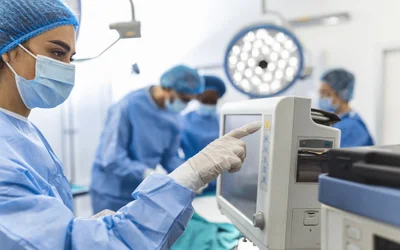
Interdisciplinary team tackles complexity of clinical data in perioperative care
As a physicist and ‘real techie’, Sofie Baselmans dedicated her career to creating healthcare technology. Always searching for the ‘perfect’ workplace, she worked in a hospital and in several corporate environments.
5 minutes read
Advancements in 3D printing have helped to lower the cost of robotics innovation by more than 40,000x! This article explains how that happened and highlights 5 categories of end-use robotics components that can be made on-demand with additive manufacturing today.

5 minutes read
Digital imaging giant Teledyne DALSA is one of the most senior residents at High Tech Campus Eindhoven. Using state-of-the-art X-ray detectors for medical, dental and industrial applications their ambition is to be both world and innovation leader in their field.
4 minutes read