Featured
Strong enough to move soft robots and medical capsules, weak enough to not ruin MRI images
Strong enough to move soft robots and medical capsules, weak enough to not ruin MRI images
Strong enough to move soft robots and medical capsules, weak enough to not ruin MRI images
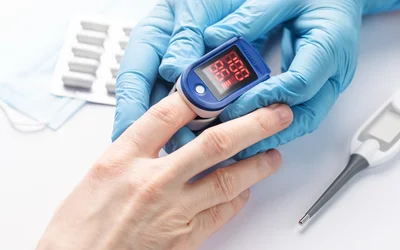
With an increased focus on home health, wellness, and prevention, a new market has been born around smart devices for tracking several vital parameters.
Optimizing Medical AI: Revolutionizing Diagnostics with the OKdo Nano C100 Developer Kit
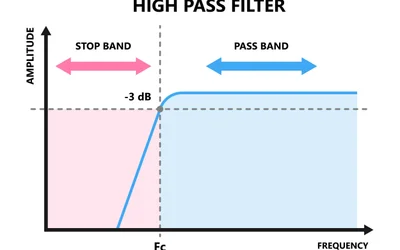
Active high-pass filters remove unwanted low-frequency signals while preserving useful higher frequencies. This article covers first- and second-order filter design, Sallen-Key and multiple-feedback topologies, and practical applications in audio electronics, instrumentation, and signal processing.
16 minutes read.
15 minutes read.
19 minutes read.
12 minutes read.
14 minutes read.


Entertainment
The Next Byte Podcast is hosted by two young engineers - Daniel and Farbod - who select the most interesting tech/engineering cont...
165 Posts

High Tech
High Tech Campus Eindhoven is Europe's smartest square km and has the ultim...
49 Posts

University for science and technology
Freedom and individual responsibility, entrepreneurial spirit and open-min...
43 Posts

University
At the Harvard John A. Paulson School of Engineering and Applied Sciences (...
42 Posts
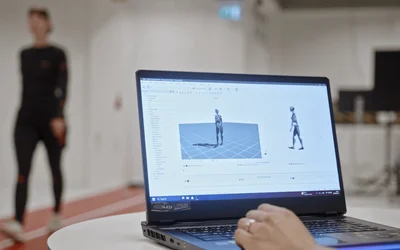
with Xsens motion capture
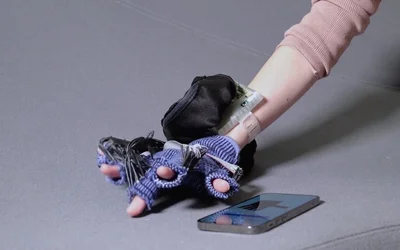
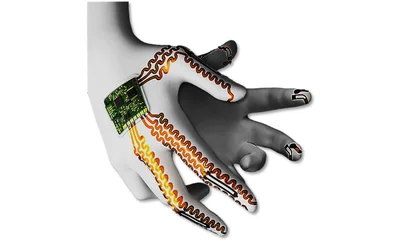
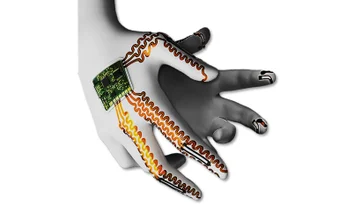
A new glove with more than three dozen actuators across all five fingers and the palm, developed by Cornell researchers, aims to reduce swelling for people suffering from edema.
AI-powered artificial muscles made from pliable materials are reshaping recovery, from stroke rehabilitation to prosthetic design. These machines help people regain motion, strength, and confidence.
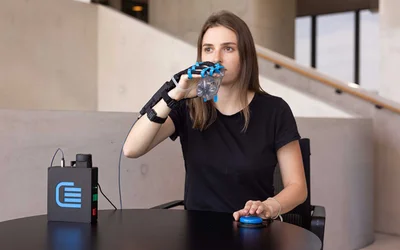
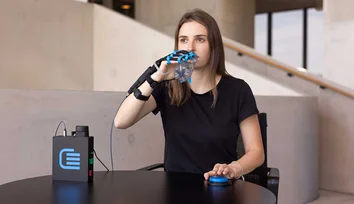
Researchers at ETH Zurich have developed an innovative hand exoskeleton that helps persons after stroke re-learn how to grasp. Its accordion-like structure makes it light, robust and easy to integrate into everyday life.
AI-powered artificial muscles made from pliable materials are reshaping recovery, from stroke rehabilitation to prosthetic design. These machines help people regain motion, strength, and confidence.
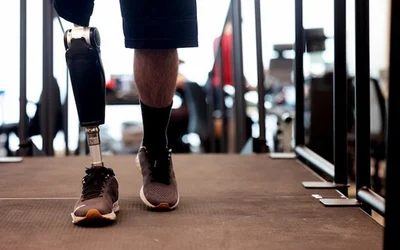
Paired with custom control software, Össur's powered knee prosthesis helped study participants sit, stand and walk more easily.
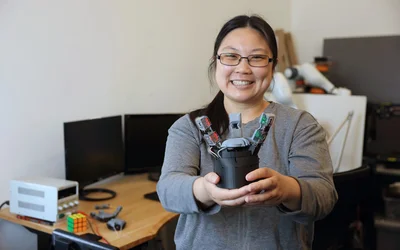
MIT CSAIL researchers enhance robotic precision with sophisticated tactile sensors in the palm and agile fingers, setting the stage for improvements in human-robot interaction and prosthetic technology.
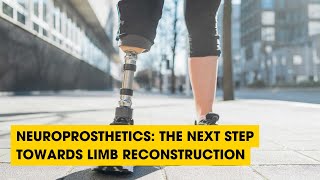
In this episode, we discuss a breakthrough from ETH Zurich to mimic natural foot signals to the brain using state of the art neuroprosthetics.
Strong enough to move soft robots and medical capsules, weak enough to not ruin MRI images

4 minutes read
With an increased focus on home health, wellness, and prevention, a new market has been born around smart devices for tracking several vital parameters.

10 minutes read
Optimizing Medical AI: Revolutionizing Diagnostics with the OKdo Nano C100 Developer Kit
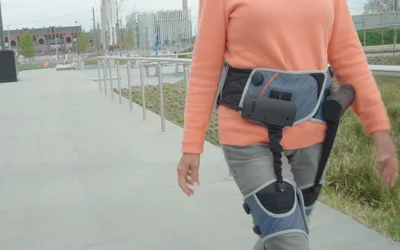
In this episode, we talk about how a soft robotic exoskeleton from Harvard and Boston University is allowing patients suffering from Parkinson’s Disease to get their independence back by being able to walk safely without extra assistance.

16 minutes read
An interdisciplinary project at Caltech has designed a new type of catheter tube that impedes the upstream mobility of bacteria, without the need for antibiotics or other chemical antimicrobial methods.

4 minutes read
In this episode, we dive into our favorite episodes from the last year and present the first annual saucy awards!
20 minutes read
Robotic exosuit eliminated gait freezing, a common and highly debilitating symptom

4 minutes read
Changes in small blood vessels are a common consequence of diabetes development. Researchers at the Technical University of Munich (TUM) and Helmholtz Munich have now developed a method that can be used to measure these microvascular changes in the skin – and thus assess the severity of the disease.

3 minutes read
The technique represents an important step in engineering skin grafts, drug testing

3 minutes read
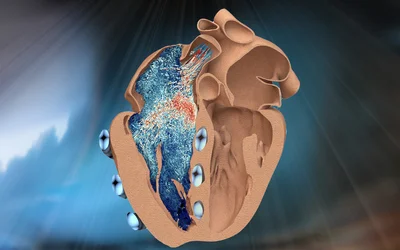
The realistic model could aid the development of better heart implants and shed light on understudied heart disorders.
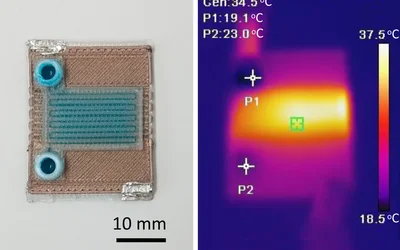
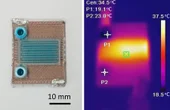
The one-step fabrication process rapidly produces miniature chemical reactors that could be used to detect diseases or analyze substances.
In part II of the Mouser podcast episode, Dr. Smit Patel continued discussing the evolving landscape of digital therapeutics and its impact on healthcare highlighting several key insights into how digital solutions are reshaping medical treatments and the regulatory environment surrounding them.
Digital therapeutics are transforming the way we approach medicine and patient care.
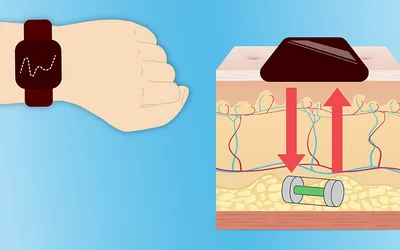
Researchers receive funding to develop injectable grain-of-rice-sized continuous glucose monitor technology.

3 minutes read
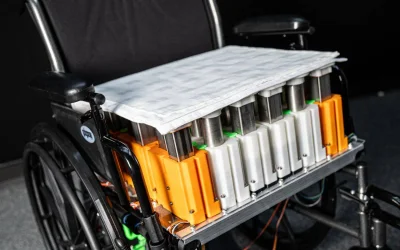
MSE researchers are using a Catalyst Award from the National Academy of Medicine to develop a pressure-relieving sensor system that could also be used in hospital beds.

3 minutes read